
Food Coordinating Ministry and UNDP expand Sungai Lestari to protect coastal food supplies
Protecting mangroves means protecting the coast, the local economy and the climate. Through the Sungai Lestari Programme, we are driving a shift from simply cleaning up waste to preventing it at source.
Jakarta (ANTARA) – The Coordinating Ministry for Food and the United Nations Development Programme (UNDP) are expanding the Sungai Lestari Programme to Bali to reduce plastic pollution in rivers and safeguard food sources and the livelihoods of coastal communities.
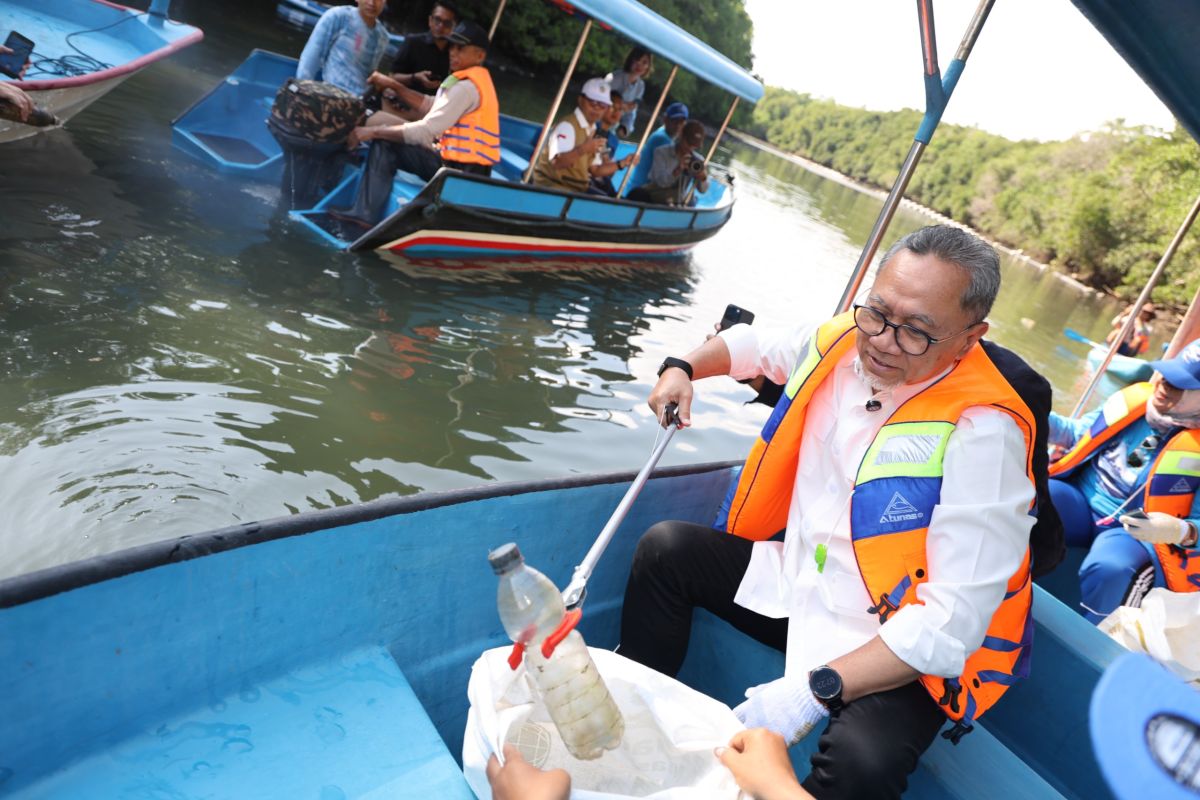
The expansion was marked by the launch of the Sungai Lestari Programme and a mangrove clean-up event attended by Coordinating Minister for Food Zulkifli Hasan (Zulhas) in Denpasar, Bali, on Friday.
“Protecting mangroves means protecting the coast, the local economy and the climate. Through the Sungai Lestari Programme, we are driving a shift from simply cleaning up waste to preventing it at source,” Zulhas said in an official statement received in Jakarta on Friday.
The programme aims to reduce waste, particularly plastic, carried by rivers to the sea by strengthening waste management at source, including sorting, collection and recycling.
According to UNDP, Sungai Lestari is being implemented at five priority locations: Bekasi, Surakarta, Surabaya, Sidoarjo and Bali.
In Bali, the pilot programme targets the Badung River in Denpasar and the Mati River in Badung regency to prevent waste from leaking into coastal and marine areas.
UNDP said that since implementation began in Surabaya and Surakarta in May 2026, the programme had removed 492 tonnes of waste from four rivers.
The programme involves four civil society organisations, 55 waste banks, 1,200 women and communities in 20 urban villages, with support from local environmental agencies.
At its initial stage, the programme also reached riverbank areas inhabited by more than 54,000 people to strengthen waste management and reduce the risk of environmental pollution.
Meanwhile, the programme’s expansion to Bekasi and Sidoarjo, which began in October 2026, has a combined target of managing around 5,066 tonnes of waste by 2027.
The Sungai Lestari Programme, also supported by Clean Rivers, a foundation backed by the United Arab Emirates, uses a performance-based funding mechanism for civil society organisations.
Under this mechanism, funding is linked to the quantity of waste collected and directed into appropriate management channels, as verified independently.
UNDP Indonesia Resident Representative Sara Ferrer Olivella said better waste management could also bring economic benefits to communities and workers in the waste sector.
“Better waste management also creates opportunities to turn waste into something of value, while generating income and livelihoods for local communities and waste workers,” Sara said.
Zulhas stressed that rivers and mangroves need to be protected through an integrated approach because pollution can damage coastal ecosystems and fisheries resources.
“Mangroves are a strategic national asset. These ecosystems protect the coast and biodiversity, sustain the local economy, and absorb and store carbon to mitigate climate change,” Zulhas said.
He said preventing waste on land must go hand in hand with conserving mangroves and the sea to safeguard food security and the sustainability of economic activity in coastal communities.
Indonesia has significant blue carbon potential, he said, with about 3.46 million hectares of mangrove ecosystems and around 660,000 hectares of seagrass beds.
In Bali, these efforts also complement the development of the Denpasar Raya waste-to-energy facility, which entered the construction phase after its groundbreaking on 8 July 2026.
Zulhas said the development of waste-processing infrastructure needs to be supported by changes in public behaviour, discipline in waste management, and collaboration among central and local governments, academics, communities and businesses.
Through an integrated approach to waste management from source to final processing, the government hopes that protecting river and coastal ecosystems will support the sustainability of Bali’s tourism industry, the local economy and national food security.
Source: jawawa.id (https://jawawa.id/newsitem/food-coordinating-ministry-and-undp-expand-sungai-lestari-to-protect-coastal-food-supplies-1792155246)
Originally published by Antara (Indonesian) (https://www.antaranews.com/berita/5791817/kemenko-pangan-undp-perluas-sungai-lestari-lindungi-pangan-pesisir), translated from Indonesian