
Food Coordinating Minister Highlights Importance of 'Stick and Carrot' in Waste Management
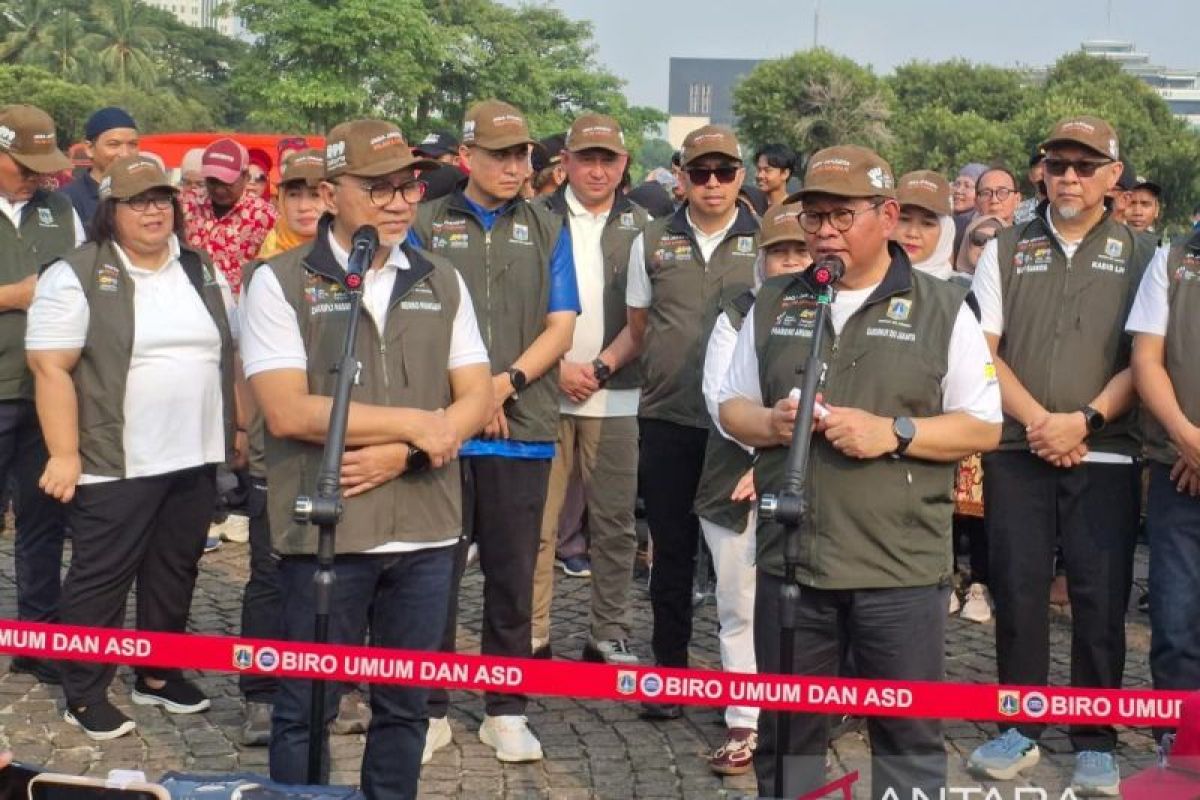
Coordinating Minister for Food Zulkifli Hasan has highlighted the importance of a ‘stick and carrot’ approach—punishment and reward—as an effort to change public behaviour in waste management. The ‘stick’ serves as law enforcement in the form of fines or social sanctions, while the ‘carrot’ functions as an incentive or reward to motivate the public to enthusiastically sort and deposit their waste. “Because open dumping is no longer allowed. So, places like Bantar Gebang will not be permitted anymore. Therefore, waste must be resolved at each location. If open dumping continues as it is now, there will certainly be penalties; there is a law now. So, there really must be a stick and carrot, we have to force it,” said Minister Zulhas. In a brief interview following the ‘Apel Siaga Jaga Jakarta Pilah Sampah’ ceremony at the National Monument Square in Jakarta on Sunday, Minister Zulhas reminded that accumulated waste has an extraordinary impact, including environmental damage, air pollution, and microplastic content that can cause cancer. On this occasion, he revealed that several regions in Indonesia are ready to launch waste incinerator machines, which are also targeted for implementation in offices and households. At the same event, Jakarta Governor Pramono Anung stated that the DKI Jakarta Province will have Waste-to-Energy Power Plants, located in Bantar Gebang, Tanjungan, and Sunter. The presence of these projects is in accordance with Presidential Regulation Number 112 of 2022 on the Acceleration of Renewable Energy Development for Electricity Supply, as well as DKI Jakarta Governor’s Instruction Number 5 of 2026. If all goes according to plan, he is targeting that by 2029, waste extraction will be carried out from Bantar Gebang, which currently has a volume reaching 55 million tonnes and a height of up to 60 metres.