
Food Coordinating Minister: Coconut Is a Highly Strategic Commodity
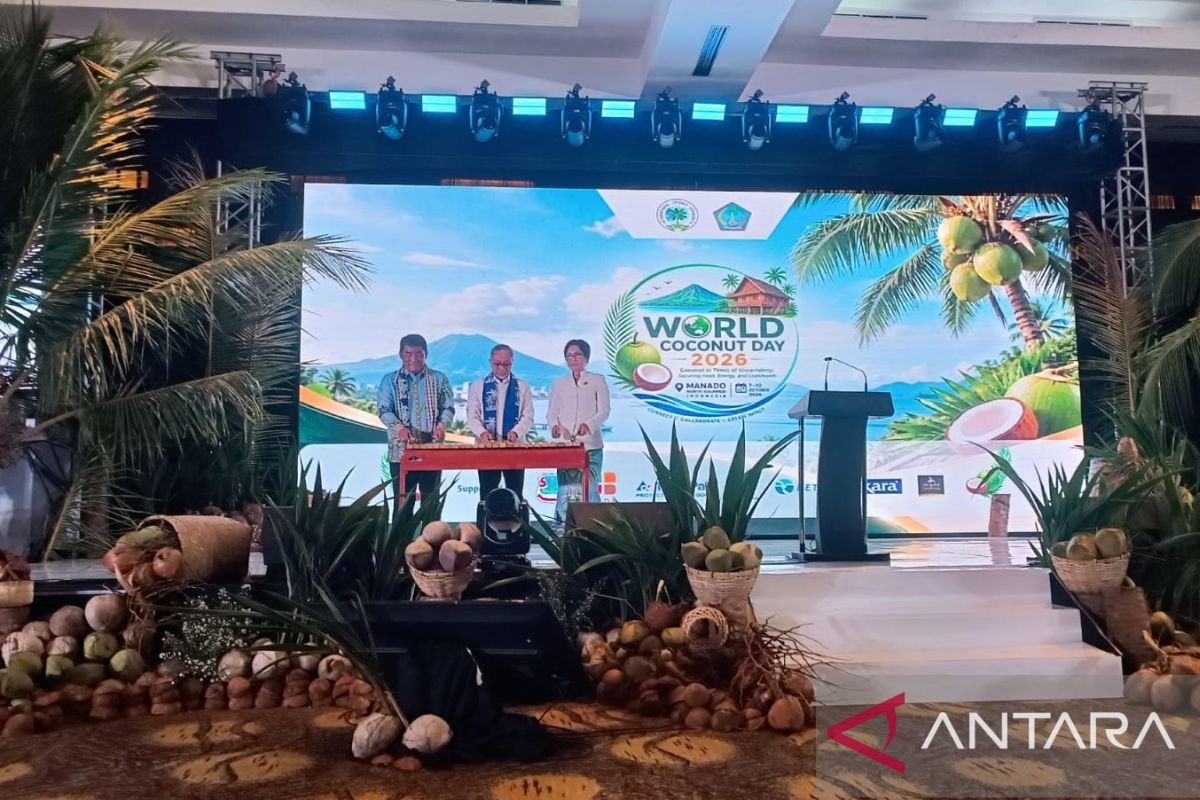
Manado (ANTARA) – Coordinating Minister for Food Affairs Zulkifli Hasan said at World Coconut Day 2026 that coconut is a highly strategic commodity with significant potential for added value.
“Coconut plantations and downstream processing of coconut products are receiving special attention from the President,” Zulkifli said in Manado on Thursday.
He said downstream coconut processing had repeatedly been discussed at limited meetings chaired directly by the President.
As a result, he explained, the responsibilities of the body formerly known as the Oil Palm Plantation Fund Management Agency (BPDPKS), previously managed by the Ministry of Economic Affairs, have now been transferred to the Coordinating Ministry for Food Affairs.
“We are just waiting for the harmonisation process. Coconut will become one of the main commodities we develop,” he said.
Zulkifli said coconut’s economic value was now higher than that of other plantation commodities. Even people working in the palm oil industry, he added, said coconut was currently more profitable and worth considerably more than other plantation products.
“On behalf of the Indonesian Government, I welcome the delegations from member countries of the International Coconut Community (ICC),” he said.
Zulkifli also praised the ICC for this year’s event, held under the theme “Coconut in Times of Uncertainty: Securing Food, Energy, and Livelihoods”. He said the theme was highly relevant to current global challenges.
“Under President Prabowo’s leadership, agriculture and food have been established as top priorities in Indonesia’s national development,” he added.
World Coconut Day 2026 in Manado was attended by North Sulawesi Governor Yulius Selvanus, regents and mayors, ICC Director-General Jelfina C. Alow, deputy-level officials from Malaysia, the Philippines and Papua New Guinea, representatives of friendly countries’ embassies, academics, businesspeople, coconut farmers and other guests.
The global event was organised by the ICC in collaboration with the North Sulawesi Provincial Government in Manado from 7 to 10 October 2026.
The theme highlights the crucial role coconut can play in responding to global climate and economic uncertainty through three main pillars.
First, coconut can help secure food. It is no longer merely a raw plantation commodity, but an important source of nutrition and hydration.
As consumer preferences change, a wider range of derivative products—including coconut water, coconut cream and virgin coconut oil (VCO)—is helping meet global food needs. The global market for ready-to-drink coconut-based beverages is also growing rapidly.
Second, coconut can provide renewable energy. Waste materials such as husks, shells and old coconut wood can be used as feedstock for renewable green energy.
Coconut is being incorporated into the development of second-generation biofuels, briquettes and biochar, which can reduce carbon emissions and dependence on fossil fuels.
Third, coconut supports livelihoods. The industry is an economic pillar and source of employment for millions of smallholder farmers in tropical regions.
Through commodity downstreaming programmes, producing countries such as Indonesia—which produces around 2.1 million tonnes of coconut a year—are focusing on processing products domestically to generate substantially greater added economic value and improve the welfare of local farmers.