
Food Assistance and Free Homecoming Dominate Benefits of Lebaran Programme
Jakarta (ANTARA) - Food assistance and the free homecoming programme emerged as the two government policies most felt by the public during the 2026 Lebaran homecoming, reflecting the strong role of direct interventions in supporting citizens’ mobility.
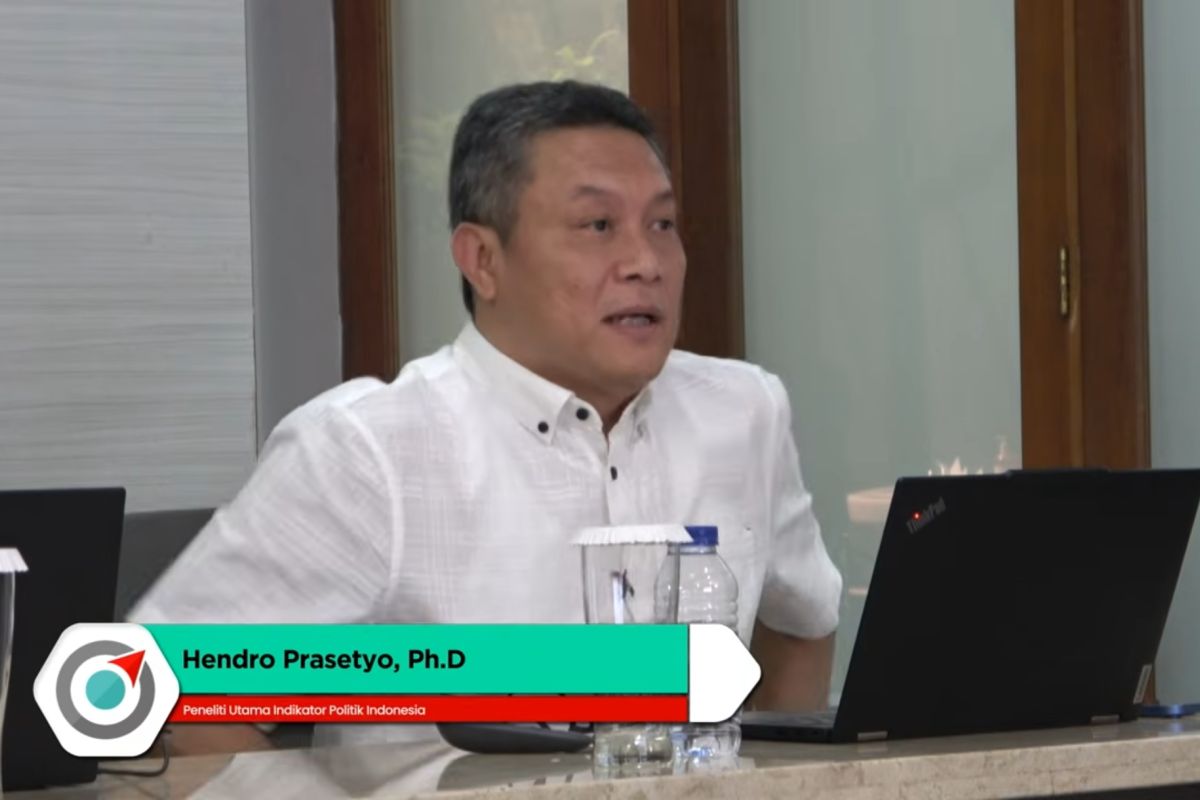
Researcher from the Indonesian Political Indicators survey institute, Hendro Prasetyo, stated that both programmes topped the list in terms of public recognition and perceived benefits.
“The programme most widely known to the public is food assistance, followed by free homecoming,” he said in a release of the public evaluation survey on the 2026 Lebaran homecoming implementation, conducted online in Jakarta on Tuesday.
Survey data showed that food assistance was known to 58.6% of respondents, followed by free homecoming at 55.3%.
Meanwhile, other programmes such as fuel price guarantees were known to 48.8%, transport fare discounts to 38.1%, increased holiday allowances (THR) to 34.5%, toll fare discounts to 34%, and the work-from-anywhere policy for civil servants (ASN) to 28.8%.
In terms of benefits, free homecoming was the programme most directly felt by the public. “Overall, the programme considered most helpful is free homecoming, followed by food assistance,” said Hendro.
As many as 86.9% of respondents rated free homecoming as quite or very helpful, followed by food assistance at 83.5%. The transport fare discount programme was rated helpful by 82.6% of respondents, while the fuel price guarantee reached 81.9%.
Other programmes were also rated positively, though not as highly as the two main ones, such as toll fare discounts at 79.1%, increased THR at 74.5%, and the work-from-anywhere policy for ASN at 63.4%.
Hendro assessed that the high appreciation for direct assistance indicates the public’s need for concrete support during the costly homecoming period.
“People who know about the programme tend to rate it more positively,” he said.
However, there remains a gap between knowledge levels and utilisation of programmes, particularly in sectoral policies like ASN work flexibility.
“The main homework is the low socialisation of some programmes,” said Hendro.
The survey was conducted from 29 March to 4 April 2026 with 1,200 respondents using multi-stage random sampling, with a margin of error of ±2.9% at a 95% confidence level.
These findings affirm the homecoming as a strategic moment that not only strengthens social ties but also drives broad regional economic growth.