
Food and Housing: Two Basic Needs That Must Progress Together
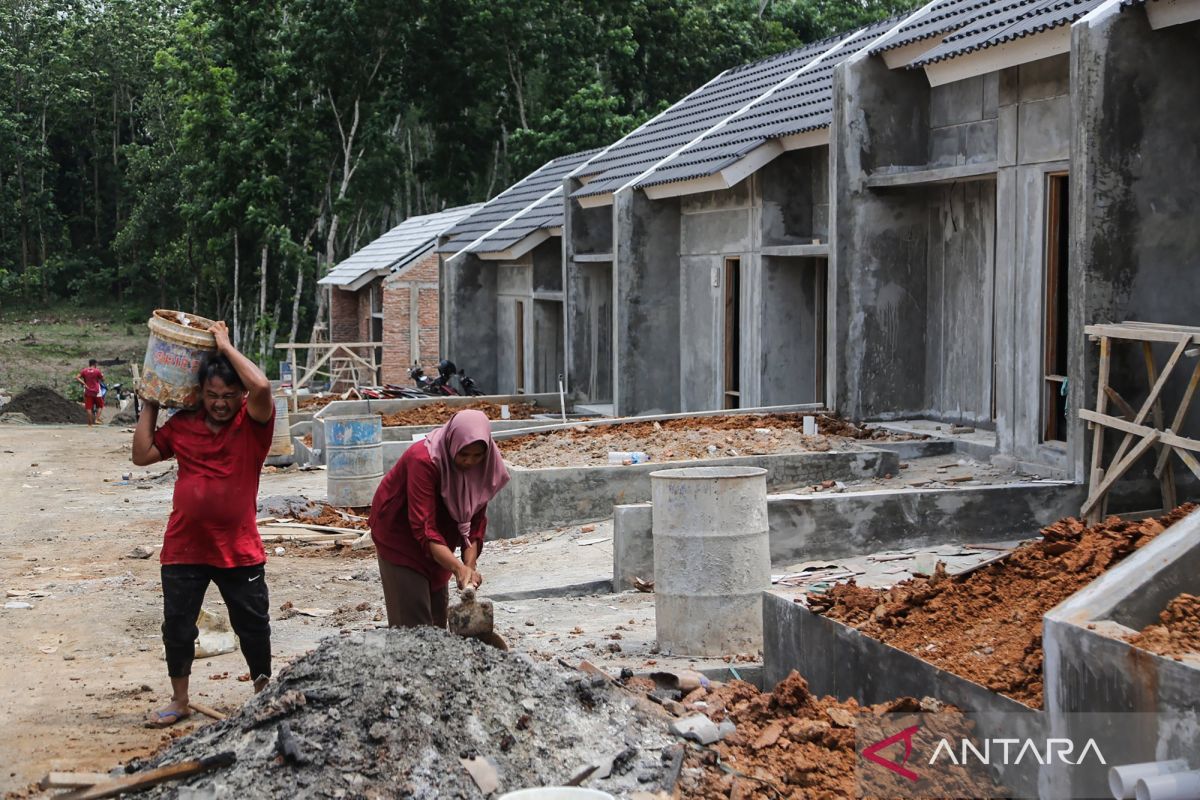
The intersection of these needs is real, and the key lies in comprehensive, data-based spatial planning that is oriented towards the needs of both current and future generations.
Jakarta (ANTARA) - Land issues have always been a dilemma in Indonesia’s development. On one hand, the state must guarantee the availability of agricultural land to maintain food security. On the other hand, population growth and rapid urbanisation continue to increase the demand for housing.
Therefore, the debate regarding the priority of land use between food and housing is not a black-and-white choice. Both are basic societal needs that must be met in a balanced and sustainable manner.
The Minister of Housing and Residential Areas (PKP), Maruarar Sirait, conveyed a simple yet strategic message regarding the importance of ensuring the success of food programmes while maintaining the sustainability of housing programmes. The main challenge lies in finding a common ground in spatial utilisation.
The government currently has strong reasons to protect food-producing land. Paddy fields are not merely expanses of land producing rice, but are a crucial part of the national food security system.
The Coordinating Minister for Food, Zulkifli Hasan, emphasised that spatial planning is essential to provide certainty and direction in managing various land uses. One of the government’s primary focuses is the existence of national paddy fields, which reach approximately 7 million hectares. This spatial planning will eventually be incorporated into a single integrated map to serve as a shared reference.
Zulkifli explained that the government continues to strengthen the protection of food land through spatial planning policies and the control of paddy field conversion. These efforts are accommodated through Presidential Regulation Number 12 of 2025 concerning the National Medium-Term Development Plan (RPJMN) 2025–2029. In this RPJMN, the government targets the designation of Sustainable Food Agricultural Land (LP2B) to at least 87 per cent of the total Basic Paddy Field (LBS) by 2029.
This policy is further strengthened by Presidential Regulation Number 4 of 2026 concerning the Control of Paddy Field Conversion. This regulation governs the mechanism for controlling the conversion of paddy fields, the designation of Protected Paddy Field (LSD) maps, and the integration of LSD into the designation of LP2B and spatial plans.
These protection policies deserve support. Experience in various regions shows that agricultural land that has been converted into built-up areas is very difficult to restore to its original function as paddy fields. Once an area is filled with buildings, roads, and infrastructure, both its ecological function and agricultural productivity are practically impossible to recover. Therefore, controlling land conversion must be an integral part of long-term development strategies.