
Food and Beverage Industry Targets Gen Z and Records Rp85.5 Trillion in Investment
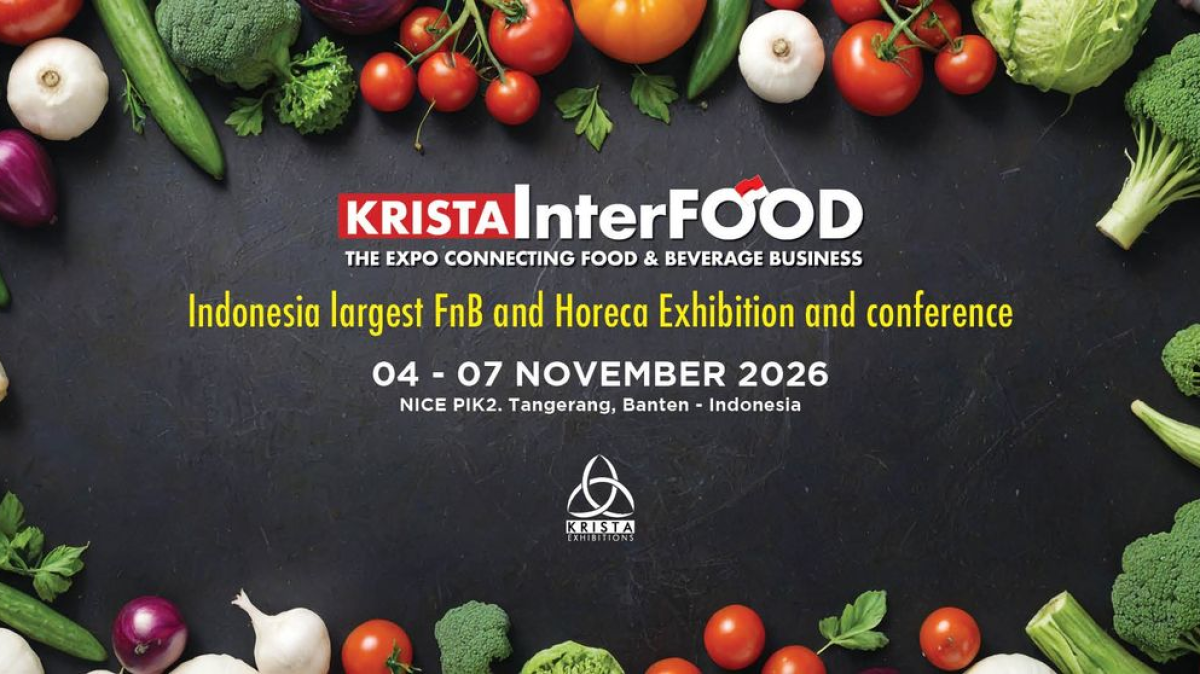
The size of the potential young-consumer market is prompting Indonesia’s food and beverage industry to expand its reach and attract investment. Indonesian Food and Beverage Industry Association (GAPMMI) chairman Adhi S Lukman outlined the opportunity at the Krista Interfood Expo 2026 at NICE, PIK 2, Tangerang Regency, Banten, on Wednesday (4 November 2026), according to Investor Daily.
The market potential is underpinned by projections that Indonesia’s population will reach 318.9 million by 2045. Of that total, 233 million people are expected to be in the middle-income group, with Gen Z and millennials making up the dominant consumer cohorts.
Data from Bapena cited in the report put Post Gen Z at 10.88 per cent of the population, Gen Z at 27.94 per cent and millennials at 25.87 per cent.
Adhi said young consumers’ characteristics created opportunities to develop products with higher quality, greater variety, more added value and a wider range of functions.
“As consumers, they are not looking for cheap products, but better products, more variety, higher added value and more functional food,” said Adhi, GAPMMI chairman.
According to Adhi, Gen Z and Generation Alpha tend to prioritise speed, scientific evidence, new experiences and challenges. These traits also encourage interest in newly launched food and beverage products.
“In my view, one of their characteristics is that they always want things quickly. They also want information or science-based evidence before making decisions. They want to stand out, try new things, and enjoy challenges, change and different experiences,” Adhi said.
The popularity of food and beverage products that go viral and draw queues of customers also presents an opportunity for new businesses to enter the market.
“We can see many food and beverage products going viral, to the point that people are willing to queue to buy them. In my view, this is one of the opportunities arising from the characteristics of today’s young generation,” Adhi said.
Functional foods are also growing in popularity, with nutritional ingredients being added to a range of food and beverage products.
“If you look around, more and more products are being fortified, for example with added vitamins, minerals and collagen,” Adhi said.
Adhi also linked activity in the food and beverage industry to wider economic trends. He said production preparations ahead of Christmas, Ramadan and Eid al-Fitr increase demand for raw materials and manufacturing activity.
“From Christmas through the fasting month to Eid, the food and beverage industry has a cycle of preparation. The industry is already getting ready. Production increases, as do purchases of raw materials and various other requirements.
“This has also helped improve our PMI [Purchasing Managers’ Index]. In October, as I told the minister earlier, our industrial index could reach 53.7. One of the sectors contributing to that increase is the food and beverage industry,” Adhi said.
Rakhmat Yulianto, director of promotion development at the Ministry of Investment and Downstreaming/BKPM, said the outlook for market demand needed to be matched by adequate supply capacity. He said investment in the food and beverage sector still had room to grow.
“Returning to demand, we have seen that investment demand in food and beverages will continue to grow over time. At this point, supply readiness is clearly needed,” Rakhmat said.
According to Rakhmat, domestic investment in the food and beverage industry continued to rise in 2024, although it remained below foreign investment. Investment realised in the sector from January to September 2026 totalled Rp85.5 trillion.
That figure placed the food and beverage industry seventh among sectors with the highest investment. Rakhmat estimated that total investment for 2026 could exceed the full-year 2025 result.
He also outlined the countries of origin of foreign investment in Indonesia’s food and beverage industry.
“By country of origin, Singapore remains in first place for investment in the food and beverage industry, at 29.6 per cent, or US$14 billion, followed by Hong Kong at 27 per cent, or US$12.8 billion; China at 10.5 per cent, or US$5 billion; the US at 7.1 per cent, or US$3.4 billion; Japan at 5.5 per cent, or US$2.6 billion; South Korea; and other countries. This is the picture of direct investment from various countries in the food and beverage industry,” Rakhmat said.
Adhi said the scale of the food and beverage industry helped strengthen Indonesia’s appeal as an investment destination.
“Food and beverages are a substantial sector, so Indonesia remains an investment destination and has good growth potential,” Adhi said.
Source: jawawa.id (https://jawawa.id/newsitem/food-and-beverage-industry-targets-gen-z-and-records-rp85-5-trillion-in-investment-1793904631)
Originally published by demokratis.co.id (https://demokratis.co.id/industri-mamin-bidik-gen-z), translated from Indonesian