
Following Wall Street, Asian Markets Open Lower
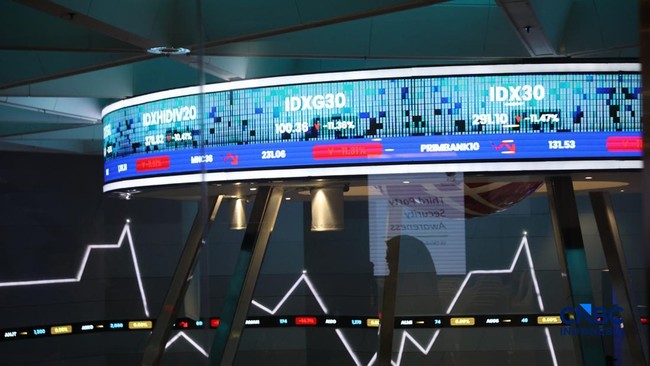
Asian stock markets opened lower on Friday (23 October 2026), as concerns about the scale of artificial intelligence (AI) spending weighed on US technology shares.
The declines followed a sharp correction in the US technology sector in the previous session, with investors scrutinising the funding required to develop AI infrastructure.
According to CNBC International, South Korea’s Kospi fell 2.42%, while Japan’s Nikkei 225 declined 0.49%. Australia’s S&P/ASX 200 slipped 0.21%.
US technology shares came under pressure after concerns about AI spending dragged the sector down by about 3% on Thursday. Nvidia plunged 4.4%, Alphabet fell 3.2%, and Advanced Micro Devices (AMD) dropped 8.1%.
Nvidia chief executive Jensen Huang said that access to capital for AI development was becoming a challenge amid substantial funding needs. He said demand for capital far exceeded the funds available, particularly in the neocloud segment, which forms part of AI infrastructure development.
Yardeni Research president Ed Yardeni said AI-related stock trading had entered bubble territory, but added that easing pressure on valuations was not necessarily a bad thing. He said a correction in AI stocks would not automatically cause problems for the economy, while pointing to the bond market as a competitor to equities for investors’ capital.
In the US bond market, the yield on 10-year Treasuries fell 18.5 basis points to 4.961% on Thursday as demand for assets considered safe increased. The 30-year yield fell 15 basis points, while the two-year yield declined 17.5 basis points.
Meanwhile, crude oil prices surged after reports emerged that the US and Israel were drawing up plans for new strikes on Iran amid a regional conflict that has continued since late February. Brent crude rose 4% to settle at US$113.17 a barrel, its highest closing level since May.
On Wall Street, the S&P 500 was on track for a weekly gain of just under 0.1%, while the Nasdaq was down 0.5%. The Dow Jones Industrial Average was set for a 1.7% gain over the same period.
On the economic calendar, market participants will be watching the final reading of the University of Michigan’s consumer sentiment index. The data will be among the indicators investors use to assess the state of US consumer confidence.
Source: jawawa.id (https://jawawa.id/newsitem/following-wall-street-asian-markets-open-lower-1792723847)
Originally published by CNBC Indonesia (https://www.cnbcindonesia.com/market/20261023085305-17-778769/mengekor-wall-street-bursa-asia-dibuka-melemah), translated from Indonesian