
Following Vietnam's Example, Employers Propose Minimum Wage Increases Every Two Years
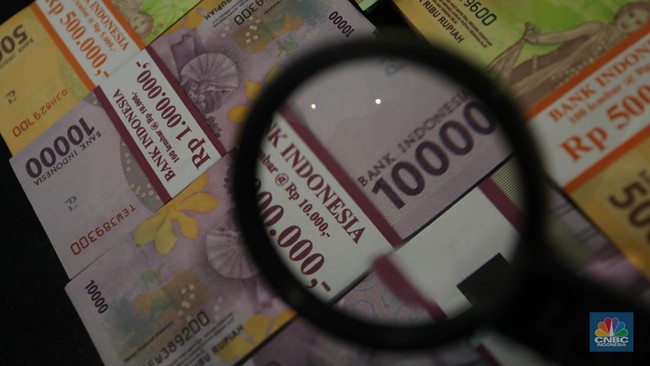
Business owners are pushing for the minimum wage determination to no longer be conducted every year. A wage adjustment scheme proposed to occur once every two years is intended to create more conducive industrial relations and prevent recurring debates regarding wage hikes at the end of every year.
The Head of Labour Affairs at the Indonesian Employers Association (Apindo), Bob Azam, stated that changing this period is expected to create better certainty for both the business world and workers. This proposal is included in the 10 points submitted by Apindo for the Labour Bill.
“Yes, so that it is more conducive if it is every two years,” Bob told CNBC Indonesia on Thursday (1/10/2026).
Similar proposals look at practices in other countries, especially those that compete with Indonesia in labour-intensive industries. The Vice Chairman of the Indonesian Footwear Association (Aprisindo), Harijanto, highlighted Vietnam’s wage-setting pattern as a point of comparison.
“The minimum wage in Vietnam increases every two years. And the increase is always below economic growth. Here, it rises every year and is always above economic growth,” said Hari/janto.
Pressure on labour costs is a critical issue for industries relying on export markets. This condition forces companies to seek efficiency to keep production costs under control.
“For example, last year the increase was 6.5 per cent, while economic growth was 5 per cent. This is due to pressure from demonstrations and trade unions, which they are more afraid of. Meanwhile, employers cannot demonstrate,” he said.
Harijanto believes this condition ultimately drives business players to take internal efficiency measures. For export-oriented industries, production cost pressures are directly linked to a company’s ability to compete in the global market.
“One weakness of employers is that we cannot demonstrate. But how will we automatically survive? By accelerating automation and reducing costs related to labour. Because in the footwear industry, the orientation is entirely export-based,” he said.
The footwear industry itself has a heavy dependence on export markets. Harijanto noted that the industry’s export value reaches approximately US$8 billion, with the majority of products being sports shoes and sneakers.
“With 8 billion dollars in exports, 99 per cent of that is sports shoes and sneakers. Therefore, our labour cost has already reached about 25-30 per cent. If it continues to rise like this, it will certainly collapse. Because productivity can only increase by a maximum of about 2 per cent each year. Furthermore, adjustments from foreign payments are at a maximum of about 2-3 per cent. Thus, our resilience will certainly be very vulnerable,” he concluded.