
Following Success in Halting Diesel Imports, Indonesia Strategises to End Petrol Imports
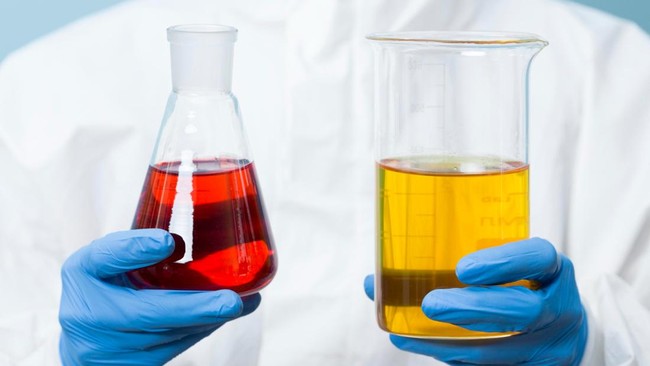
President Prabowo Subi.anto has instructed the Minister of Energy and Mineral Resources (ESDM), Bahlil Lahadalia, to formulate steps for the development of a 50% bioethanol fuel blend, known as E50. This follows the success of the B50 biodiesel programme, which has effectively halted diesel imports.
The plan was discussed during the Plenary Session of the National Energy Council (DEN) as an alternative energy solution amidst global uncertainty. Minister Bahlil Lahadalia emphasised that the target to stop petrol imports can be realised if the E50 programme is successfully implemented. He explained that the raw materials for ethanol utilise domestic commodities such as sugarcane, cassava, and maize, which can create jobs and drive regional economies.
“If we are able to achieve E50, God willing, our target is to no longer import finished petrol products. If we can do this, our energy security will no longer depend heavily on foreign sources,” Bahlil stated during an event in Jakarta.
The E50 development plan draws inspiration from the success of Brazil and several US states that have produced 100% bioethanol (E100). The study is also based on Indonesia’s achievements in developing B50 biodiesel from palm oil.
“In Brazil and parts of the US, E100 is already in use. Since the raw material for E50 is ethanol derived from sugarcane, cassava, and maize, this process can create new jobs and foster growth in regional areas,” Bahlil added.
The government is currently drafting a roadmap for the gradual implementation of bioethanol. The target is to begin E10 implementation in 2027, progressing to E20 in 2028.
“The roadmap was recently decided within the DEN. Our task now, alongside the Director General of Oil and Gas, is to design the roadmap. For example, we will implement E10 in 2027 and move to E20 in 2028,” he said.
The government emphasised that the implementation stages must align with the supply capacity of domestic industries. This is to ensure that all ethanol needs are met through domestic production without relying on imports.
“We must adjust to our industry. We do not want to implement E10, E20, or E50 only to import the ethanol from abroad; that would be the same issue. We want to utilise our domestic production,” he concluded.
Regarding fuel consumption, data from the Ministry of Energy and Mineral Resources shows that national fuel consumption remains high. Diesel consumption is recorded at approximately 39 million kilolitres (KL) per year, while petrol consumption reaches around 39-40 million KL per year. This situation is prompting the government to increase domestic oil production capacity through several strategic steps.
One prepared measure is to encourage new oil and gas exploration, particularly in basins and blocks that still hold potential. This exploration is expected to increase national oil production potential.
In addition to new exploration, the government will optimise approximately 45,000 old wells through technological intervention. The management of these wells will be strengthened professionally to optimise production and prevent illegal oil sales at production sites.
On the downstream side, the government is preparing the development of E50 by studying the success of the B50 programme. The development of E50 is aimed at strengthening fuel supply security while increasing the use of domestic energy sources.
The government’s strategy also includes strengthening the institutional framework of the oil and gas sector, including plans to form a Special Business Entity (BUK) for Oil and Gas, which will be regulated through revisions to the Oil and Gas Law. Under the government’s concept, the BUK Migas will operate under the President and be directly accountable to him.
Source: jawawa.id (https://jawawa.id/newsitem/following-success-in-halting-diesel-imports-indonesia-strategises-to-end-petrol-imports-1790160794)
Originally published by CNBC Indonesia (https://www.cnbcindonesia.com/news/20260923160636-4-770296/sukses-setop-impor-solar-ri-bersiasat-hentikan-impor-bensin), translated from Indonesian