
Following Inauguration, Said Iqbal Pushes for Abolition of Outsourcing in Labour Bill
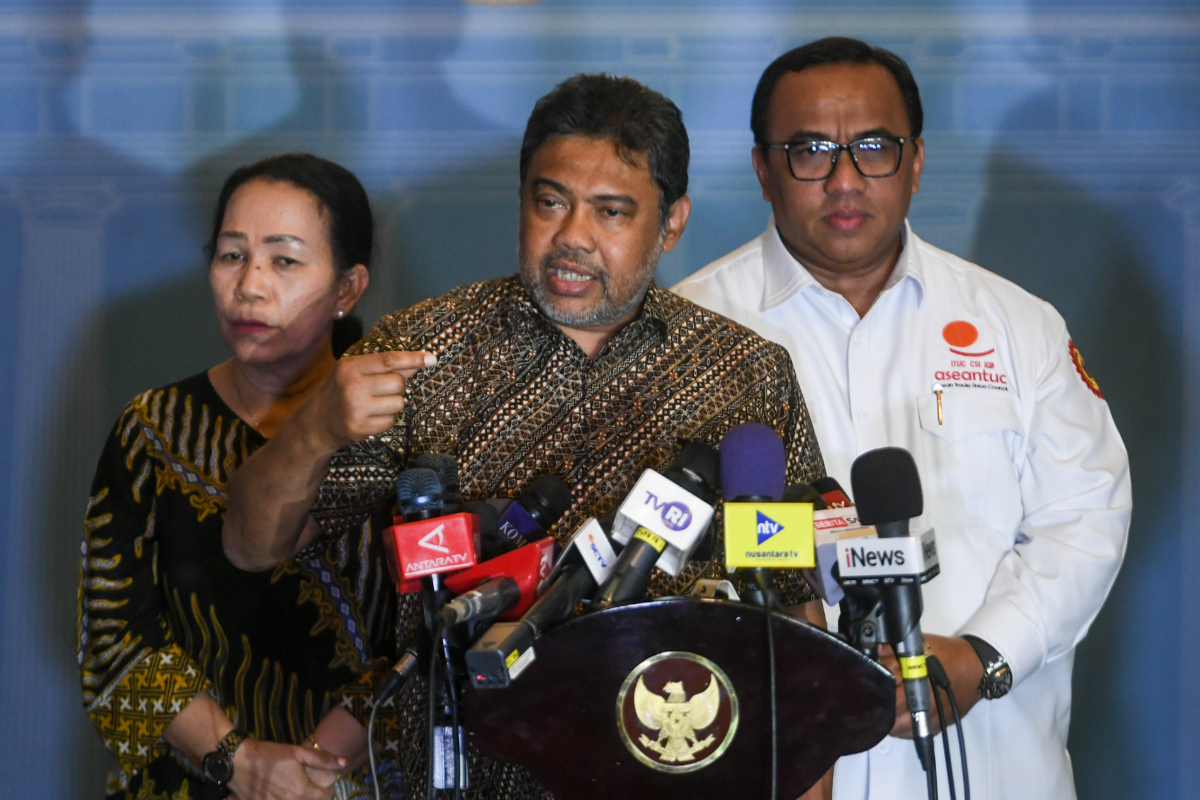
As a moral force for the nation, the Special Adviser to the President for Labour and Worker Welfare, Said Iqbal, immediately set a significant agenda following his inauguration by President Prabowo Subianto at the Merdeka Palace, Jakarta, on Monday (8/6). One of his primary focuses will be to push for strict limitations or even the total abolition of the outsourcing system within the upcoming Draft Labour Law.
According to Said Iqbal, worker welfare cannot be separated from job security, income security, and social security. Consequently, the various policy recommendations he will present to the President will focus on these three pillars.
“In the near future, there will be a draft labour law. There is an ideological struggle between the interests of capital owners and labourers in that process. We must ensure that in that draft law, outsourcing—contract labour—can be abolished if possible. If not, it must at least be strictly limited,” said Said.
He emphasised that this proposal is part of an effort to strengthen worker protection amidst the labour challenges still facing Indonesia. In his view, the economic growth targeted by the government must go hand in hand with the equitable distribution of welfare.
Said believes the Head of State’s vision is rooted in the spirit of Article 33 of the 1945 Constitution, which ensures that natural resources and national assets are utilised to the greatest extent for the prosperity of the people. Workers, he noted, are a vital part of the populace that must feel the benefits of economic development.
While the target of 8% economic growth is important, he argued it is insufficient without accompanied redistribution of wealth and equal opportunities for all members of society.
“In our simple terms: you may become wealthy, but do not impoverish us. You may have a luxury house, but labourers should at least have a type 21 or type 30 house. You may have a car, but labourers should be provided with public transport,” he stated.
In addition to fighting for equitable welfare, Said also highlighted labour conditions currently facing the challenges of deindustrialisation. Waves of layoffs are still occurring in several formal sectors, even as the government continues its efforts to attract both domestic and foreign investment.
Therefore, he plans to provide various analyses and policy inputs to support national reindustrialisation. The goal is to ensure that formal employment grows again and is capable of absorbing more workers.
“We want the formal sector, where workers can return to factories, companies, and other workplaces,” he said.
In carrying out his new duties, Said stated that his reports will focus not only on job creation but also on ensuring workers obtain a decent income. He noted that many workers remain in vulnerable economic conditions despite having jobs and fulfilling their tax obligations to the state. Therefore, the movement towards a living wage remains a key agenda.
Beyond job and income security, social security is also a primary concern. These three aspects—job security, income security, and social security—will serve as the foundation for the policy recommendations he presents to the Head of State.
Said also reminded that several labour demands presented during the last International Labour Day are beginning to receive government responses. He mentioned several implemented policies, such as the discussion of the Domestic Workers Protection Bill (PPRT) and the regulation of income distribution for online motorcycle taxi drivers, which he believes are more favourable to workers.