
Following Election Victory, AfD Pressures German Government to Halt Ukraine Aid
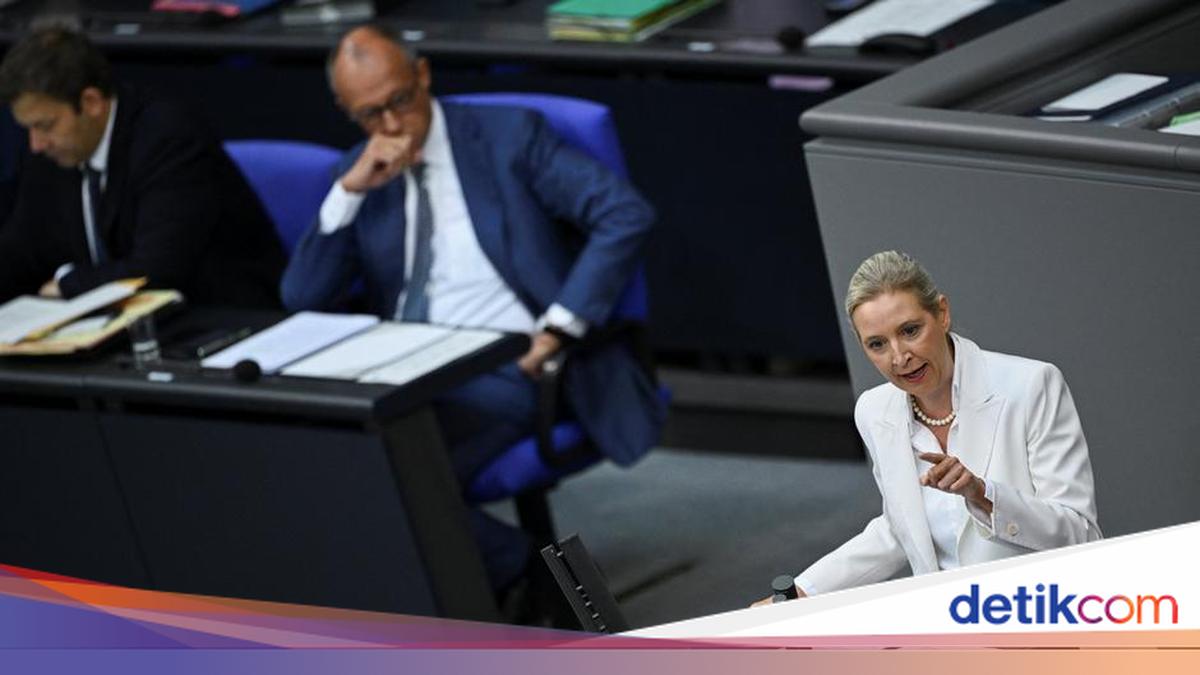
German Chancellor Friedrich Merz remains steadfast in supporting Ukraine with military aid in the war against Russia. “We support Ukraine, and we will continue to support it, because Ukraine is also defending our freedom,” the Chancellor stated on 9 September during a debate in the German Parliament, the Bundestag.
The German Chancellor’s statement was directed at the leader of the Alternative for Germany (AfD) party, Alice Weidel, who previously urged the Chancellor to “start pushing for Russia-Ukraine peace negotiations, as the US is doing.” US President Donald Trump has hinted that he would offer significant concessions to Russia to negotiate, a move that critics in Germany have described as ‘imposed peace’.
AfD leadership also addressed rising energy prices, stating, “We need cheap natural gas from Russia. That is what we will strive for.” This statement implicitly suggested the role of the Ukrainian government in the explosion of the Nord Stream gas pipeline, which connected Russia and Germany, in September 2022. “They continue to reward the alleged ‘masterminds’ behind the attacks in Kyiv with payments worth billions of dollars that become a burden on Germany.” A Ukrainian sabotage team is suspected of being behind the attack.
The extent of support for Russia was further demonstrated by AfD Member of Parliament, Jürgen Koegel, who during the debate remarked, “Our respected President Vladimir Putin does not pose a threat of war to NATO.”
Division between East and West Germany regarding Ukraine aid
AfD’s antagonism towards the war in Ukraine is not a new phenomenon. However, since winning the state parliamentary elections in Saxony-Anlam on 6 September with nearly 44% of the vote, the party has become increasingly vocal in its rejection. When combined, approximately 60% of voters in Saxony-Anhalt chose parties that oppose support for Ukraine or are sceptical of the state. These parties include the AfD, the socialist Die Linke, and the Bündnis Sahra Wagenknecht (BSW).
According to a survey, concerns regarding peace in Europe influenced voter choices. Respondents cited this topic as the second most important, following “social security,” far removed from issues of immigration or the environment and climate.
Furthermore, results from an ARD Deutschlandtrend survey conducted shortly before the election showed differing views between citizens in eastern and western Germany regarding military support for Ukraine. Approximately 3ym% of West German citizens (from the region that was West Germany before reunification) believe that German military aid to Ukraine has become excessive, while that figure reaches 54% for East Germans—those living in the region that was formerly the communist state of the German Democratic Republic (GDR).
“The policies adopted by the German federal government regarding Ukraine do not have majority support in the eastern region,” Johannes Varwick, a political scientist at Martin Luther University Halle-Wittenberg in Saxony-Anhalt, told DW. “I would not call it ‘pro-Russian’; it stems from a desire to prioritise diplomacy over continuously sending weapons to prolong a war that Ukraine cannot win,” Varwick explained.
Germany’s fear of the Russian threat
On 2 September, the German government blamed Russia for a failed drone attack at Leipzig Airport, a key hub for delivering military aid to Ukraine. Putin called it a “serious mistake,” while Russian Foreign Minister Sergei Lavrov even described the accusations as the “beginning of the real war.” This exchange of verbal attacks marks a new level of escalation in already strained relations.
According to the latest ARD Deutschlandtrend survey, the majority of Germans (56%) currently feel very or very much threatened by Russia. However, the survey also showed that East Germans and AfD voters feel less threatened by Russia. The election results in Saxony-Anhalt appear to reflect this.
Political scientist Sven Leunig from the Friedrich Schiller University Jena in Thuringia offered his own perspective on the reaction of East German citizens, particularly following the Leipzig incident: “This is not a fundamental rejection of support for Ukraine, but rather a reaction based on fear.” “They want to distance themselves from the conflict so as not to be further drawn into it. This certainly strengthens parties such as the AfD, BSW, and the Left Party, which accommodate these sentiments.”
There are also other reasons for wanting the government to scale back support for Ukraine. According to the AfD and BSW, the funds received by Ukraine should instead be used for Germany’s strained social services budget. AfD MP Gottfried Curio, for instance, accused the German government of cutting social benefits and raising taxes “to continue providing billions to foreign countries” to finance other nations’ wars, such as in Ukraine.
Support for Ukraine is slowly weakening
Chancellor Merz remains confident that he has political and public support for the steps taken. In the Bundestag debate, he responded to the AfD’s proposal to resume energy supplies from Russia and halt German support for Ukraine: “The path you describe is not supported by the majority in the German Parliament, nor is it supported by the majority of the population of the Federal Republic of Germany. We will defend this freedom, also for the future.”
However, support for Ukraine, as shown in ARD Deutschlandtrend surveys over the years, is increasingly lacking public support. The percentage of people who believe military support has become excessive continues to rise steadily, now reaching 42%.
Source: jawawa.id (https://jawawa.id/newsitem/following-election-victory-afd-pressures-german-government-to-halt-ukraine-aid-1789639641)
Originally published by detikcom (https://news.detik.com/dw/d-8667097/usai-menang-pemilu-afd-tekan-pemerintah-jerman-setop-bantuan-ukraina), translated from Indonesian