
Following Central Regulations, Sukabumi City Government Prepares to Implement WFH for Civil Servants
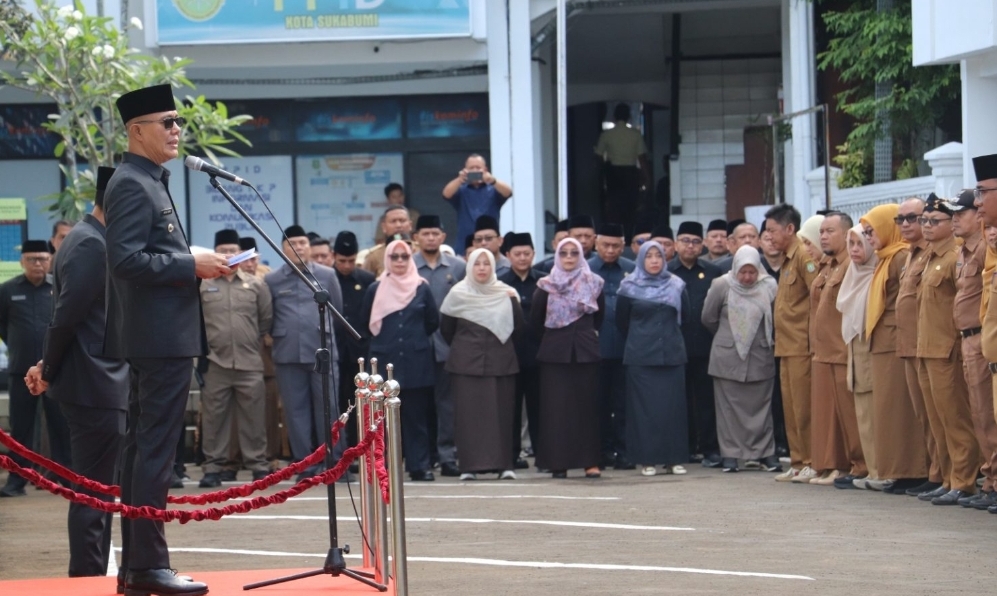
The Sukabumi City Government (Pemkot) in West Java plans to implement a work-from-home (WFH) system for civil servants (ASN). This policy follows central government regulations, stemming from geopolitical impacts in the Middle East region.
Sukabumi Mayor Ayep Zaki stated that the central government will enforce WFH for employees. In the scope of Pemkot Sukabumi, this policy must certainly be followed up.
“In line with the central government’s directives, the Sukabumi City Government is planning to implement Work From Home (WFH). One day per week will be designated for WFH. We plan to implement WFH every Friday,” said Ayep during a joint morning assembly and halal bihalal event in the courtyard of the Sukabumi City Regional Secretariat, Tuesday (31/3).
The implementation of WFH is part of efficiency measures, particularly efforts to save on fuel oil (BBM) usage due to the crisis from tensions between Iran, the United States, and Israel.
“However, WFH applies to ASN working in regional apparatus units that do not provide direct services to the public. For regional apparatus service units, WFH can be implemented on a rotational basis,” Ayep explained.
Other efficiency efforts are also being initiated by Pemkot Sukabumi, primarily implementing careful budget efficiency policies without reducing the quality of development or services to the public.
“This (budget efficiency) is very important. I have asked the regional secretary and the Inspectorate to consult with the Financial Audit Board (BPK) to carry out efficiency in the budget for goods and services procurement,” he added.
The efficiency mentioned by Ayep is more specific to cutting distribution spending. This means that every budget usage for expenditure is done directly with the provider.
“For goods and services procurement, it usually involves third parties. So, can we now procure directly from the factory? For example, for hospitals, procuring medicines or medical equipment, can we buy directly from the factory, without going through third parties? This is what we will consult with BPK or BPKP. If it does not violate regulations, this effort can streamline the budget,” he elaborated.
Thus, Ayep continued, the efficiency from goods and services spending can run alongside other efficiencies. One of them is savings from official travel.
“We want budget efficiency not only from official travel but also from goods and services procurement spending,” he concluded.