
Foldable ‘Passport’ Phones Face Off: iPhone Duo vs Samsung Galaxy Z Fold8
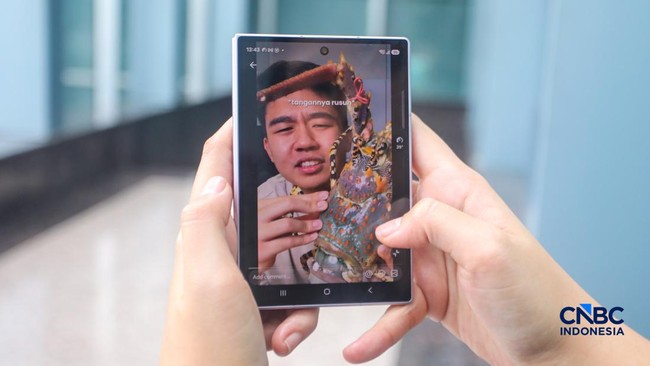
Jakarta, CNBC Indonesia — Competition in the foldable-phone market is heating up with the arrival of the iPhone Duo and Samsung Galaxy Z Fold8. Both feature a passport-style folding design, but differ in materials, screens, cameras and battery life.
The iPhone Duo is Apple’s first foldable phone, and its price in Indonesia was officially announced on Friday (23 October 2026). According to information on the official iBox website, the 256GB model starts at Rp45,678,910. The top-end version, with 2TB of storage, costs Rp75,999,000.
By comparison, when the Samsung Galaxy Z Fold8 launched in Indonesia, it was priced from Rp28.5 million for the 256GB model and Rp40.5 million for the 1TB version. The price gap reflects the two phones’ different approaches to the foldable-device market.
Here is a comparison of the iPhone Duo and Samsung Galaxy Z Fold8 in terms of materials, screens, cameras and battery.
iPhone Duo vs Samsung Galaxy Z Fold8: materials
Although they have similar designs, the iPhone Duo and Samsung Galaxy Z Fold8 use different materials. The iPhone Duo has Ceramic Shield 2 on the front and first-generation Ceramic Shield on the back. The Samsung Galaxy Z Fold8 uses Gorilla Glass Victus Ceramic 3 on its front screen and Victus 2 on the back.
Both phones are designed to withstand minor impacts. However, Ceramic Shield 2 on the iPhone Duo is claimed to be tougher, based on durability tests conducted by JerryRigEverything on the iPhone 18 Pro.
In those tests, the iPhone 18 Pro screen began to scratch at hardness level 7, while the Samsung Galaxy Z Fold8 showed scratches at level 6.
The iPhone Duo weighs 251 grams, compared with just 201 grams for the Z Fold8.
iPhone Duo vs Samsung Galaxy Z Fold8: screens
The Samsung Galaxy Z Fold8 has a 5.5-inch outer screen, slightly larger than the iPhone Duo’s 5.4-inch outer screen.
Both use high-resolution OLED panels with a 120Hz refresh rate and peak brightness of 3,000 nits. Their outer screens provide sufficient space for everyday tasks such as typing messages, browsing the internet and checking notifications.
When unfolded, the iPhone Duo and Samsung Galaxy Z Fold8 both offer a 7.6-inch foldable OLED screen with a 120Hz refresh rate. This size is suitable for watching films in landscape orientation, as well as reading articles and reviewing documents in portrait orientation.
Despite their similar screen specifications, the iPhone Duo has a new anti-reflective coating to reduce glare. Some early reviews also say the coating helps make the crease less noticeable, giving the device a more modern appearance.
Another advantage is that the iPhone Duo supports the Apple Pencil USB-C. This could appeal to users who rely on a stylus to take notes or annotate documents.
Samsung, by contrast, dropped S Pen support starting with the Galaxy Z Fold7 series.
Apple has also hidden the iPhone Duo’s inner-screen selfie camera beneath the display. This gives the screen a cleaner look, without a camera cut-out.
iPhone Duo vs Samsung Galaxy Z Fold8: cameras
For users seeking flagship-level photography, the iPhone Duo and Samsung Galaxy Z Fold8 have relatively simple camera set-ups compared with some other flagship phones.
The iPhone Duo has two rear cameras: a 48-megapixel main camera and a 48-megapixel ultra-wide camera with a 120-degree field of view.
The Samsung Galaxy Z Fold8, meanwhile, has two 50-megapixel rear cameras: a main camera and an ultra-wide camera.
According to a TechRadar review, the Galaxy Z Fold8 camera produces natural-looking, detailed images in daylight and also offers good HDR performance.
The Galaxy Z Fold8’s Portrait mode also uses Samsung’s image processing to separate the subject from the background. However, the lack of a telephoto sensor may limit the camera’s ability to take photos with optical zoom.
Users of both phones can use the outer screen as a viewfinder when taking selfies with the rear camera.
Both devices also have a dedicated selfie camera on the outer screen. The iPhone Duo uses a 12-megapixel sensor, while the Samsung Galaxy Z Fold8 is equipped with a 10-megapixel sensor.
There is also a difference in the inner-screen selfie cameras. Apple places its camera beneath the display, while Samsung has returned to a hole-punch design after previously using under-display camera technology.
Samsung made the change after concerns were raised about compromises in image quality from under-display cameras.
Source: jawawa.id (https://jawawa.id/newsitem/foldable-passport-phones-face-off-iphone-duo-vs-samsung-galaxy-z-fold8-1792756244)
Originally published by CNBC Indonesia (https://www.cnbcindonesia.com/tech/20261023163437-37-778987/adu-hp-lipat-paspor-iphone-duo-vs-samsung-galaxy-z-fold8), translated from Indonesian