
Flying in Indonesia: Two Foreign Aircraft Nearly Crashed After Encountering Volcanic Ash
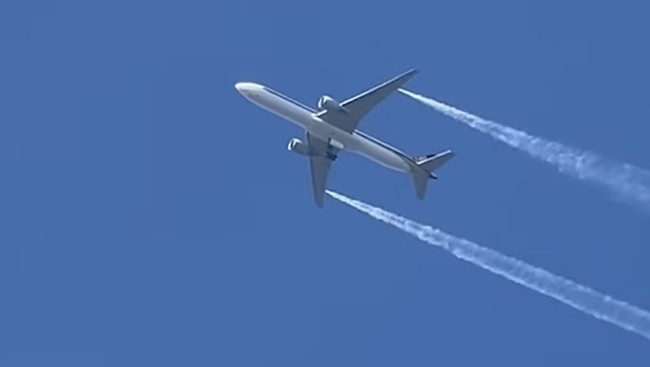
Jakarta, CNBC Indonesia — The government’s decision to close airports and bar flights affected by the eruption of Mount Krakatau since Sunday (6/8/2026) was the right step.
History records that aircraft have nearly crashed after encountering volcanic ash from an Indonesian eruption. Two foreign aircraft experienced this: a British Airways flight and a Singapore Airlines flight in 1982, when Mount Galunggung in West Java erupted.
Mount Galunggung began erupting in April 1982. Reporting by the newspaper Merdeka (8 April 1982) quoted the Minister of Mining and Energy, Subroto, as saying the eruption was caused by a blockage in the volcano’s crater measuring 8.6 million cubic metres.
The eruption blanketed the surrounding area in volcanic ash. At the time, however, the government imposed no flight ban, believing that Mount Galunggung’s activity would not intensify again in the near future.
That assessment proved wrong. Amid the ongoing volcanic activity, aircraft crossing West Java faced a danger that nearly cost the lives of their passengers.
On 24 June 1982, a British Airways flight from Perth to Kuala Lumpur inadvertently entered an area filled with volcanic ash at an altitude of 37,000 feet.
All four engines cut out and exploded, accompanied by jets of flame. The aircraft lost thrust and began to lose altitude. Captain Eric Moody, who commanded the flight, then sought to reassure passengers through a cabin announcement.
“We have a small problem. All four engines have stopped. We are trying to restart them. I hope you are not too anxious,” Moody said in his calm announcement to passengers, as quoted by The Squirrels, cited Monday (7/9/2026).
As the aircraft continued descending to 12,000 feet, Moody changed course for Halim Perdanakusuma Airport in Jakarta. Meanwhile, the crew kept trying to restart the engines, and two of them were eventually relit. The Boeing 747 finally landed safely at Halim at around 22.00 Western Indonesia Time. All 263 passengers survived.
Yet the danger from Mount Galunggung’s volcanic ash was not over. Only about three weeks later, another aircraft suffered a similar incident — this time Singapore Airlines flight SQ 21A.
On 14 July 1982, the Boeing 747 was flying from Singapore to Sydney. At 19.40 Western Indonesia Time, Mount Galunggung erupted again, spewing volcanic ash into the atmosphere.
The problem was that the crew were unaware of the ash. Such volcanic material cannot be detected by radar, so the aircraft continued on its way.
As it crossed the skies of West Java at around 35,000 feet, two of the four engines suddenly failed. Emergency alarms sounded. The aircraft shook violently and lost part of its thrust. The captain and co-pilot lowered the altitude and diverted the flight towards Halim Perdanakusuma Airport in Jakarta.
With only two engines still functioning, the aircraft pressed on towards Jakarta.
“In the end, the aircraft made an emergency landing at around 23.00 Western Indonesia Time at Halim airfield, Jakarta,” reported the Armed Forces Daily (15 July 1982).
After the two incidents, Mount Galunggung in fact continued to erupt, with no sign its activity would end soon. The newspaper Merdeka (23 August 1982) recorded that in Tasikmalaya, sand, gravel and stones fell almost daily.
Bandung and Garut also experienced ash and gravel rain. Suara Karya (26 June 1982) reported that both cities were hit by fairly intense falls of ash and gravel.
The two aviation incidents eventually pushed the government to change its policy. According to the Armed Forces Daily (21 July 1982), the government asked airlines to reroute flights to avoid Mount Galunggung.
The policy was issued about a week after the Singapore Airlines incident, aimed at preventing a repeat of aircraft nearly crashing due to volcanic ash.
The flight ban remained in force until Mount Galunggung’s activity subsided. The volcano was recorded as dormant again on 8 January 1983, after which aircraft were once more permitted to cross the airspace of West Java.
Source: jawawa.id (https://jawawa.id/newsitem/flying-in-indonesia-two-foreign-aircraft-nearly-crashed-after-encountering-volcanic-ash-1788762139)
Originally published by CNBC Indonesia (https://www.cnbcindonesia.com/entrepreneur/20260907094931-25-765660/terbang-di-ri-2-pesawat-asing-nyaris-jatuh-gegara-kena-abu-vulkanik), translated from Indonesian