
Fly the Red and White first, the Rp3 billion can wait
A bonus of Rp3 billion will only truly matter once a medal has been secured. Before that moment arrives, athletes need only focus on one thing: competing to the best of their ability for the Red and White.
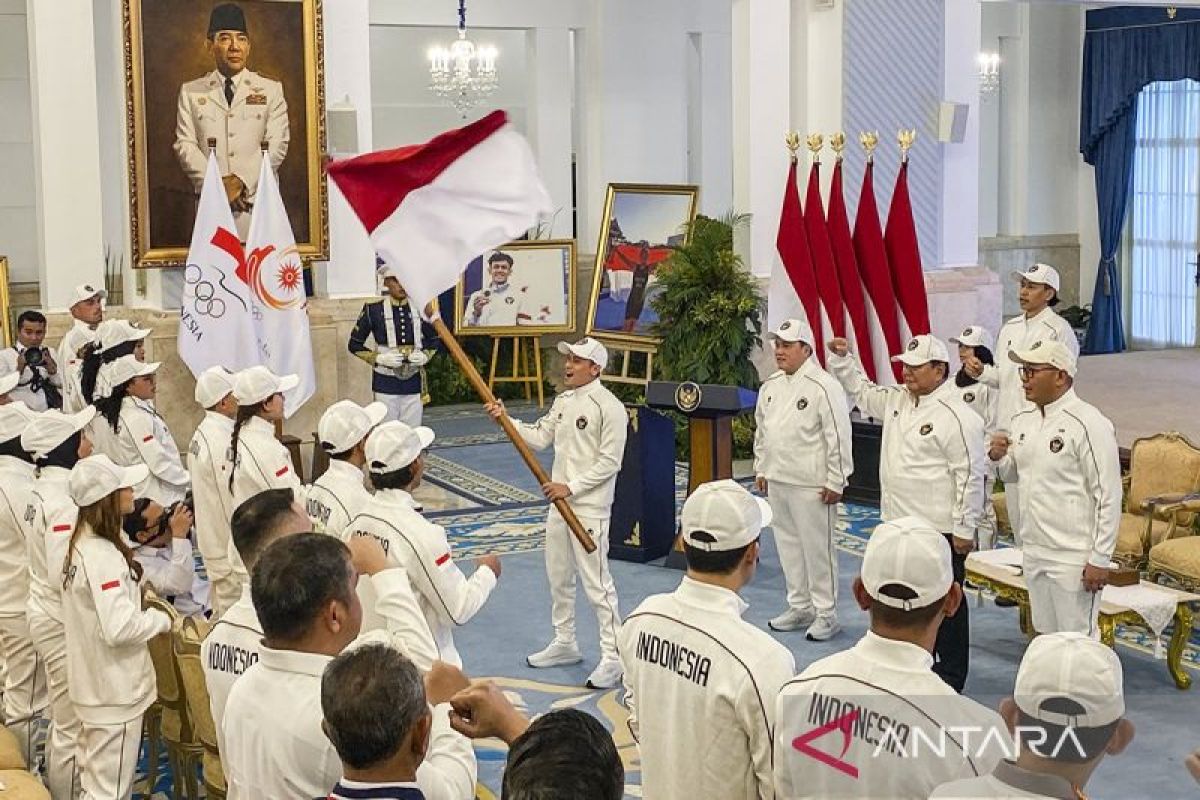
Jakarta (ANTARA) - There is one figure that will perhaps be easiest for Indonesian athletes to remember after President Prabowo Subianto sent off the Indonesian Contingent to the Aichi-Nagoya 2026 Asian Games at the State Palace, Jakarta, on Wednesday (9/9): Rp3 billion.
This is the value of the bonus promised by the government to every athlete who successfully brings home a gold medal from this year’s Asian Games.
In front of hundreds of athletes departing for Japan, the President mentioned this figure while simultaneously comparing it to the SEA Games gold bonus, which is set at Rp1 billion.
This comparison makes the discussion about bonuses more than just about the nominal amount. There is a message regarding how the state positions these two competitions within the hierarchy of sporting events in which Indonesia participates. The Asian Games bring together sporting powers from across all of Asia, whereas the SEA Games are limited to the scope of Southeast Asia.
Twelve years ago, when Indonesia competed in the Incheon 2014 Asian Games, an individual gold medallist received a bonus of Rp400 million. That figure might have seemed large at the time, but compared to the rewards prepared for the Aichi-Nagoya Asian Games, the value now looks vastly different.
Four years later, the bonus increased sharply. When Indonesia hosted the 2018 Asian Games in Jakarta and Palembang, the government provided Rp1.5 billion to individual gold medallists. For doubles events, the bonus was Rp1 billion, while team gold medallists received Rp750 million per athlete. The tax on these bonuses was also covered by the state.
Subsequently, at the Hangzhou 2022 Asian Games, the individual gold bonus rose again, this time to Rp1.575 billion. And now, the figure has reached Rp3 billion.
Behind these figures lies a shift in how the state rewards athletes. Medals brought home are no longer merely a source of pride during welcoming ceremonies; there is a material value that continues to be increased alongside them.
However, there is another part of President Prabowo’s message that might not be as prominent in the headlines as the Rp3 billion figure, but instead touches the lives of athletes after the competition ends. Silver and bronze medallists will also receive attention. The same applies to coaches. For athletes and coaches who are members of the TNI (National Armed Forces) or Polri (National Police), this attention includes accelerated career progression and promotions.