
Flush with AI Cash, Toilet Maker Toto Bets Big on Semiconductor Business
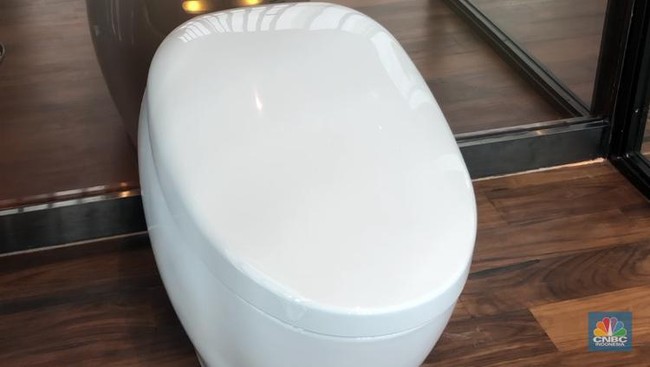
The movement within the artificial intelligence (AI) chip industry is becoming increasingly massive. Even the Japanese bathroom fixture manufacturer, Toto, is pouring funds into this sector.
Toto plans to invest 80 billion yen, or approximately Rp 8.8 trillion, over the next five years to expand its semiconductor materials business. This move is intended to support the development of next-generation chip manufacturing technology with circuit sizes in the 1 nanometre (nm) range.
Although primarily known as a manufacturer of ceramic sanitary products, Toto is now positioning its semiconductor-related business as the company’s main profit engine. The surge in demand for AI chips is driving the growth of this business and is helping to transform the Japanese manufacturing landscape, which has faced structural transformation challenges for years.
Toto is currently concentrating its research and development activities at its facility in Kanagawa Prefecture. This facility focuses on supporting the production of logic semiconductors with a target circuit width in the 1 nm range, which is considered several generations more advanced than currently available technology.
In general, logic semiconductors will possess higher processing capabilities as circuit path sizes decrease. Currently, the world’s largest contract chip manufacturer, Taiwan Semiconductor Manufacturing Company, is mass-producing the most advanced logic chips using 2 nm technology.
To increase production capacity, Toto will install the latest equipment at its factories in Oita and Fukuoka Prefectures, located on Kyushu Island in southwestern Japan. Both facilities are currently operating at full capacity.
Furthermore, the construction of a new furnace building at the Fukuoka facility is scheduled for completion next January. If market demand remains unmet following this expansion, Toto stated it would consider building a new factory.
The company targets a total investment of approximately 80 billion yen until the fiscal year ending in March 2030. Of this amount, Toto has decided on an investment of 39 billion yen, while the remainder will be realised according to market conditions, as reported by Nikkei Asia via CNBC Indonesia.
Toto entered the semiconductor materials business in the 1980s by leveraging ceramic firing technology previously developed for sanitary products. One of its key products is the electrostatic chuck, a device used to hold semiconductor wafers during the production process.
This product is known for its high durability due to the use of high-purity ceramics. Additionally, Toto possesses an advantage in materials produced using the aerosol deposition method, a coating technique that sprays extremely fine ceramic particles directly onto the material surface.
Toto’s semiconductor business recorded losses for several years. However, demand has surged since around 2020 alongside the rapid development of the AI chip industry, transforming this business into a primary source of profit that has overtaken the core sanitaryware business.
In the fiscal year ending last March, Toto’s New Domain Business division, which oversees the semiconductor materials business, recorded a 34% increase in sales to 67.4 billion yen. Meanwhile, operating profit surged by 42% to 28.9 billion yen.
Although its sales contribution accounts for only about 10% of the company’s total revenue, the profits generated by this division have surpassed the housing equipment business, including ceramic sanitary products. In fact, the unit now contributes more than half of Toto’s total profits.
Source: jawawa.id (https://jawawa.id/newsitem/flush-with-ai-cash-toilet-maker-toto-bets-big-on-semiconductor-business-1782273096)
Originally published by CNBC Indonesia (https://www.cnbcindonesia.com/tech/20260624094544-37-745262/terigur-duit-ai-pabrik-toilet-sekarang-mau-bisnis-chip), translated from Indonesian