
Floods in Padang Recede as Residents Begin Cleanup
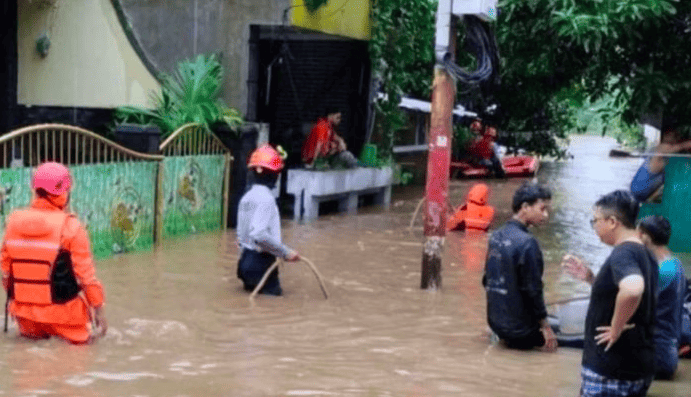
The National Disaster Management Agency (BNPB) has reported that flooding in the city of Padang, West Sumatra, is gradually receding. As of the latest update on Tuesday at 2:30 PM WIB, water levels across several affected areas have continued to drop. As the floodwaters subside, residents have begun returning to their homes to clean their affected living spaces and surrounding environments.
The flooding was triggered by high-intensity rainfall that fell on Padang on Monday from 11:00 AM to 5:00 PM WIB. The heavy rain caused several rivers to overflow, inundating residential areas with water levels reaching up to 150 centimetres in some locations. Affected sub-districts include Kuranji, Koto Tangah, Bungus Teluk Kabung, Lubuk Begalung, and Nanggalo. Several villages were also flooded, including Gunung Sarik, Pasar Lalang, Rimbo Tarok, Kuranji, Sungai Sapih, Aia Pacah, Koto Panjang Ikua Koto, Bungus Selatan, Teluk Kabung Utara, Pagambiran Ampalu Nan XX, and Surau Gadang.
Officials are still collecting data on the impact of the floods, including the number of victims and material losses. For emergency response, the Padang City Regional Disaster Management Agency (BPBD), together with the West Sumatra Province BPBD’s Rapid Response Team and supported by relevant regional apparatus organisations, has evacuated affected residents and conducted rapid assessments. The operation also involved the National Search and Rescue Agency (Basarnas), the Indonesian National Armed Forces (TNI), the National Police (Polri), sub-district and village governments, and the local community.
Meanwhile, the West Sumatra Provincial Government has maintained a Disaster Emergency Transition to Recovery Status for floods, flash floods, landslides, and strong winds, based on a Gubernatorial Decree that remains in effect until 18 September 2026. This status serves as the legal basis for implementing emergency response measures and accelerating recovery in the affected areas. The BNPB has urged the public to remain alert to the potential for further extreme weather, to follow official information from the Meteorology, Climatology and Geophysics Agency (BMKG) and local government, to avoid flood-prone areas during heavy rain, and to immediately report any emergency conditions to authorities.