
Floods expose fragility of Nepal’s bid to reduce trade dependence on India through China
analysis Asia
Floods expose fragility of Nepal’s bid to reduce trade dependence on India through China
Deadly floods have destroyed Nepal’s main overland trade route with China, highlighting the challenge Kathmandu faces as it tries to reduce its heavy economic dependence on India.
KATHMANDU/BEIJING: More than six decades ago, Nepal’s King Mahendra defied concerns about opening his Himalayan kingdom to communist China and backed the construction of a highway from Kathmandu to the Tibetan frontier.
It was both a road and a statement of intent: landlocked Nepal, overwhelmingly dependent on India for access to the outside world, wanted another way north.
Amid fears that the highway could become a conduit for Chinese influence, Mahendra famously said that “communism does not travel by taxi”.
Since then, Nepal has sought greater connectivity with China partly as an economic counterweight to its overwhelming dependence on India, the country’s largest trading partner and the source of about 60 per cent of all its imported goods.
The latest deadly floods, which wiped out Nepal’s principal trading route with China, have exposed the physical vulnerabilities of that strategy just as trade, investment and geopolitical importance have grown with its northern neighbour, experts told CNA.
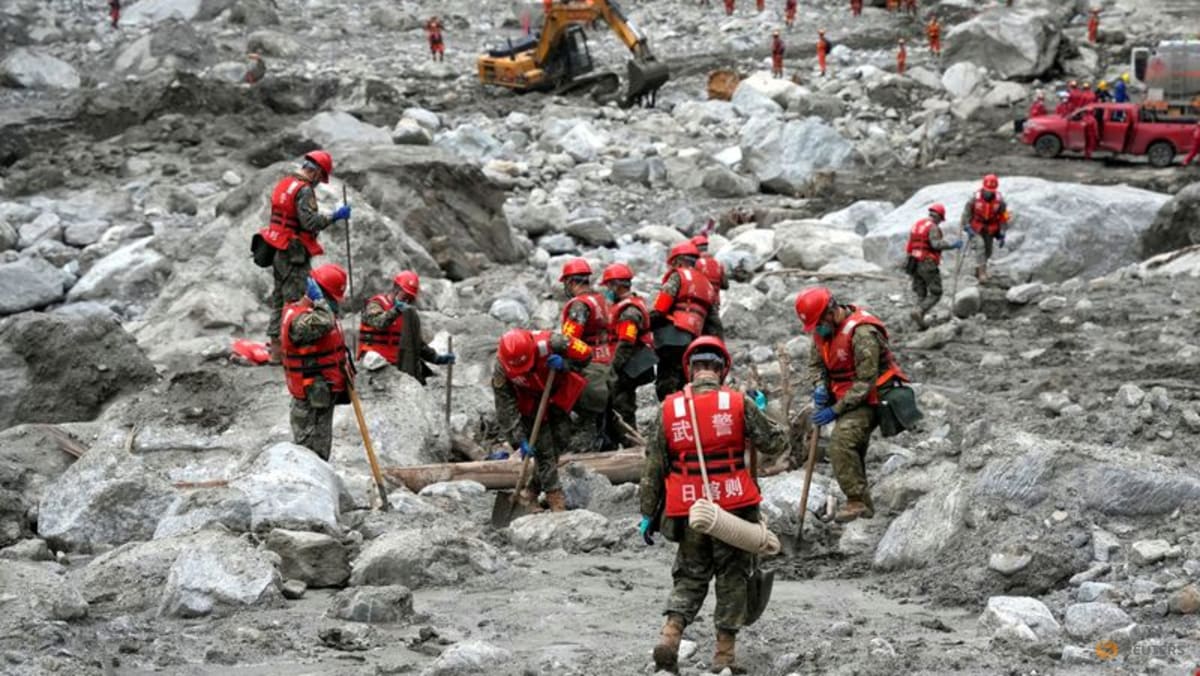
On Aug 26, the collapse of part of a glacier and underlying bedrock triggered a devastating flood through the Bhote Koshi-Trishuli river system in north-central Nepal.
The death toll from the flood stands at 1,357 as of Sep 9, with more than 5,300 people still missing. It also destroyed critical infrastructure along a trade corridor used heavily for Chinese garments, footwear, consumer electronics and, increasingly, electric vehicles (EVs).
At least 55km of road needs to be rebuilt, while more than 100 bridges were damaged or destroyed in Nepal, according to the country’s disaster authority.
Critically among the ruined infrastructure was the Rasuwagadhi-Gyirong border crossing with Tibet, which handles close to 11 per cent of Nepal’s imports from China and nearly half of its relatively small exports in the other direction.
“Because of the disaster, we are in an unimaginable situation right now. We lost all the trucks that were in the process of bringing goods from across the border,” said Bhagwan Thapa, an importer for Musa Logistics, a company that specialises in cross-border trade with China.
“All the goods that had arrived for the festival season have been carried away. Half of the cargo vehicles are no more,” he told CNA.
“VERY CHALLENGING” GEOGRAPHY
For decades, that original highway commissioned by King Mahendra, running northeast from Kathmandu to the border at Tatopani, provided Nepal’s main overland trade connection with China.
A second route, running north from Kathmandu through Rasuwa district to the Rasuwagadhi-Gyirong crossing, opened shortly before Nepal’s devastating 2015 earthquake.
When the quake badly damaged the old Tatopani route, trade shifted west to Rasuwagadhi. The newer crossing eventually became Nepal’s most important overland trade route with China.
Its rise came despite a precarious approach on the Nepalese side, where sections of road cling to steep mountainsides above the river, leaving the corridor highly exposed to floods and landslides. The route was also closed for several months last year after flooding caused extensive damage.
“The geography is very challenging, and in hindsight, one can always argue that we should not have built a road there,” said Paras Kharel, executive director of South Asia Watch on Trade, Economics and Environment, a Kathmandu-based NGO, referring to the route to Rasuwagadhi.
The destruction leaves Nepal with few alternatives. It could take years for operations to return to normal at Rasuwagadhi, experts said, given the likely ongoing damage risks in the area.
Tatopani, which is also reached through a steep, wet and geologically unstable gorge, has been closed to cross-border trade by China since Aug 29 because of landslide risks on the Nepali side.
That leaves the high-altitude crossing at Korala in Mustang as Nepal’s only operational land trade gateway with China. Cargo is being rerouted there, but the corridor remains underdeveloped and its extreme altitude of about 4,650m leaves it vulnerable to cold, heavy snow and seasonal disruption.
“Korala is over 400 km away with harsh geography and high altitude issues. It can operate for a month at most. However, it’s a necessity right now for 2,000 to 3,000 containers en route for the festive season,” said Ram Hari Karki, president of the Nepal Trans Himalaya Border Commerce Association.
Nepal cannot escape the constraints of geography, or the growing threat posed by landslides, floods and other disasters - which scientists say are more likely to occur due to climate change - to its connectivity with China, Kharel told CNA.
“I wouldn’t say that our strategy has failed. It’s just that we need more diversified routes, and when developing alternatives, the geological conditions and how prone they are to landslides must also be taken into account,” he said.
Chinese analysts acknowledged that geography and growing disaster risks posed a persistent challenge to Nepal’s northward connectivity, but pushed back against the idea that they imposed a hard limit on deeper economic ties with China.
Poor terrain and frequent natural disasters were “unavoidable practical challenges” for China-Nepal trade routes, said Huang Yunsong, professor and deputy dean of the School of International Studies at Sichuan University.
But some disruptions could be mitigated through engineering, while others reflected geological vulnerabilities that could never be eliminated entirely, he said.
“That does not mean these routes are unviable,” Huang told CNA.
Rather than trying to keep every route permanently open, he said the priority should be to build a more resilient network, with stronger disaster protection, alternative crossings and joint Chin
Source: jawawa.id (https://jawawa.id/newsitem/floods-expose-fragility-of-nepals-bid-to-reduce-trade-dependence-on-india-through-china-1789019568)
Originally published by CNA (https://www.channelnewsasia.com/asia/nepal-china-flood-disaster-trade-routes-6374776)