
Floods and Landslides Keep Aceh Food Prices Volatile
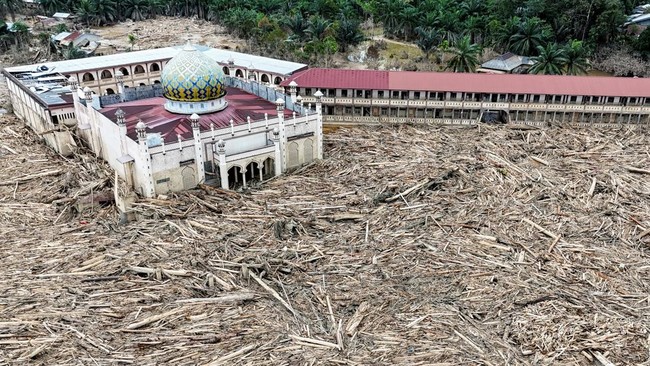
Sabang, CNBC Indonesia — Bank Indonesia (BI) says floods and landslides in late 2025 are still contributing to price rises for several commodities that have driven high inflation in Aceh. Rising chilli prices and prepared food, particularly rice with side dishes, continue to put pressure on inflation in the province.
Data for October 2026 show Aceh’s year-on-year (yoy) inflation at 5.05%. This made Aceh the province with the highest inflation on Sumatra, although it was no longer the highest nationally.
Aceh’s month-on-month (mtm) inflation was 0.13%.
The natural disasters damaged distribution routes and areas of production. Agus said this presented a challenge to keeping inflation within its target.
Agus Chusaini, head of BI’s Aceh representative office, added that the necessary repairs were under way to speed up recovery.
“Repairs have been carried out, including to roads and bridges. However, not all the bridges are permanent yet; some are still temporary and have lower capacity. Some roads are also not yet back to how they were before the disaster, and this affects distribution,” Agus said at a BI focus group discussion with media in Sabang, Aceh, as quoted on Saturday (7 November 2026).
Rising prices for several food commodities remain the main challenge to controlling inflation in the region.
Agus said rice with side dishes was among the commodities that consistently contributed to inflation. The problem is that once the price of this prepared food rises, it tends to be difficult to bring it back down.
“The usual causes are chillies and rice with side dishes. Whether month on month or year on year, rice with side dishes is always a source of inflation because of the way its price behaves. As I tell my colleagues, once it goes up, it forgets how to come down,” he said.
Chillies are another focus for BI. Aceh is one of the country’s chilli-producing regions, but this does not always guarantee stable market prices.
Agus explained that when chilli production and supply are plentiful, consumer prices tend to be low. But when availability falls, prices can rise sharply and trigger inflation volatility.
“That is what causes inflation here. We produce chillies, but when they are unavailable, inflation here is high. When there are chillies, prices here are very low; when prices rise, inflation becomes volatile,” he said.
BI steps up regional inflation controls
To anticipate price pressures, BI and the Regional Inflation Control Team (TPID) are strengthening coordination to maintain stable prices for essential goods.
The TPID’s responsibilities include gathering data on price and supply developments, preparing policy recommendations and carrying out various interventions to address regional inflation.
One of the measures is the Food Prosperity and Inflation Control Movement (GPIPS).
The programme has seven main strategies. The first is to raise agricultural productivity by applying Good Agricultural Practices (GAP).
The second is to strengthen post-harvest management through downstream processing and build the capacity of farmers’ institutions and region-owned enterprises (BUMD). The third is to reinforce the role of off-takers—parties that purchase farmers’ output.
The programme also includes optimising inter-regional cooperation (KAD), strengthening food distribution facilitation (FDP), holding market operations and low-cost markets, and improving the food balance through digitalisation and the integration of data across institutions.
Coordination and communication among stakeholders are also important parts of the programme.
Aceh’s economy begins to recover after disaster
Despite inflationary pressures, BI says Aceh’s economy is performing relatively well.
Agus expects economic growth in the third quarter of 2026 to slow compared with the previous period, although the decline is not expected to be severe.
Aceh’s economy grew by 4.86% in the second quarter of 2026, up from 4.09% in the first quarter.
Growth was mainly supported by trade, construction and agriculture. Agriculture contributed 1.05 percentage points to Aceh’s economic growth.
BI says Aceh’s economic recovery is taking shape after the region was hit by disasters in late 2025.
“Overall, Aceh’s economic growth, despite the disaster at the end of the year, is now close to where it was before the disaster. Aceh usually grows at a rate just below 5%—not quite 5%, but close to it,” Agus concluded.
Source: jawawa.id (https://jawawa.id/newsitem/floods-and-landslides-keep-aceh-food-prices-volatile-1794045040)
Originally published by CNBC Indonesia (https://www.cnbcindonesia.com/research/20261107133102-128-783180/bencana-banjir-longsor-menghantui-harga-pangan-di-aceh-bergejolak), translated from Indonesian