
Flooding in Aceh and North Sumatra: BNPB Urges Residents to Prepare for Heavy Rain
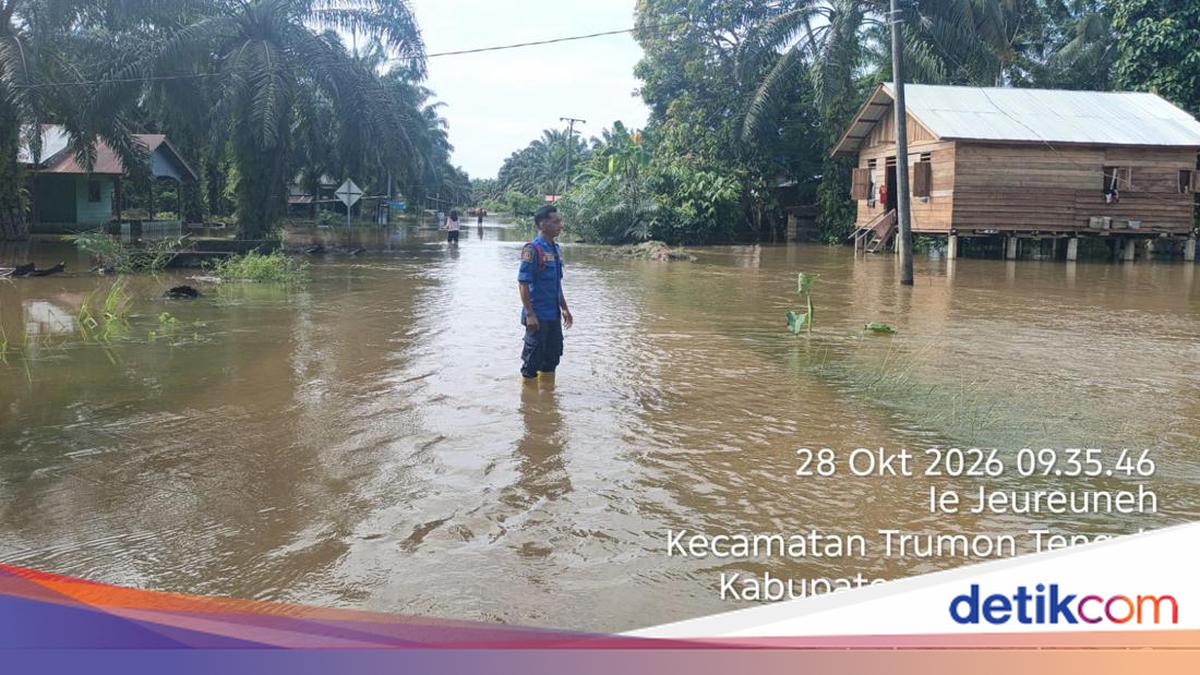
The National Disaster Management Agency (BNPB) has urged the public to strengthen preparedness for floods, strong winds and landslides as the rainy season begins. The agency reported an increase in wet hydrometeorological disasters in various parts of Indonesia through the end of October 2026.
According to data from BNPB’s Disaster Data, Information and Communication Centre as of Friday (30 October 2026), the total number of disasters recorded in Indonesia had risen to 2,247. The increase was dominated by hydrometeorological disasters, including six additional flood incidents in North Sumatra and Aceh, and two extreme-weather incidents in South Kalimantan and East Java.
“The most significant impact from flooding was in Deli Serdang regency, where 7,615 households were affected and 7,327 homes inundated, as well as Medan, where 2,405 households were affected in North Sumatra,” Berton SP Panjaitan, acting head of BNPB’s Disaster Data, Information and Communication Centre, said in a statement on Friday (30 October).
The threat of extreme weather, including heavy to very heavy rain, remains in Aceh, which is currently on alert. Most areas of Sumatra, Java, Kalimantan, Sulawesi and Papua are also under an advisory because of the indirect effects of Tropical Cyclone Seed 91B in the Andaman Sea.
“To anticipate hydrometeorological hazards such as floods, strong winds or whirlwinds, and landslides, BNPB urges residents to take early preparedness measures,” Berton said.
To prepare for flooding, residents have been advised to work together to clear drains and inspect river courses under the supervision of regional disaster management agencies (BPBD). They have also been asked to identify safe evacuation routes, check dam infrastructure and prepare an emergency bag containing at least three days’ worth of essential supplies.
To guard against whirlwinds and strong winds, residents have been asked to reinforce roof structures and prune dense tree branches around homes and public spaces. During strong winds, they should avoid sheltering near objects at risk of collapsing, such as billboards, advertising hoardings or large trees.
Residents in landslide-prone areas and hilly regions should evacuate independently without delay if prolonged heavy rain falls upstream. They have also been urged to recognise early warning signs, such as cracks appearing in the ground or house floors, and to keep monitoring official weather information.
BNPB has also issued guidance on preparedness and early warning measures for potential coastal or tidal flooding, through the Director of Early Warning’s Letter No. B-79/BNPB/PDin/BP.03.02/10/2026, dated 22 October 2026. The threat is driven by the full moon on 26 October 2026, the perigee on 29 October 2026 and oceanographic conditions.
Berton said the coastal areas at risk include those in North Sumatra, West Sumatra, Lampung, Banten, Jakarta, West Java, Central Java, East Java, Bali, North Kalimantan, Central Kalimantan, West Kalimantan, South Kalimantan, North Sulawesi and Maluku.
“For the specific threat of coastal flooding (tidal flooding), BNPB has asked BPBD and coastal communities to limit beach activities during maximum high tide, postpone fishing when dangerous high waves are forecast, and secure boats and residents’ property,” he added.
Local governments have also been asked to strengthen monitoring in coordination with the Meteorology, Climatology and Geophysics Agency (BMKG), check the readiness of evacuation centres, clear coastal drainage channels, secure sea walls, and prepare evacuation personnel and supplies. BNPB stressed the importance of stronger coordination to minimise the risks and adverse impacts of disasters that could occur at any time.