
Flocks of Birds Could Help Predict Pass Rates in Electrical Certification Tests
JAKARTA — Determining whether an electrical technician is truly competent is no trivial matter. In the electricity sector, even a minor mistake when installing wiring or safety equipment can have fatal consequences. Certification tests are therefore intended to ensure that every installer has precise skills and meets strict safety standards.
However, processing and analysing large volumes of practical examination data — from the neatness of switch installations to the accuracy of safety components — requires exceptional care. This challenge prompted researchers to explore how artificial intelligence (AI) could help identify patterns in assessment data.
The innovation stems from collaborative research by three lecturers from three different universities, led by Andi Saryoko of Universitas Nusa Mandiri (UNM), known as the Digital Business Campus, and his team. The researchers developed an AI-based system to predict pass rates in electrical certification tests by combining two advanced computational methods. The findings were published in the September 2026 edition of JIPI (Jurnal Ilmiah Penelitian dan Pembelajaran Informatika), Volume 11, Issue 3, under the title “Application of Particle Swarm Optimisation to Improve Electrical Certification Pass-Prediction Accuracy Using a Neural Network Algorithm”.
Pairing an artificial brain with the strategy of a flock
To build a reliable prediction system, the researchers combined two AI technologies: a neural network (NN) and Particle Swarm Optimisation (PSO). A neural network is a computing technology designed to mimic the human brain. It identifies basic patterns and learns the relationship between candidates’ technical performance during an examination and their final pass or fail result.
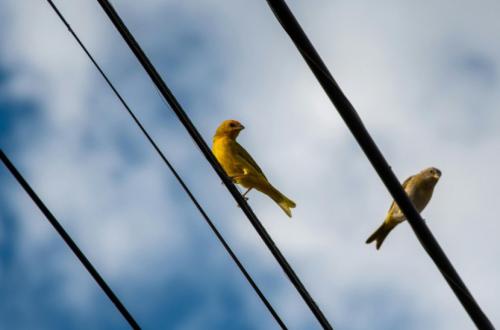
PSO, meanwhile, is inspired by the behaviour of flocks of birds searching for food. Each bird moves not only on the basis of its own experience, but also by using the best information gathered by the group to find the most suitable location. Computers apply this principle of “swarm intelligence” to identify the most appropriate combination of assessment variables, making predictions more accurate.
Testing data from 200 electrical technicians
The experiment used data from 200 candidates who took competency examinations administered by PT Sertifikasi Instalasi Prima in Jakarta. The records included technical assessment details such as the positioning of light points, socket outlets and switches; cable quality and installation methods; and the installation of miniature circuit-breakers (MCBs), as well as candidates’ sex.
The data was processed using RapidMiner software to compare two scenarios: a standard neural network without optimisation, and a neural network combined with the PSO flocking strategy.
Accuracy rises to 83 per cent
Laboratory testing showed a significant improvement in performance:
• Neural network without optimisation: 76.50 per cent accuracy and an Area Under the Curve (AUC) score of 0.783.
• Neural network plus Particle Swarm Optimisation (PSO): accuracy rose to 83 per cent, with an AUC score of 0.796.
This represents an increase of 6.5 percentage points in accuracy and a 0.013-point rise in the AUC score.
PSO also helped simplify the analysis. The computer reduced the number of variables from seven assessment criteria to the four attributes with the greatest influence. This suggests that robust predictions do not require every available data point; a system can instead focus on the most relevant key information.
Looking ahead to smarter certification
Although the 83 per cent accuracy was achieved under experimental conditions and is not intended to replace human assessors, the findings could pave the way for digitalisation in certification bodies.
In future, vocational schools or training institutions could use the AI system to monitor candidates’ readiness before the actual examination. If the analysis identifies a weakness in a particular area — such as the neatness of cable installation — instructors could provide more targeted support from an early stage.
The research team also flagged an ethical consideration: variables such as sex should be reviewed regularly to ensure that AI systems remain fair and transparent, and free from bias.
The UNM research demonstrates that AI innovation does not always require developing a new algorithm from scratch. By intelligently combining existing methods, it is possible to build a more accurate and measurable assessment system that can help prepare highly qualified workers to meet professional standards.
Source: jawawa.id (https://jawawa.id/newsitem/flocks-of-birds-could-help-predict-pass-rates-in-electrical-certification-tests-1794469966)
Originally published by Republika (https://news.republika.co.id/berita/todl52490/kawanan-burung-bisa-bantu-prediksi-kelulusan-uji-sertifikasi-listrik), translated from Indonesian