
Flaws in the Legal System's Response to Crime Causing Overcapacity in Prisons
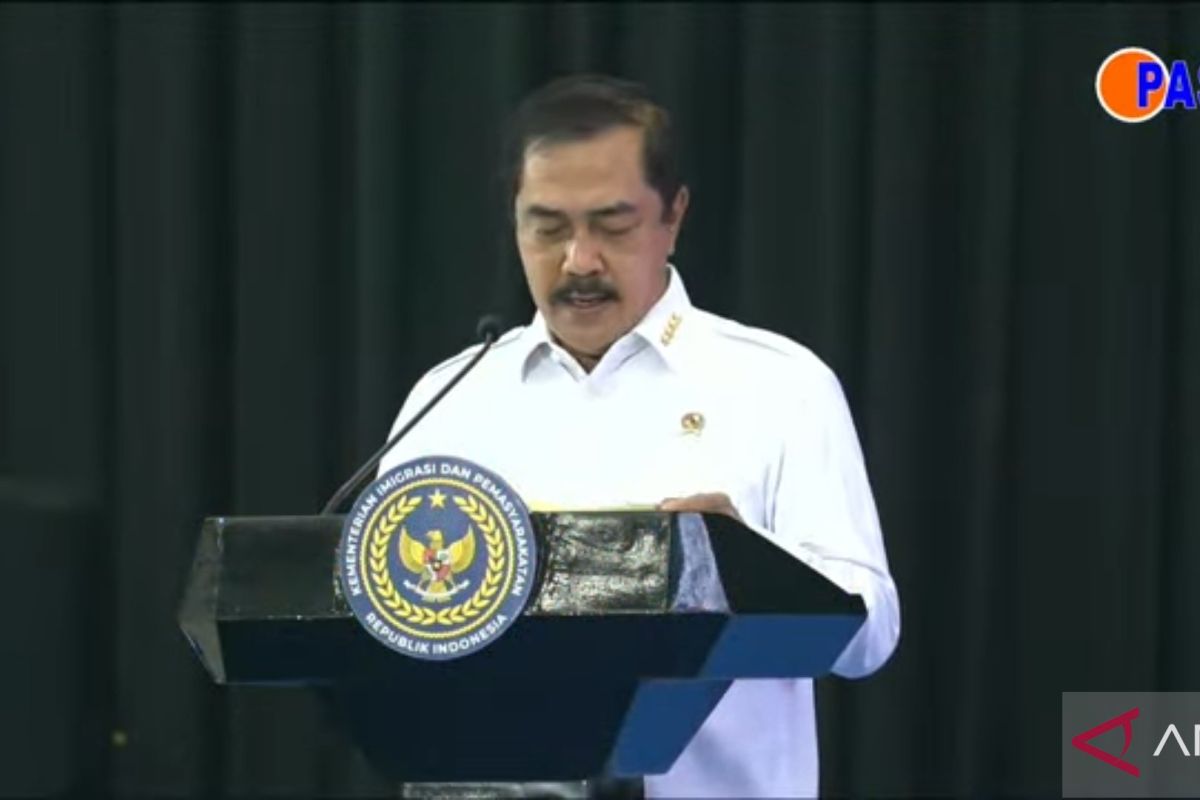
Minister of Immigration and Corrections (Imipas) Agus Andrianto has revealed that one of the causes of overcapacity in correctional institutions (lapas) and state detention centres (rutan) is flaws in the legal system’s response to crime.
He stated that correctional institutions and detention centres across Indonesia are currently experiencing an overcapacity of 85 per cent.
“This is no longer just a crisis of overcapacity; it is clear evidence that something is wrong with the legal system’s response to crime,” said Agus at the National Seminar on Corrections titled “Transformation of the Correctional System in the Implementation of the New Criminal Code and Code of Criminal Procedure,” which was held in a hybrid format at the Auditorium of the Indonesian Immigration and Corrections Polytechnic, Tangerang, on Wednesday.
Of the 271,602 prison inmates, he said, 53 per cent or 146,376 individuals are convicted of narcotics offences. In addition, there has been an increase in the number of recidivists re-entering the system.
“This indicates the ineffectiveness of the sentencing process that has been in place so far,” Agus remarked.
The former Deputy Chief of Police explained that this situation persists while Indonesia’s criminal justice system still relies on the colonial-era Criminal Code.
For decades, he continued, Indonesia’s legal system has been trapped in a retributive approach (a model of justice focused on retribution for crimes by imposing proportionate punishment on offenders).
“It cannot be denied that this approach is one of the causes of overcapacity in prisons and detention centres in Indonesia, as well as the social stigma attached to former inmates,” he stated.
The three-star police general described the new Criminal Code and Code of Criminal Procedure not merely as regulatory updates but as a paradigm revolution.
Through the National Seminar on Corrections titled “Transformation of the Correctional System in the Implementation of the New Criminal Code and Code of Criminal Procedure,” Agus hopes for a shared understanding among law enforcement apparatus—namely the police, prosecutors, and courts—in implementing the new criminal law.
“Through this forum, let us ensure that Indonesia’s criminal law going forward is not only firm but also wise, not only about incarceration but also about restoration,” said Agus.
The National Seminar on Corrections was held in a hybrid format, attended by 200 participants both in person and online, comprising officials from the Directorate General of Corrections, Immigration, police, prosecutors, courts, and academics.
Speakers included Deputy Minister of Law and Human Rights Edward Omar Sharif Hiariej, Japidum Asep Mulyana, Director General of Corrections Mashudi, Head of the Legal Division at National Police Headquarters, Deputy Chief Justice of the Supreme Court for Non-Judicial Affairs, with Reza Indragiri Amriel as moderator.