
Flash Floods Strike Nepal-Tibet Border, 95 Reported Dead, Hundreds Missing
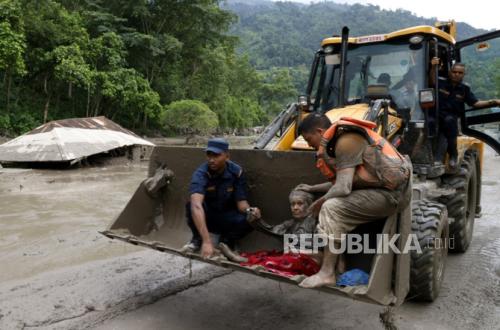
A severe flash flood and landslide struck the border region between Nepal and Tibet on Wednesday (26/8/2026). The disaster killed at least 95 people and left hundreds of tourists and travellers reported missing, according to reports from the BBC and Anadolu.
Nepal’s tourism board said the affected area is one of the routes heavily used by tourists, pilgrims and trekkers. Among the tourists whose whereabouts remain unknown are more than 100 Indian nationals, 47 United States citizens and 33 British nationals.
The disaster occurred at around 08.30 local time, or 09.45 Western Indonesia Time. Water mixed with mud swept through settlements and a number of public facilities around the Nepal-China border. A police post, a customs office and residents’ homes were reported to have been swept away by the strong currents.
The Rasuwagadhi area was one of the worst-hit locations. The area is a route to Langtang, one of Nepal’s popular trekking destinations. The same route is also used by tourists and pilgrims heading to Mount Kailash and Lake Mansarovar in China.
Nepalese police recovered a number of bodies in Nuwakot and Dhading districts. Meanwhile, search and rescue operations continued, involving security personnel, rescue teams, local residents and helicopters.
An official from Nepal’s Armed Police Force, Shailendra Thapa, said the flood was likely linked to the bursting of a glacial lake in the upper reaches of the Bhotekoshi River. However, Nepal’s foreign minister said the disaster may also have been triggered by an earthquake that caused a snow or land avalanche.
The impact of the disaster was not only felt in Nepal. On the Tibetan side, Chinese state media reported three people dead and 265 others missing. CCTV footage showed a wall of water mixed with mud slamming into buildings around the border post.
Landslides around Gyirong Port, one of the main overland routes connecting Nepal and China, cut off road access from the Chinese side. Communication networks and electricity supplies in the area were also disrupted.
An emergency warning was subsequently issued for communities in downstream areas as far as Chitwan, a Nepalese district bordering India. Government hospitals and health facilities managed by security agencies in Kathmandu were prepared to receive the injured.
The scale of the disaster has made search operations face significant challenges. Authorities are still working to ascertain the whereabouts and condition of tourists who were in or travelling through the affected area.