
Flagship Smartphone Sales Surge Drives Profit Growth
The national smartphone market shifted towards the upper segment in early 2026. Counterpoint Research recorded that the segment above US$600 grew 30% year-on-year and achieved its highest contribution in history at 8.3% of total shipments, amid national shipments in the first quarter of 2026 that contracted 9% due to a memory chip supply crisis that pushed retail prices up by 7% to 45%. The segment below US$150, or around Rp2.4 million, contracted the deepest at 19%.
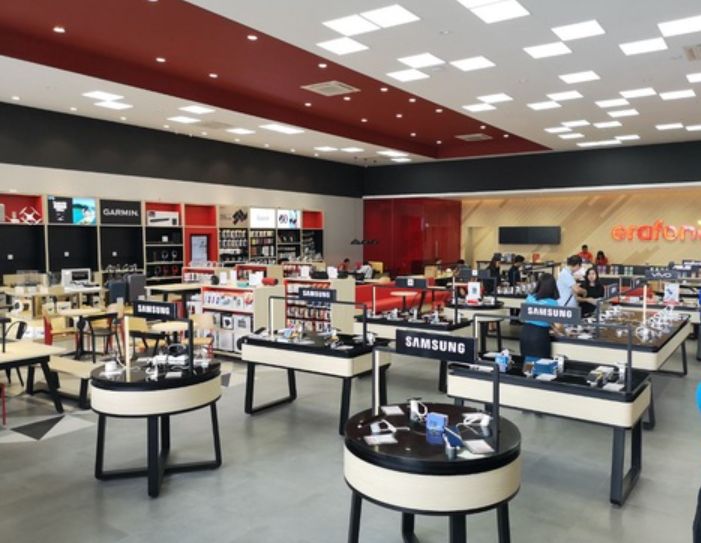
PT Erajaya Swasembada Tbk (ERAA), a listed retailer and distributor of electronic devices, lifestyle products, accessories, and food and beverages, posted growth supported by its digital, active lifestyle, and food and beverage lines throughout the first half of 2026. Sales were recorded at Rp42.9 trillion, up 22.4% year-on-year, while net profit attributable to owners of the parent entity reached Rp784 billion, growing 38.0%.
Profit grew faster than sales, and the shift occurred on the operating expense side, with the expense-to-sales ratio falling to 7.8% from 8.1%. Gross profit reached Rp4.8 trillion, up 21.0%, with gross profit margin maintained at 11.2% and net margin strengthening to 1.8% from 1.6%.
Vice President of Infovesta Utama and capital market analyst, Wawan Hendrayana, assessed that profit growing faster than sales is fundamentally a positive signal because it reflects operating leverage. According to him, the quality of such earnings can be seen from its source. “The main thing is the ability to shift sales to premium products, manage inventory and working capital, and have bargaining power with brands. Cost efficiency is important, but it is secondary,” said Wawan.
In terms of sales per outlet, the shift in market mix was also felt. ERAA’s Same Store Sales Growth (SSSG) during the first six months of 2026 was still positive at 4.1%, with a correction in June 2026 of 11.6% year-on-year, in line with normalisation against the surge in iPhone 16 launches the previous year. According to Wawan, such a pattern is very common in the mobile phone business.
“The segment above US$600 strengthened, meaning premium demand rose. Retail prices rose because memory prices soared, and the entry level tends to be more sensitive to price increases. This shift is normal, and the decline is still being analysed as a base effect of iPhone 16 sales,” he said.
The second factor, inventory and working capital, also moved in the same direction. Limited memory chip supply made inventory levels in sales channels relatively leaner, and according to Wawan, in the short term this condition helps working capital management because funds tied up in inventory are lower. “Inventory days fell, less capital is tied up, and the risk of expensive stock is reduced,” he said.
Network expansion took place during the same period. Throughout the first half of 2026, ERAA opened 276 new outlets with a net addition of 173 outlets, bringing the total network across all verticals to 2,506 outlets by the end of June. In the common pattern of the retail industry, new outlets require time before reaching full productivity, so expansion generally raises the expense ratio first. For Wawan, the combination of opening and arranging a large number of outlets reflects active portfolio management. “That is a signal of network optimisation,” he said.
Wawan assessed that at that point the improvement in the expense ratio occurred. When asked about the expense ratio falling alongside a net addition of 173 outlets, Wawan considered the pattern to fall into the category of efficiency from scale. “Fixed costs are spread over a larger base,” he said.
According to him, what needs to be monitored going forward is how quickly new outlets reach productivity and whether the SSSG of old outlets is maintained. Entering the third quarter of 2026, ERAA is maintaining growth momentum in its digital line by preparing seasonal campaigns such as iBox Back-to-School, the erafone Shopping Festival, and various programmes to welcome the celebration of Erajaya’s 30th anniversary to capture demand in the premium device and mobile phone categories. The company is also directing these initiatives to support inventory and working capital optimisation ahead of peak demand in the fourth quarter.
Outside the device line, the segment mix also supported the group’s margins. PT Sinar Eka Selaras Tbk (ERAL), a subsidiary of ERAA that houses the active lifestyle line, posted sales of Rp3.7 trillion, growing 41.0% year-on-year, with a gross profit margin of 18.1% compared to 17.7% in the same period last year, far above the consolidated margin of 11.2%. The SSSG of this line in June 2026 was relatively stable with a slight correction of 0.5% year-on-year, and cumulatively over six months it grew 8.8%. For Wawan, the contribution from categories outside mobile phones reduces concentration risk because the retailer is not overly dependent on the handset cycle, and its margins tend to be more stable because the characteristics of the categories are different.