
FKIC Ready to Bridge Government and Investors Amidst Scrutiny from the China Chamber of Commerce
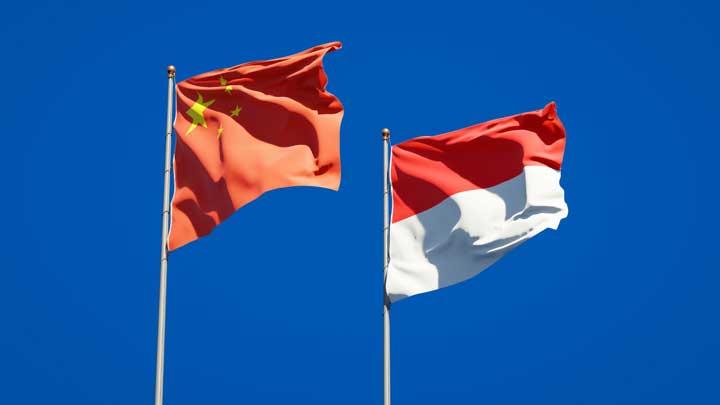
The Indonesia-China Communication Forum (FKIC) is pushing for stronger constructive dialogue between the government and businesses to maintain a stable national investment climate amidst recent developments. FKIC believes that the economic relationship between Indonesia and the People’s Republic of China has significantly contributed to the growth of the national industry, job creation, technology transfer, and the strengthening of downstreaming initiatives.
“Various inputs from the business world should be positioned as part of the dialogue process to improve the national investment ecosystem, rather than as a form of confrontation with the government,” said FKIC Secretary-General S Suparmaji, accompanied by FKIC Chairman Firdaus Dewilmar, who is also a Special Staff to the Minister of Energy and Mineral Resources Bahlil Lahadalia, and FKIC Daily Chairman Ahmad Kaylani, who is also the General Chairman of Perisai Prabowo.
FKIC also affirmed that Indonesia has full sovereignty in determining national policies, including in the management of natural resources, industrial downstreaming, and law enforcement. However, regulatory certainty and consistent policy implementation are still needed to maintain investor confidence and Indonesia’s competitiveness in the global competition.
FKIC appreciates the Indonesian government’s efforts in maintaining open communication with businesses and strategic investors. According to FKIC, this dialogical approach reflects the government’s commitment to maintaining investment stability while ensuring that all business activities continue to comply with the law and national interests.
“The dialogical approach shows the government’s commitment to maintaining investment stability while ensuring that all business activities continue to comply with the law and national interests,” said Suparmaji.
FKIC stated that it is ready to take an active role as a communication bridge between the government, investors, business associations, and other stakeholders. This support includes facilitating institutional dialogue, providing data-based input, strengthening regulatory understanding for investors, and supporting legal compliance and good business governance.
FKIC also emphasized the importance of building Indonesia-China economic relations based on the principles of mutual respect, mutual benefit, and supporting Indonesia’s national development priorities, including strengthening domestic industry, creating jobs, and increasing national added value.
Previously, the China Chamber of Commerce in Indonesia sent a letter to President Prabowo Subianto containing several notes regarding the investment climate in Indonesia. In the letter, business actors highlighted issues related to rapid regulatory changes, royalty policies, taxation, and law enforcement, which are considered to affect the stability and sustainability of investment. In addition, investors also complained about bureaucratic obstacles and licensing processes that are considered not fully efficient in several strategic sectors. They hope that the government can maintain legal certainty and open up more intensive communication with investors so that the business climate remains conducive amidst global investment competition.
The letter then became a public concern because it was considered to reflect the dynamics of the relationship between the government and foreign investors in the midst of the national downstreaming agenda. Several parties believe that this situation needs to be addressed through constructive dialogue so that investment stability is maintained and the economic relationship between Indonesia and China continues to run healthily and mutually beneficial. Several parties, especially the Indonesia-China Communication Forum (FKIC), believe that this situation needs to be addressed through constructive dialogue so that investment stability is maintained and the economic relationship between Indonesia and China continues to run healthily and mutually beneficial. (P-5)