
FK-KMK UGM Sends Medical Team and Medicines for NTT Earthquake Victims
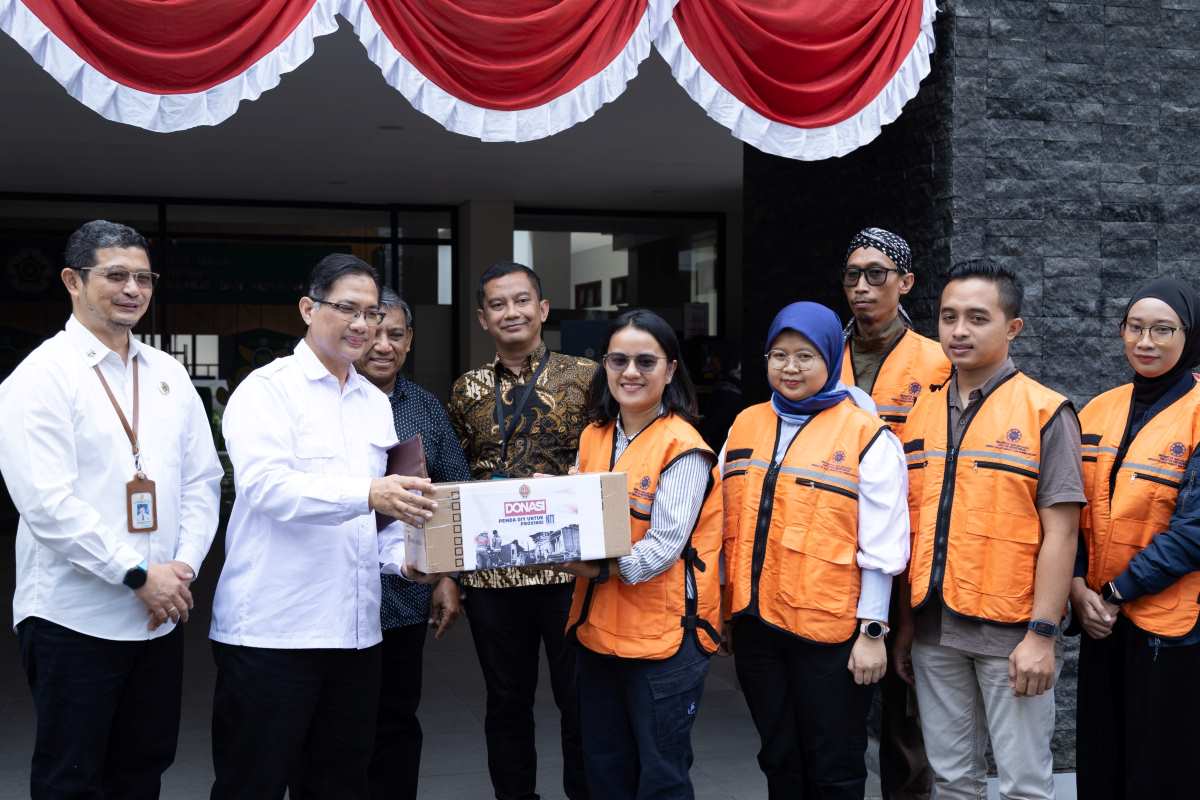
The Faculty of Medicine, Public Health, and Nursing (FK-KMK) at Universitas Gadjah Mada (UGM) has sent six disaster management and medical personnel to East Nusa Tenggara (NTT) to help handle earthquake victims. The team also brought around 40 kilograms of medicines provided by the Yogyakarta Special Region (DIY) government.
The team departed from the FK-KMK UGM Central Administrative Office on Wednesday (19/8). The humanitarian mission is scheduled to run until 30 August 2026, focusing on conducting needs assessments and strengthening health services in several affected areas.
Sutono, Chair of the FK-KMK UGM Disaster Working Group, said the deployment was a rapid response after the faculty received information about the disaster conditions in NTT. “When there was information about a disaster there, as the fastest response, our disaster response team worked with the UGM Academic Health System and networks with the Health Office, coordinated and decided to send a disaster team to the areas that are currently in need,” Sutono said.
FK-KMK UGM Dean Yodi Mahendradhata symbolically dispatched the six personnel, consisting of three members of the FK-KMK UGM disaster management team and three medical staff from the UGM Academic Hospital. Yodi said the team was tasked with strengthening disaster management governance in three NTT regions based on a request from the crisis centre.
“We are dispatching six of the best personnel from FK-KMK and UGM Academic Hospital who are part of the disaster management team and medical team. This mission responds to a request from the crisis centre to strengthen disaster management governance in three districts in NTT,” Yodi said.
The team will not only provide medical services but also conduct a rapid health assessment of the affected communities. The assessment results will serve as the basis for determining further aid and support needs. “The team will conduct an assessment in the field and from there we will be able to identify what the real needs are. Because this requires information from the field,” Yodi said.
One of the initial target locations for the medical team is Ngada Regency. Rizki Fitria Febrianti, a general practitioner at UGM Academic Hospital, said the team would map health needs before determining the form of intervention. “We will be the first team to depart for NTT. Our target will be Ngada Regency. There we will conduct a rapid health assessment because we are the initial team departing,” Rizki said.
In addition to the assessment, the medical team will function as an Emergency Medical Team to help provide health services to affected communities. According to Rizki, post-earthquake conditions have the potential to produce trauma and injury cases requiring treatment. “The current cases there are earthquake-related. With earthquakes, there are many trauma and injury cases. Wound care is also needed there,” she said.
Besides personnel, FK-KMK UGM brought medicine supplies from the DIY government. The supplies include paracetamol, multivitamins, ibuprofen, antacids, cetirizine, intravenous fluids, masks, and medical gloves.
Gregorius Anung Trihadi, Head of the DIY Health Office, said the DIY government had prepared around 240 kilograms of medicines for handling affected communities. In the initial stage, around 40 kilograms were handed over to the FK-KMK UGM team. “There is paracetamol tablets, paracetamol syrup, multivitamins, ibuprofen, antacids, cetirizine, and we also prepared intravenous fluids. In addition, masks and medical gloves are also included,” Anung said.
According to Anung, the phased delivery was carried out due to time constraints and transport capacity. The DIY government appreciated FK-KMK UGM for bringing the aid together with the team’s departure.
Yodi stressed that the medicines carried were a mandate that must be distributed to communities in need. Aid distribution will be adjusted based on assessment results and coordination in the field. “This is what I must ensure arrives and is distributed appropriately to the communities in need,” Yodi said.
Yodi also asked all personnel to prioritise safety during the mission. The team was asked to be flexible in facing changing conditions at the disaster site and to maintain coordination with local governments and health networks. “Flexibility and preparedness in team movement. Second, prioritise safety, safety first. Ensure your safety and the team’s safety are well maintained in every movement,” he stressed.
The main earthquake with a magnitude of 7.7 shook the NTT region on Saturday (15/8) and briefly triggered a tsunami early warning.