
Fix SPMB with Accurate Data to Address the Crisis of Empty State Primary Schools
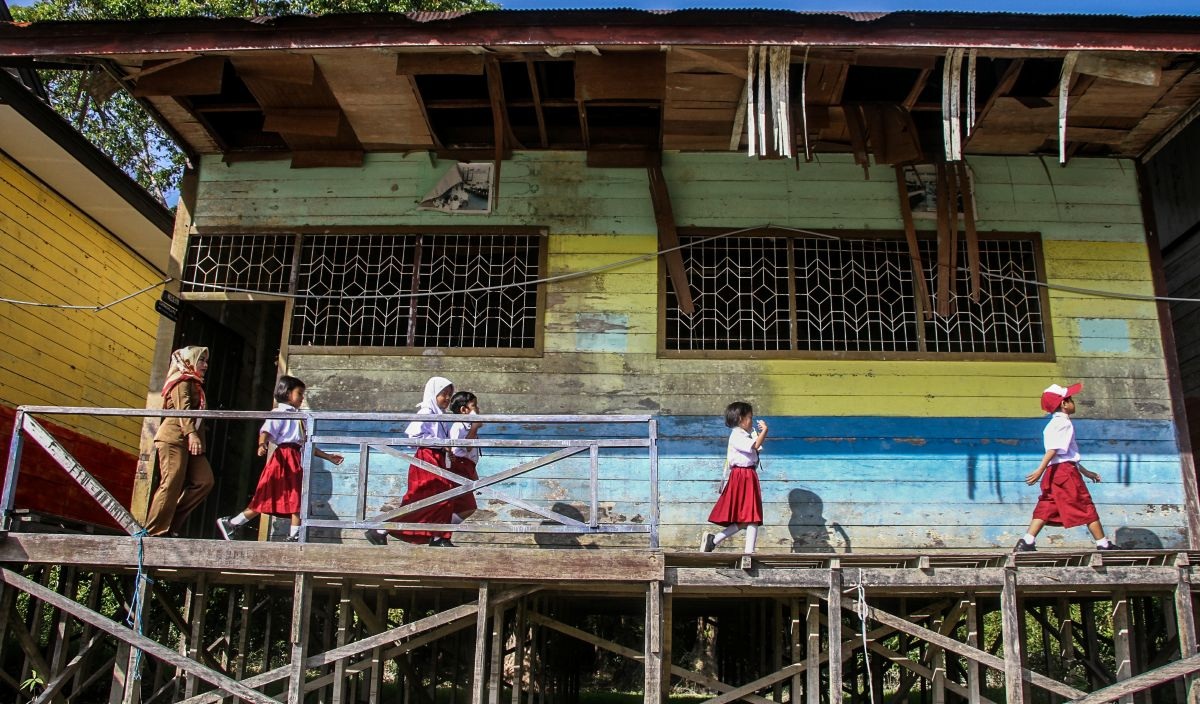
The dearth of applicants to state primary schools (SDN) in various regions for the 2026/2027 academic year is a serious warning bell that the national new student admissions system (SPMB) must be repaired urgently.
Deputy Speaker of the People’s Consultative Assembly (MPR RI), Lestari Moerdijat, has pressed the government to carry out a fundamental overhaul of the SPMB by prioritising analysis of current data on the alignment of school capacity and potential student interest in each region.
Data from the Ministry of Primary and Secondary Education shows a significant contraction in the number of primary school pupils, from 27.58 million in 2011/2012 to around 23.9 million in 2024.
Ironically, the number of primary schools actually increased from 61,566 in 2003 to 72,470 in 2024, creating a major imbalance between capacity and the number of pupils.
“This asymmetrical planning must be fixed immediately. Physical school development must no longer run out of step with demographic realities and public interest,” said Lestari, familiarly known as Rerie, in a written statement on Tuesday (21 July).
According to Rerie, who is also a member of Commission X of the House of Representatives (DPR RI), a student admissions system that is intelligent, data-driven and adaptive to change is needed. “The reorganisation of the state primary school network can no longer be done in a piecemeal fashion,” she said.
Field data reinforces that urgency. In Ngawi, East Java, for example, of 470 state primary schools, on average each received only 13–14 new pupils, and one school even had zero applicants.
In Malang City, East Java, 62 out of 195 state primary schools failed to fill their quotas, with 2,285 empty seats (27.46% of the total allocation). In Bangli, Bali, seven state primary schools enrolled only 3–6 pupils each. Even in large cities such as Solo in Central Java, there were a total of 1,144 empty seats at primary level.
Rerie also highlighted shifting public preferences as an important factor in preparing education services.
Over one decade, the number of state primary school pupils slumped from 22.4 million (2016) to 20.3 million (2022), while private primary school pupils grew from 3.1 million to 3.7 million over the same period.
“This is a clear indication that parents are seeking more responsive education services. State schools must improve their quality,” she asserted.
Rerie pushed for a number of strategic measures to address the situation, including the immediate establishment of a data-driven education roadmap based on accurate population data to determine the location and needs of schools.
In addition, said the senior member of the NasDem Party, stronger coordination between central and regional governments is needed so that policies implemented are properly targeted.
“The data has spoken. Now is the time for real action. Fix the new student admissions system (PPDB) from its roots, so that every Indonesian child has access to fair and quality education,” Rerie concluded.
Regional governments have committed to providing a more stable, secure and transparent registration process in anticipation of a surge in access to online PPDB registrations.
A member of the Ombudsman of Indonesia, Indraza Marzuki Rais, said the implementation of the SPMB has repeated the mistakes that occurred under the previous PPDB system.
SPMB 2025 continues to generate a number of problems in its implementation, as seen in the thousands of prospective vocational school (SMK) students in Central Java who were disappointed not to be accepted in the first stage of selection.
Two new policies from the Ministry of Primary and Secondary Education have again sparked widespread discussion about the direction of basic education in Indonesia.