
Five Years of Taliban Rule in Afghanistan: Secure, but the People Are Getting Poorer
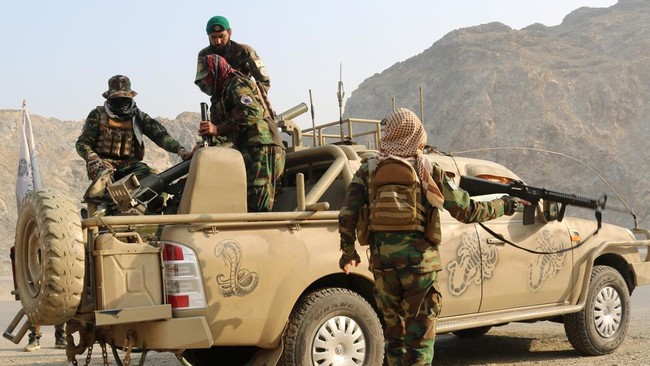
Exactly five years after the Taliban returned to power in Kabul, Afghanistan has indeed become calmer. However, that stability has come at a high price: poverty, isolation from the international community, and increasingly strict restrictions on freedom. On 15 August 2021, the Taliban recaptured Kabul after 20 years of fighting against the Afghan government and its allies, including the United States. The war began in 2001 when the US toppled the Taliban regime because it had provided shelter to the group that planned the 11 September attacks. Five years later, the Taliban has consolidated its control over Afghanistan. Taliban flags are visible in cities, fields, checkpoints, government offices and universities.
One of the biggest changes is the level of security. After decades of war and bomb attacks, a number of cities are now much quieter. Afghans are also feeling the benefits. Farmers find it easier to bring their harvests to market, intercity travel is safer, and children can go to school, although access to education for girls is severely restricted. Last year, the number of civilians killed in terror attacks fell to fewer than 100. The Taliban has also managed to suppress the activities of ISIS-K and Al-Qaeda in Afghanistan.
But that stability has come alongside repression. Security forces act harshly against dissent. During a women’s demonstration in Herat in June, several participants were beaten and a teenage girl was reportedly shot dead.
Fiscally, the Taliban government has actually managed to increase state revenue. The World Bank estimates the Afghan government now collects around US$4 billion, or about Rp 72 trillion (US$1 = Rp 18,000), from taxes and other receipts each year, nearly 60% higher than in 2020. However, that increase has not been enough to offset the collapse in international aid. Humanitarian and development aid, which reached around US$4 billion in 2020, fell to only US$1.2 billion in 2025 and is expected to be even lower in 2026. This has left hospitals and clinics short of funding. The government even allocates about half of its revenue to security, while spending on health and welfare has been cut.
Amid the security stability, Afghanistan’s economy remains far from prosperous. Gross domestic product per capita based on purchasing power parity is now only around US$2,300, roughly back to mid-2000s levels. Poverty also remains a major problem. Prolonged drought has limited food supplies, while many people have to go into debt to survive. “We have peace, but our pockets are empty,” one village elder said, describing the economic situation, as quoted by The Economist. Afghanistan is also facing additional pressure from around 6 million Afghans who have been forcibly returned from Pakistan and Iran. Many of them have come back without money or jobs, further burdening the country’s resources.
One of the Taliban’s most controversial policies is the ban on secondary education for girls. Before the Taliban returned to power, school participation rates had risen over two decades. But since 2021, girls over the age of 12 have been officially barred from secondary education. A number of religious schools or madrasas have become an alternative route for some women to continue learning. At one school in Kabul, around 600 women are reported to be receiving an education, including mathematics, science, geography and English. Yet the students still face uncertainty about their future. “We do not want to just stay at home and raise children or become teachers at Islamic schools. That is not our dream,” one student said.
Despite international isolation, the Taliban government is still trying to build the economy. Road construction continues. The government is also investing in canals, gas pipelines and solar power plants, and has issued mining permits for commodities such as gold, copper and lithium. In Kabul, road widening and house building have also increased. Some housing projects are financed by the Afghan diaspora for their families still living in the country. However, the Taliban still struggles to attract foreign investment because Afghanistan remains cut off from the global financial system and some of its officials are still subject to international sanctions.
Five years after returning to power, the Taliban has achieved one important thing: Afghanistan is relatively safer after decades of war. But security has not automatically brought prosperity. The economy remains weak, foreign aid is shrinking, poverty is high, health services are under pressure, and women’s rights are increasingly restricted. With a population of around 45 million, nearly two-thirds of whom were not even born when the war began in 2001, Afghanistan now faces a major challenge: how to turn security stability into economic growth and prosperity. For many Afghans, five years has been long enough to wait for change. “We do not want to wait any longer,” one Afghan student said.
Source: jawawa.id (https://jawawa.id/newsitem/five-years-of-taliban-rule-in-afghanistan-secure-but-the-people-are-getting-poorer-1786798364)
Originally published by CNBC Indonesia (https://www.cnbcindonesia.com/research/20260815171842-128-759694/5-tahun-taliban-kuasai-afghanistan-aman-tapi-rakyat-makin-miskin), translated from Indonesian