
Five Steps for Indonesia to Become a Global Benchmark for Hajj Services
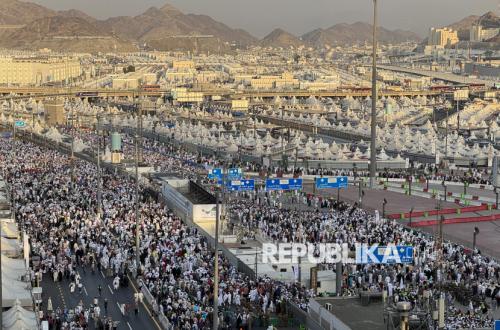
JAKARTA — The hajj season of 1447 AH/2026 CE has drawn to a close. More than 220,000 Indonesian pilgrims have returned home carrying spiritual experiences beyond measure. Yet for the organisers, the end of the hajj season should not merely mark the close of operations — it should open something far more important: an honest evaluation of what actually happened on the ground.
This year’s hajj management carries its own historical significance. For the first time, the hajj was managed by the Ministry of Hajj and Umrah, which now stands as an institution in its own right. The public — and certainly the millions of pilgrims still waiting on queues stretching back years — places great hope that this new institution will be more than a change of nameplate, but a genuine leap in service quality.
That hope has not yet been fully answered. And this is what we must discuss openly — not to find someone to blame, but to ensure that in five years’ time, Indonesia truly becomes a global reference point for hajj services, rather than merely the largest sender of pilgrims.
When awards speak louder than statistics
There is one fact that deserves deeper reflection: in the 2026 hajj, Indonesia once again failed to make the list of recipients of the Labaytum Award from Saudi Arabia’s Ministry of Hajj and Umrah — the highest honour for countries judged to have organised the hajj to the best service standards. Meanwhile, Malaysia — which sends far fewer pilgrims — won the Diamond Award for the fifth consecutive time.
This gap is not a matter of scale. That is precisely the paradox: the country with the largest number of pilgrims in the world should have the greatest leverage to define world-class hajj service standards. Large scale is not an obstacle — it is an opportunity, and a moral responsibility that cannot be deferred.
To date, hajj evaluations have been too oriented towards administrative success: what percentage of visas were completed on time, how many travel groups departed on schedule, how many pilgrims were repatriated without major problems. These indicators matter, but they are not enough. Saudi Arabia, through its Vision 2030 programme, has shifted the benchmark to a different level: the quality of the pilgrim experience, speed of service response, digital integration, and the ability to mitigate risk in real time. Those are the criteria of the Labaytum Award. And that is where Indonesia still lags behind.
Five urgent pieces of homework
From field observations and existing evaluations, there are at least five problems that must be resolved seriously — not with rhetoric, but with measurable systemic change.
First, human resources remain the weakest link in the service chain. Indonesia sends more than 221,000 pilgrims each year, yet it does not have a national certification system requiring every hajj officer to master communicative Arabic, crisis management, cross-cultural negotiation, the use of Saudi digital applications, and knowledge of regulations continually updated by the Saudi authorities. This is not a new complaint — it recurs year after year.