
Five Social Assistance Programmes Disbursed in September 2026 and How to Check Eligibility
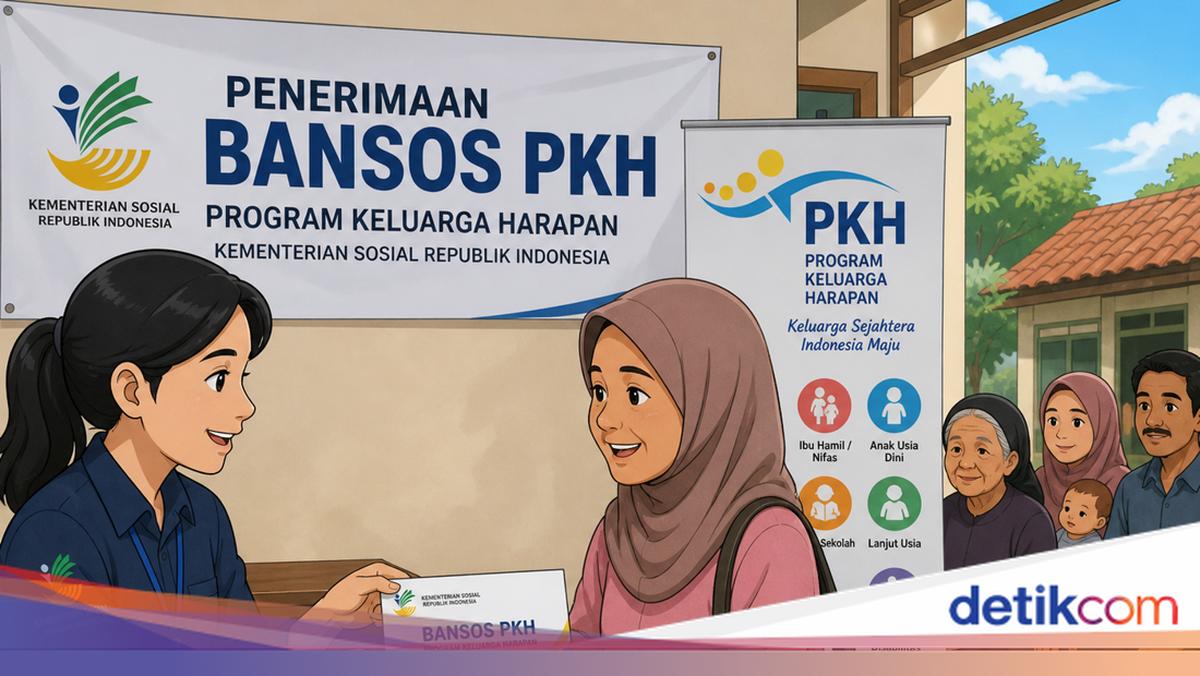
September 2026 is the final month of disbursement for the third quarter. A series of social assistance programmes are planned to be distributed to eligible recipients.
According to the official website of Mijen Urban Village in Semarang City, social assistance is a form of support provided by the government to help communities in need. It can take various forms, including cash and goods.
Social assistance is important for helping to ease the economic burden on communities, particularly groups that require support to meet basic needs. In addition to maintaining purchasing power, the distribution of social assistance is also expected to help improve the welfare of recipients.
- Family Hope Programme (PKH)
According to the official website of the Ministry of Social Affairs, PKH is social assistance aimed at poor and vulnerable families. The objectives of PKH are to reduce poverty, create behavioural change, and reduce expenditure burdens.
PKH recipients are divided into several categories, and the amounts received therefore vary. The details are as follows:
Pregnant women: Rp 750,000 per three months
Children aged 0-6 years: Rp 750,000 per three months
Primary school students: Rp 225,000 per three months
Junior secondary school students: Rp 375,000 per three months
Senior secondary school students: Rp 500,000 per three months
Persons with severe disabilities: Rp 600,000 per three months
Elderly persons aged 60 years and above: Rp 600,000 per three months
Victims of gross human rights violations: Rp 2,700,000 per three months
PKH is distributed by the government every three months through designated banks or post offices. September therefore falls within the third quarter of 2026, together with July and August.
For this third phase, PKH began to be distributed by the Ministry of Social Affairs as of 20 July 2026. If recipients have still not received it, there is a possibility that PKH funds will be disbursed this month.
As a note, the Ministry of Social Affairs has never issued a single fixed date for social assistance disbursement. This means that the disbursement schedule may differ between regions, depending on a number of influencing factors.
- Non-Cash Food Assistance (BPNT)
Officially transformed into the Sembako Programme in 2020, BPNT is aimed at poor families included in the National Socio-Economic Data (DTSEN), specifically deciles 1-4. The value of the Sembako Programme is Rp 200,000 per month.
Like PKH, BPNT is distributed every three months through designated banks or post offices. As a result, Beneficiary Families (KPM) receive Rp 600,000 per disbursement.
In the third quarter of 2026, the number of BPNT or Sembako Programme recipients reached 18 million KPM. This figure comprises 15 million KPM from the second quarter who continue to receive assistance and 3 million KPM who have undergone changes.
- Atensi YAPI Assistance
Atensi YAPI assistance targets children under the age of 18 with orphan status, whether having lost a father, mother, or both parents. The programme, which began in 2021, continues to this day.
According to information from the official Instagram account of the Directorate General of Treasury at the Indonesian Ministry of Finance, @ditjenperbendaharaan, recipients of this assistance receive Rp 200,000 per month. The funds are used to support daily basic needs and to restore the child’s social functioning.
Generally, Atensi YAPI assistance is disbursed on a quarterly system. September therefore falls within the third quarter of 2026. This assistance is provided to recipients through designated banks.
- Health Insurance Contribution Assistance Recipients (PBI-JK)
Unlike other social assistance programmes where recipients receive cash, PBI-JK participants do not receive cash. Instead, their BPJS Kesehatan contributions are covered by the government, so they do not need to pay monthly premiums.
According to the official Cek Bansos website of the Ministry of Social Affairs, communities in decile 5 of the DTEN can still be proposed as PBI-JK participants. This means that priority recipients come from deciles 1-4, with decile 5 as the maximum.
- Indonesia Smart Programme (PIP)
PIP is a government priority programme to support access to education for students from underprivileged families. Its recipients, as detailed in Regulation of the Secretary General of the Ministry of Primary and Secondary Education Number 17 of 2026, are kindergarten, primary, junior secondary, and senior secondary school students or equivalent, aged 5 to 22 years.
PIP is prioritised for students from families in deciles 1-4 of DTSEN, school dropouts, orphans, and those with special needs. The amount of PIP in 2026 varies by level, from Rp 225,000 to Rp 900,000 per semester. PIP is disbursed directly to the recipient’s activated bank account.
Regulation Number 17 of 2026 does not detail the disbursement terms for PIP this year. However, referring to the 2025 rules, the second term of PIP is disbursed from August to December.
How to Check Which Social Assistance You Receive in September 2026
A. Check on the Ministry of Social Affairs’ Cek Bansos Website
First, you can check the type of social assistance received in September 2026 through the Cek Bansos website of the Ministry of Social Affairs. There are three types of social assistance that can be checked here: PKH, Sembako Programme/BPNT, and PBI-JK. The steps are as follows:
Open the Cek Bansos website of the Ministry of Social Affairs via the link https://cekbansos.kemensos.go.id.
Enter your Population Identification Number (NIK) and the captcha code in the available fields.
Ensure the NIK and captcha code are correct, then click ‘CARI DATA’.
The website will display the status and period of PKH, Sembako Programme, and PBI-JK social assistance.
B. Check on the Cek Bansos Application
If checking via the Cek Bansos application, you can find out the status and period of six types of social assistance. Here is the guide:
Download the Cek Bansos application from the Play Store or App Store.
Open it, then select the ‘Cek Bansos’ menu.
Enter your 16-digit NIK in the available field.
Click ‘Cari Data’.
The application will display information on name, decile, and the status and period of six types of social assistance: Sembako Programme, PKH, Permakanan, PBI-JK, Orphan Assistance, and BLTS.