
Five Regions with the Largest Investment Realisation in Indonesia, South Sulawesi Not Included
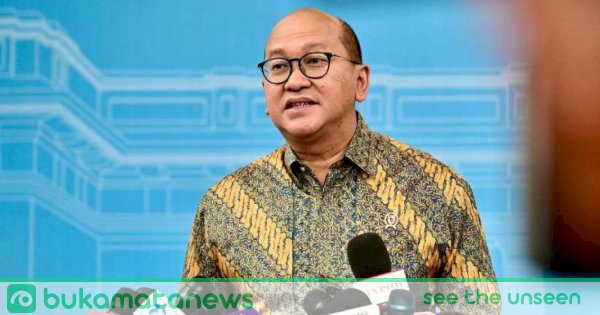
The government continues to strive to maintain investment momentum through the simplification of licensing and strengthening the investment ecosystem. The government is also accelerating the development of industrial estates, downstreaming, and improving the quality of services to investors. Based on data from the Ministry of Investment and Downstreaming/BKPM, the five provinces with the largest investment realisation are DKI Jakarta, West Java, North Maluku, East Java, and Central Sulawesi. Indonesia’s total investment realisation in the second quarter of 2026 reached Rp511.8 trillion. This value increased by 7.1 percent compared to the same period the previous year. The Ministry of Investment and Downstreaming/BKPM noted that this achievement absorbed 742,293 Indonesian workers. The government assesses that investment growth remains maintained amidst global economic uncertainty. Minister of Investment and Downstreaming/Head of BKPM, Rosan P. Roeslani, said that foreign investment in the second quarter showed a change in the composition of investor countries. Hong Kong became the largest contributor of foreign investment for the first time in a decade. ‘In this second quarter, for the first time in the last ten years, China’s investment has been more aggressive through Hong Kong. So the first position for Foreign Direct Investment in this second quarter is occupied by Hong Kong with USD5 billion,’ Rosan said in a statement in Jakarta recently. In the second quarter of 2026, FDI realisation reached Rp257.7 trillion or 50.4 percent of total investment. Meanwhile, domestic direct investment was recorded at Rp254.1 trillion or 49.6 percent. Investment outside Java continued to dominate with a value of Rp256.5 trillion or 50.1 percent. The five provinces with the largest investment realisation are DKI Jakarta, West Java, North Maluku, East Java, and Central Sulawesi. Downstreaming investment realisation in the second quarter reached Rp152.7 trillion, an increase of 5.7 percent compared to the previous year. Bauxite became the largest downstream commodity, replacing nickel which had previously always dominated. ‘The realisation of investment in downstreaming for the second quarter is Rp152.7 trillion, an increase of 5.7 percent year-on-year. This total downstreaming investment realisation accounts for almost 30 percent, or 29.8 percent, of the total investment realisation in the second quarter of 2026,’ Rosan said. Rosan stated that bauxite has now become the downstream commodity with the largest investment value, replacing nickel’s position which had previously always dominated. This change was driven by increased development of bauxite downstream projects by both domestic and foreign investors. For the first time, bauxite occupied the top position as the largest contributor to national downstream investment in the second quarter of 2026. The government continues to encourage the development of downstreaming for other commodities, including palm oil, to expand the added value of the national industry. Rosan affirmed that the government will continue to maintain investment momentum through licensing simplification and strengthening the investment ecosystem. The government is also accelerating the development of industrial estates, downstreaming, and improving the quality of services to investors.