
Five Priority Programmes to Drive Post-Disaster Education Sector Recovery
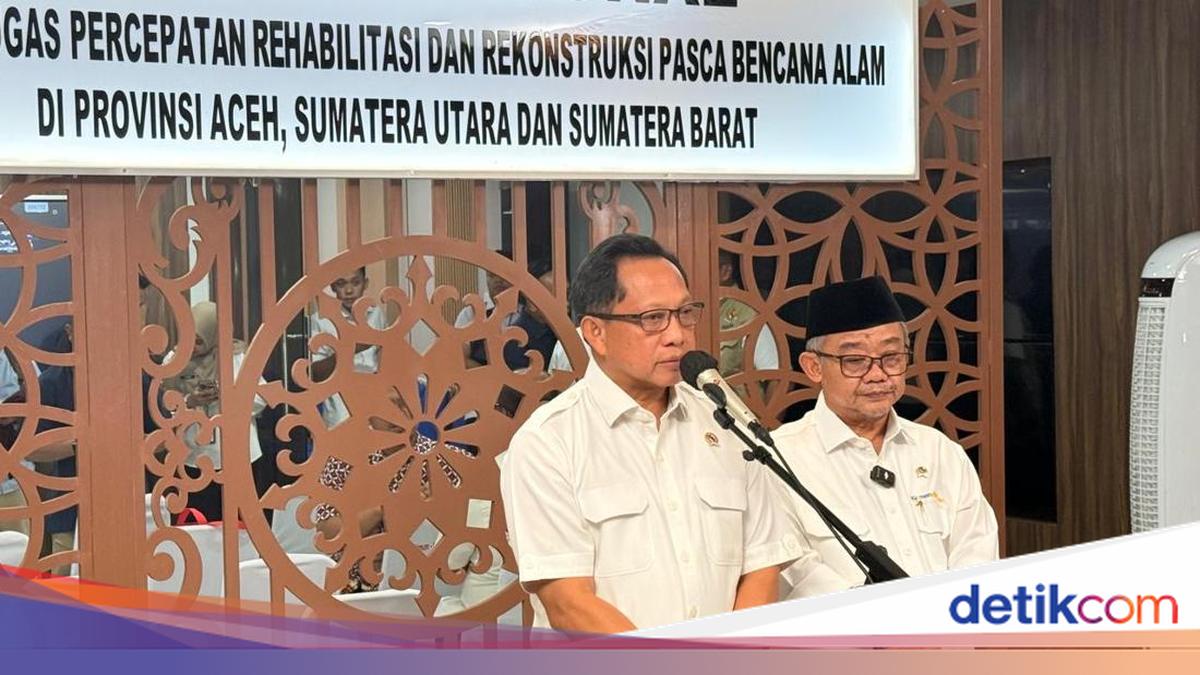
The recovery of the education sector affected by disasters in Aceh, North Sumatra, and West Sumatra is being accelerated through five priority programmes. A budget of Rp5.6 trillion has been prepared to handle 4,922 disaster-affected schools, while the relocation needs of 97 schools are also being managed to ensure learning activities can take place in safe locations.
The Chairman of the Task Force for the Acceleration of Post-Disaster Rehabilitation and Reconstruction (Satgas PRR) for Sumatra, Muhammad Tito Karnavian, stated that the large number of affected schools and the varying conditions between regions mean that recovery will require time and consistent supervision.
“Because the level of difficulty is not easy, considering the many areas affected and the varying speeds of handling in each region, we predict it cannot be completed in a short time. However, we are striving to finish as quickly as possible so that the teaching and learning process can resume in an ideal atmosphere,” Tito said in a statement on Wednesday (23/9/2026).
He made these remarks following a coordination meeting at the Satgas PRR Post, Ministry of Home Affairs, Jakarta, on Wednesday (23/9).
The five programmes include support for teachers and educational staff, school revitalisation, recovery operational assistance, the provision of learning facilities, and aid for students through the Indonesia Pintar Programme (PIP). The management is directed towards restoring learning spaces while ensuring the continuity of education for affected children.
Support for educators targets 90,962 teachers with an allocation of Rp122.95 billion. This support includes incentives, disaster preparedness and mitigation training, as well as psychosocial training to ensure teachers are better prepared to accompany students during the recovery period.
Regarding facilities, revitalisation covers 3,132 schools with an allocation of Rp3.03 trillion. Recovery operational cost assistance is being provided to 822 schools. Schools where physical work progress is still below 50 per cent will receive assistance tailored to the specific constraints of each location.
The government has also allocated Rp786.43 billion for the fulfilment of educational facilities. Through this programme, 470,235 aid packages worth Rp688.8 billion have been realised, including desks, chairs, laboratory equipment, and textbooks. Subsequent distributions are being closely monitored to ensure learning needs arrive on time and reach the intended targets.
For students, a PIP budget of Rp1.15 trillion has been prepared for more than 1.57 million recipients. This aid is intended to help students continue their education amidst the recovery of their families and schools.
Meanwhile, the Minister of Primary and Secondary Education, Abdul Mu’ti, stated that preparations for the Academic Competency Test (TKA) in October 2026 are also a priority, including for students who are unable to take exams at their original schools.
“We have conducted data collection and ensured that senior high school students and their equivalents can participate in the TKA as effectively as possible, whether held at their own schools or hosted by other schools,” he said.
Amidst this progress, 97 schools still require relocation because their previous locations were affected by floods or landslides, lost land, or are situated in high-risk areas. The Satgas PRR will oversee coordination between local governments and the Ministry of ATR/BPN to ensure land availability complies with regulations.
The recovery of access to schools is also part of the oversight. Road points that are damaged and hindering the travel of students and teachers will be identified in collaboration with the Ministry of Public Works and local governments.