
Five Months After Launch, Sangkuriang Train Has Served 330,000 Passengers on the Bandung–Ketapang Route
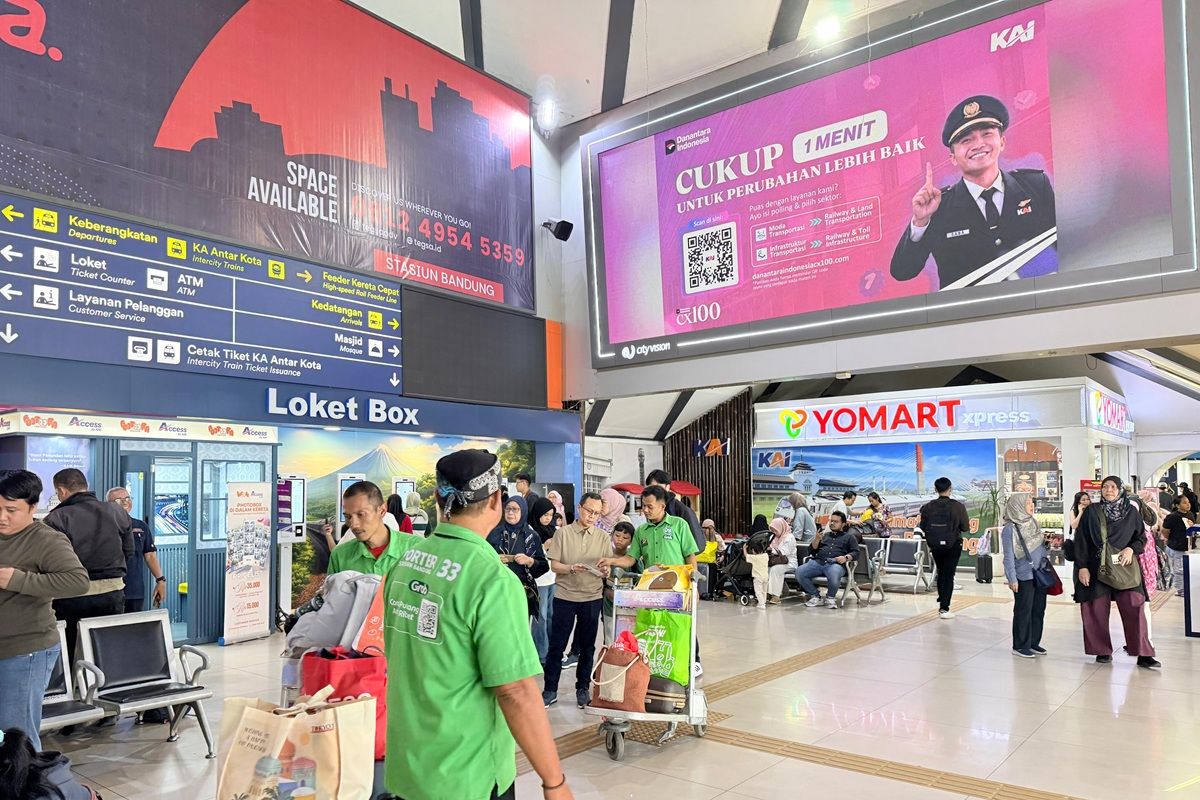
Jakarta (ANTARA) – State railway company PT Kereta Api Indonesia (Persero) recorded 330,186 passengers on the Sangkuriang train between May and September 2026. The Bandung–Ketapang (return) service has become a popular option for travel across Java since it began operating on 1 May 2026.
Passenger numbers on the Sangkuriang train were 61,078 in May, 70,399 in June, 67,620 in July, 68,974 in August and 62,115 in September 2026. In its first five months of operation, the service therefore carried more than 330,000 passenger journeys.
KAI Vice-President for Corporate Communications Anne Purba said the high use of the Sangkuriang train showed that demand had developed along the route it serves.
“The Sangkuriang train runs for 1,002 kilometres and serves passengers with varied travel patterns. Some travel from Bandung to Yogyakarta or Solo, others to Surabaya and Jember, while some continue to Banyuwangi. This pattern shows that rail travel is growing across many of the cities along the route,” Anne said.
The Sangkuriang train serves the Bandung–Ketapang route in both directions. Services from Bandung began on 1 May 2026, while journeys from Ketapang to Bandung started the following day. The corridor provides a direct connection from West Java to the eastern tip of Java via the island’s southern and eastern rail lines.
The route passes through various population centres and tourist destinations, including Tasikmalaya, Ciamis, Yogyakarta, Solo, Madiun, Surabaya, Jember, Banyuwangi and Ketapang. The direct service allows passengers to travel between these areas without changing trains on the Bandung–Banyuwangi journey.
Anne said the service was notable for its role in connecting urban areas and supporting tourism. From Greater Bandung and Priangan, the route links with the Yogyakarta–Solo area, Madiun, Greater Surabaya, the Tapal Kuda region and Banyuwangi, each with different travel markets.
“A single Sangkuriang train can serve many travel patterns at once. Passengers can board and alight at various points along the route. The service therefore benefits links between cities throughout the corridor, including for family trips, economic activity, education, work and tourism,” Anne said.
Passenger response is also reflected in the Sangkuriang train’s occupancy rate. In the July–September 2026 period, Sangkuriang service 7044A recorded average occupancy of 240.53%, the highest among featured trains travelling to and from Bandung. Occupancy was about 251% in July, 244% in August and 227% in September 2026.
During the 2026 school holiday period, occupancy on the service briefly reached 284%. Figures above 100% result from passengers changing at different points along the route. A seat can be used by different passengers after the previous passenger alights at their destination; the figures do not mean more passengers were aboard at the same time than there were seats.
“The occupancy figures show the strength of partial-route travel. In other words, the Sangkuriang is busy along its entire route. Passenger movements are not concentrated only between Bandung and Ketapang, as people also use the train for intercity journeys on various sections in between,” Anne said.
The Sangkuriang train also offers a range of service classes. Each journey has 456 seats: 16 Compartment Suites seats, 200 Executive Class seats and 240 Premium Economy seats.
Compartment Suites passengers have a more private travel space, with seats that recline to 180 degrees. Executive Class is offered in four carriages with 50 seats each, while Premium Economy has three carriages, each with a capacity of 80 seats.
Anne said the combination gave passengers a wide range of options for journeys of more than 1,000 kilometres.
“Some passengers make intercity journeys of a few hours, while others travel long distances across East Java. We offer a choice of classes in one train so passengers can match their journey to their needs and preferences,” Anne said.
KAI views the high use of the Sangkuriang train during its first five months as an indication of the potential for travel created by connecting cities in West Java, Central Java, the Special Region of Yogyakarta and East Java in one rail corridor. By the end of the first half of 2026, KAI had already identified Sangkuriang as a direct service opening access from West Java to Banyuwangi via Yogyakarta, Solo, Surabaya and other cities along Java’s southern and eastern lines.
“Some 330,000 passengers in five months show how one train service can facilitate many intercity journeys at once. Sangkuriang brings Bandung closer to cities along southern and eastern Java, while giving people more ways to travel and explore destinations by train,” Anne concluded.
Source: jawawa.id (https://jawawa.id/newsitem/five-months-after-launch-sangkuriang-train-has-served-330-000-passengers-on-the-bandung-ketapang-route-1792148070)
Originally published by Antara (Indonesian) (https://www.antaranews.com/berita/5791409/lima-bulan-beroperasi-ka-sangkuriang-layani-330-ribu-pelanggan-lintas-bandung-ketapang), translated from Indonesian