
Five Key Points of the US-Iran Peace Deal, the World Can Breathe a Sigh of Relief!
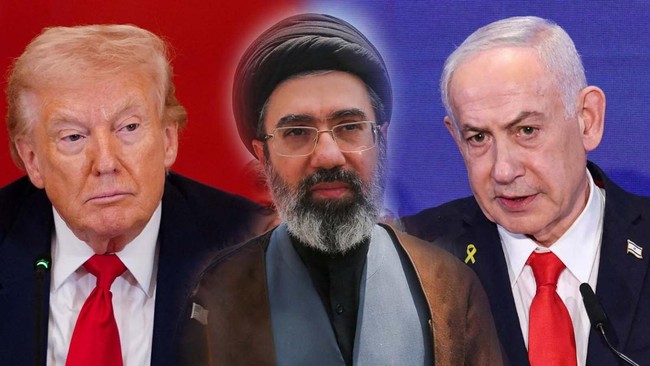
After long and arduous negotiations, the United States and Iran have finally agreed on terms to end the war and reopen the ‘sacred’ passage of the Strait of Hormuz. This news brings a breath of fresh air to markets worldwide.
Nevertheless, the US-Iran pact still leaves major questions regarding the fate of Lebanon, which continues to be bombarded by Israel. Both parties also continue to postpone complex discussions regarding Tehran’s nuclear programme.
This latest US-Iran agreement marks the largest breakthrough towards resolving the war that began with joint US-Israeli attacks on Iran last February, before escalating into a broader regional conflict that has killed thousands, shaken energy markets, and triggered fears of a global economic recession.
“The deal with the Islamic Republic of Iran is now complete,” wrote US President Donald Trump on his Truth Social platform at approximately 17:30 Washington time on Sunday (14/6).
A Memorandum of Understanding (MoU) is scheduled to be officially signed this coming Friday (19/6) in Switzerland.
World leaders welcomed the announcement on Monday (15/6), as details of the terms began to emerge. Although the text has not yet been officially published, the announcement of this peace deal clearly aims to end the widespread hostilities between the US and Iran.
However, this peace agreement presents complications for Israel, which was not part of the negotiations and has been waging war in Lebanon against the Iranian-allied Hezbollah group.
“Lebanon is an integral part of the agreement to end the war,” said Iranian Foreign Ministry spokesperson Esmaili Baghaei, as quoted by Reuters on Tuesday (16/6/2026).
He added that the US-Iran agreement text calls for an end to war on all fronts, as well as respect for the territorial integrity of Lebanon.
Leaders of the G7 nations, including Trump, are scheduled to arrive at a lakeside resort in France on Monday (15/6) local time.
In more detail, here are the 5 key points stated by the US, Iran, and mediator Pakistan regarding the contents of the preliminary agreement announced to end the war:
US-Iran Peace Agreement Mechanism
Pakistani Prime Minister Shehbaz Sharif stated that both parties have declared an immediate and permanent cessation of all military operations.
All parties stated that the MoU to resolve the war will be signed in Switzerland on Friday (19/6). Iranian Deputy Foreign Minister Kazem Gharibabadi stated that the MoU will subsequently be published.
Both Iran and the US stated that the Strait of Hormuz will begin to reopen and the US blockade on Iranian ports will be lifted immediately after the MoU is signed.
Both sides stated that negotiations on more difficult disputed areas, particularly the issue of Iran’s nuclear programme and US sanctions on Iran, will take place over the next 60 days.
Strait of Hormuz and Iranian Port Blockade
US President Donald Trump stated that the Strait of Hormuz will reopen on Friday (19/6) and he has ordered the lifting of the blockade on Iranian ports.
A senior Iranian official stated the strait would reopen “for all commercial vessels” after the MoU is signed.
The semi-official Iranian news agency, Fines, reported that under the MoU, maritime traffic through the Strait of Hormuz will be regulated by Iran in coordination with Oman.
Iran’s Nuclear Programme
Both parties stated that Iran agrees not to produce or acquire nuclear weapons. It is noted that similar promises have been made by Tehran repeatedly over decades.
A senior Iranian official stated that Iran will freeze its nuclear activities, refraining from further uranium enrichment or the expansion of nuclear facilities, while moving towards the signing of the MoU.
A senior Iranian official stated that the US has agreed that Iran may reduce its stockpile of highly enriched uranium domestically based on a future comprehensive agreement.
Trump stated on Saturday (13/6) that there is no urgency to extract Iran’s nuclear material stockpile. He emphasised that the US would take it when conditions have calmed.
Trump stated there would be a robust inspection regime for Iran under any agreement, but he did not provide specific details.
US Senator Lindsey Graham stated that any final agreement on Iran’s nuclear programme must be reviewed and approved by Congress.
Sanctions and Financial Impact
A senior Iranian official stated that the US has agreed not to impose any new sanctions on Iran until a final agreement is reached.
They added that the US will lift oil sanctions on Iran for a specific period. Once the final agreement is reached, all US and UN sanctions will be lifted according to the agreed schedule.
A senior Iranian official stated that the US has agreed to release $25 billion in frozen Iranian assets, including through direct cash transfers, cooperation with regional countries, and financial credit lines.
Washington, in coordination with its regional allies, will prepare a reconstruction and development plan for Iran, which will be negotiated and agreed upon with Tehran within 60 days.
Trump stated that Iran would not be given cash, but sanctions could potentially be lifted.
The Fate of Lebanon
Sharif stated that the immediate and permanent cessation of all military operations would include Lebanon.
Iran’s Supreme National Security Council Secretariat stated that military operations would stop permanently on Monday (15/6) evening local time, including in Lebanon.
Iranian Foreign Minister Abbas Araqchi stated there must be a total cessation of Israeli attacks on Lebanon and that the US is responsible for implementing the framework agreement.
Israeli Defence Minister Israel Katz stated that the Israeli military would remain in the security zone…
Source: jawawa.id (https://jawawa.id/newsitem/five-key-points-of-the-us-iran-peace-deal-the-world-can-breathe-a-sigh-of-relief-1781567454)
Originally published by CNBC Indonesia (https://www.cnbcindonesia.com/news/20260615225641-4-743082/5-poin-kesepakatan-damai-as-iran-dunia-bisa-bernapas-lega), translated from Indonesian