
Five Indonesian Geoparks Receive UNESCO Green Cards: The List
Jakarta, CNBC Indonesia — Five geoparks in Indonesia have secured Green Card status from UNESCO, while Bojonegoro has passed as a candidate for a new UNESCO Global Geopark (UGGp).
The decisions were made at the 11th session of the UNESCO Global Geoparks Council, held in Paris, France, from 2 to 4 November 2026.
The five geoparks awarded UNESCO Green Cards are Belitong, Merangin Jambi, Ijen, Raja Ampat and Maros-Pangkep. They received the status after undergoing a review of their management, known as revalidation.
Tourism Minister Widiyanti Putri Wardhana said UNESCO recognition was not merely an international accolade, but also a responsibility to protect Indonesia’s natural, geological and cultural wealth.
“Global Geopark status must be safeguarded through strong governance, meaningful conservation and the involvement of local communities. We want geoparks not only to be a source of pride for Indonesia internationally, but also to deliver economic benefits and improve the well-being of surrounding communities,” Widiyanti said in a written statement, quoted on Monday (9 November 2026).
One notable achievement came from Belitong UNESCO Global Geopark, which regained its Green Card after receiving a Yellow Card in the 2024 evaluation. Over the past two years, the geopark’s management and local government have made a number of improvements in response to UNESCO recommendations, including addressing the commercialisation of Batu Satam and raising turtle conservation standards.
Ijen UNESCO Global Geopark, in Banyuwangi and Bondowoso, retained its international recognition after its first evaluation since being designated a global geopark in May 2023. The area, which has 21 geological sites, or geosites, is known for its blue fire phenomenon and an acidic crater lake described as the world’s largest.
Merangin Jambi also retained its UNESCO Green Card. The 4,832.31-square-kilometre area is geologically rich, with features ranging from ancient limestone to the Masurai Caldera, which is about 33,000 years old.
UNESCO nevertheless raised concerns about illegal gold-mining activity near the river area where the Muara Karing fossils are found. The local government and geopark management are working to close the mining operations while taking the circumstances of local communities into account.
Raja Ampat and Maros-Pangkep retain Global Geopark status
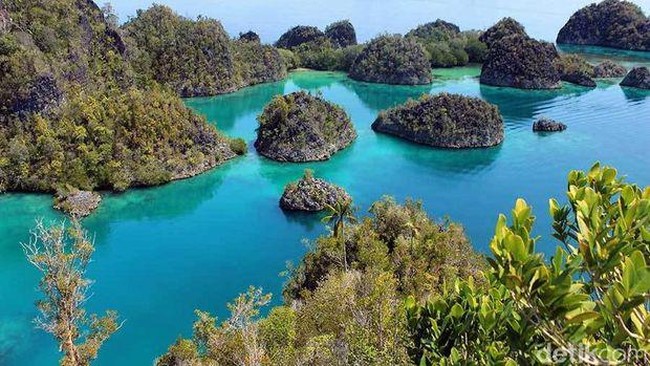
Raja Ampat was singled out for special praise at the UNESCO meeting. The leading tourism destination in Southwest Papua was judged to have fulfilled six recommendations from its previous evaluation.
Improvements included identifying four new geosites on Misool Island, building a geological information centre in Waisai, and increasing the involvement of Indigenous communities in cultural preservation and sustainable tourism development.
UNESCO also praised the government’s commitment to prohibiting mining within the Raja Ampat geopark. All members of the UNESCO Global Geoparks Council present approved the award of a Green Card to Raja Ampat.
In South Sulawesi, Maros-Pangkep UNESCO Global Geopark also retained its status. Covering 5,254.10 square kilometres, the area has more than 720 caves, world-class karst landscapes, prehistoric rock art and marine conservation areas.
Maros-Pangkep’s management was considered to have implemented various UNESCO recommendations, including improving visitor information facilities, drawing up a management plan for 2025–2034 and developing geopark education programmes.
Bojonegoro passes, while Ranah Minang Silokek still has work to do
Alongside the success of the five geoparks, Indonesia received positive news from Bojonegoro, which was approved as a candidate for new UNESCO Global Geopark status at the council meeting. The decision still requires endorsement by UNESCO’s Executive Board, which is scheduled to meet in April 2027.
Ranah Minang Silokek Geopark in West Sumatra, which was also proposed for global geopark status, has been given two years to complete a number of UNESCO recommendations.
Despite earning Green Cards, the five geoparks still have work to do. UNESCO recommended improving visitor facilities and information boards, strengthening governance and developing conservation-based tourism.
“Our goal is to retain Green Card status as evidence that area management can balance conservation, education and community empowerment. Every UNESCO recommendation must therefore be followed up with concrete action and collaboration among all stakeholders,” Widiyanti said.
Source: jawawa.id (https://jawawa.id/newsitem/five-indonesian-geoparks-receive-unesco-green-cards-the-list-1794192633)
Originally published by CNBC Indonesia (https://www.cnbcindonesia.com/lifestyle/20261109085400-33-783409/5-geopark-indonesia-raih-kartu-hijau-unesco-ini-daftarnya), translated from Indonesian