
Five Centuries of Jakarta: A Momentum to Change How We View the City
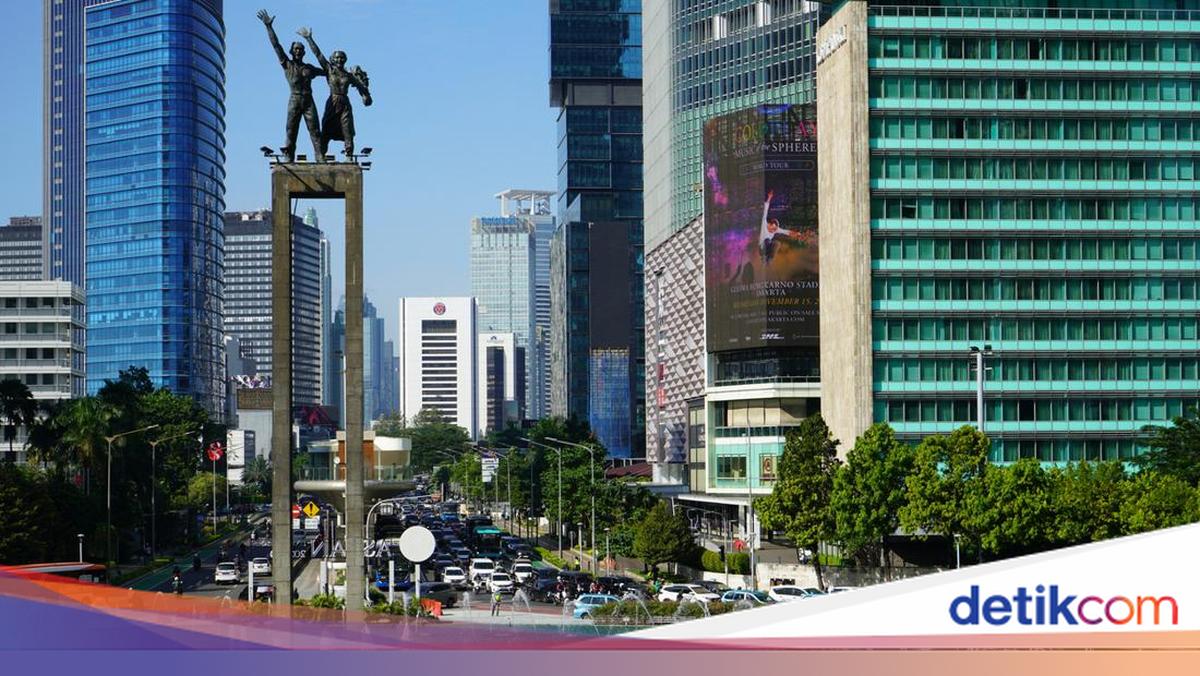
Jakarta will soon reach the age of 500 years. Five centuries. Not many cities in the world have such a long historical journey while still remaining a centre of politics, economy, culture, and now digital transformation for a country. Yet, precisely at this special age, I wish to pose a question that may sound simple but actually determines Jakarta’s future: Are we building a city? Or are we building people?
History proves that a city can be filled with skyscrapers, multi-level toll roads, the fastest internet networks, and even Artificial Intelligence, but at the same time lose something most fundamental: mutual trust, a sense of belonging, and hope. This paradox is currently being faced by almost all major cities in the world, and Jakarta is no exception.
Modern cities are experiencing an invisible crisis. For decades, we have been accustomed to measuring a city’s success through numbers: how many kilometres of roads were built, how much investment came in, the percentage of economic growth, and how many high-rise buildings were erected. All of that is indeed important. However, international research shows that these indicators are no longer sufficient to explain the quality of life of the people. The more modern a city becomes, the happier its residents are not necessarily. Cross-national research using the World Values Survey across more than 70 countries found a consistent pattern: residents of large cities are often no happier than those living in small towns or rural areas. A phenomenon called the urban happiness paradox has even emerged, where economic progress is not automatically followed by an increase in psychological well-being. Why? Because humans do not only need income. Humans also need relationships, trust, meaning, and community.
The threat to Jakarta is not only flooding. If I were asked to name the biggest threat to Jakarta in the next fifty years, my answer might differ from most people’s. It is not flooding, traffic congestion, or even climate change. Rather, it is the crisis of human connection. The WHO has placed loneliness as one of the global public health challenges. Ironically, this phenomenon appears most frequently in large cities. People live side by side in the same apartment, ride the same MRT, and work in the same building, but unfortunately do not know each other. Social media shows thousands of friends, yet when someone experiences a crisis, there may not be a single person who actually comes to knock on their door. A dense city does not necessarily bring closeness.
Jakarta is entering a new era. The first five hundred years of Jakarta were shaped by ports, trade, colonialism, independence, industry, and urbanisation. The next five hundred years will be shaped by something completely different: Artificial Intelligence. For the first time in human history, a city must learn to coexist with algorithms. AI will help predict floods, manage traffic, administer health services, and formulate data-based policies. But AI also brings new risks: disinformation, polarisation, algorithmic bias, and the digital divide. Therefore, Jakarta’s ambition must not stop at becoming a Smart City. All major cities want to be Smart Cities, so what will differentiate Jakarta is its ability to become a Wise City—a city that uses technology to strengthen humanity, not replace it.
Do not just build roads; build trust. Robert Putnam, one of the most influential social scientists in the world, introduced the concept of social capital. His conclusion is simple but very powerful: countries and cities with high levels of social trust tend to be safer, healthier, more productive, and even more prosperous. This means the greatest capital of a city is not just its regional budget, nor investment, nor buildings, but the trust among its citizens. Roads connect places, but trust connects people. A city without trust will always pay a much higher social cost.
Climate change is a crisis of justice. Jakarta indeed speaks about flooding, tidal inundation, land subsidence, and rising sea levels. But in truth, climate change is not just an environmental issue; it is a matter of justice. Various studies on Jakarta show that residents of informal settlements and low-income groups are often the most affected by flooding, land subsidence, and relocation policies. Ironically, they are not the group that contributes the most to environmental damage. At the same time, these communities often demonstrate extraordinary solidarity and adaptive capacity when facing crises. Therefore, the measure of a successful city is not only how quickly floodwaters recede, but also how fairly the city protects its most vulnerable.
Learning from the world’s best cities. The cities that serve as global benchmarks today share one commonality: they no longer merely build infrastructure; they build life. In Copenhagen, public spaces are designed so that people walk, cycle, and interact more. In Paris, the 15-Minute City concept is developing, where basic needs can be reached within a fifteen-minute walk or cycle. In Singapore, green spaces are not just aesthetic complements but part of a public health strategy. In Seoul, the government restored the Cheonggyecheon Stream, which was previously covered by an elevated highway. The impact was not only a better environment but also increased economic activity, improved air quality, and enhanced social interaction. The overarching lesson is simple: the best cities in the world do not only think about vehicles; they think about people. Jakarta needs a new measure of success.
Source: jawawa.id (https://jawawa.id/newsitem/five-centuries-of-jakarta-a-momentum-to-change-how-we-view-the-city-1782125720)
Originally published by detikcom (https://news.detik.com/kolom/d-8542489/lima-abad-jakarta-jadi-momentum-ubah-cara-memandang-kota), translated from Indonesian