
Five Cattle Left on a Remote Island Multiply to 2,000
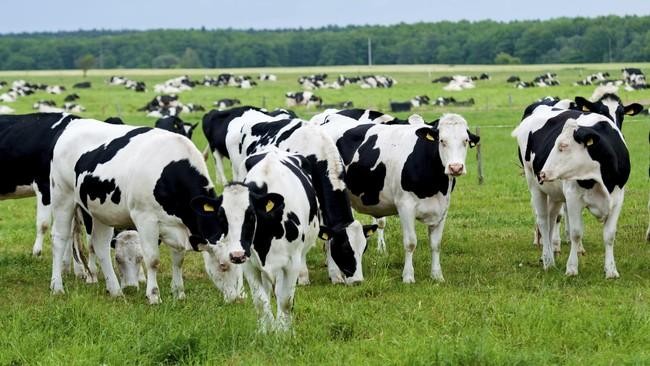
Five cattle left on a remote island in the Indian Ocean in 1871 multiplied in the wild to more than 2,000. However, the herd, which survived freely for more than a century, was entirely eradicated in 2010 to protect the local ecosystem.
The unusual story began when a French farmer from Réunion brought five cattle to Amsterdam Island in 1871. The 55-square-kilometre island lies about 4,440 kilometres south-east of Madagascar and is part of the French Southern and Antarctic Lands.
Without human intervention or supervision, the herd bred rapidly despite living in an isolated environment. Its population is recorded as having peaked at up to 2,000 in 1952, reaching a similar number again in 1988.
The herd’s numbers fell sharply in 1953 following an outbreak of an infectious disease, thought to have been paratuberculosis. Meanwhile, the burgeoning wild cattle population posed a serious threat to the survival of the island’s endemic species.
Local authorities began managing the population in 1988 to restore Amsterdam Island’s terrestrial ecosystem. Measures included culls in 1988 and 1993, as well as the construction of a protective fence for the Amsterdam albatross, a rare seabird found only on the island. In 2010, authorities made the final decision to eradicate all the remaining cattle.
A genomic study reveals how they survived
A genomic study published in June 2024 has shed light on how this small herd managed to survive and multiply so extensively in the wild, according to Earth.com.
The research team, led by Mathieu Gautier of the Centre for Biology and Management of Populations in Montpellier, France, examined genetic material from 18 cattle samples: 12 collected in 1992 and six in 2006.
The analysis produced several key findings:
Extremely high inbreeding: The herd had an average inbreeding rate of 33%, with figures remaining consistent at 32.6% in 1992 and 32.9% in 2006.
Genetic origins: Some 73.1% of the cattle’s genetic ancestry came from European taurine cattle, while the remaining 26.9% descended from zebu cattle from the Indian Ocean region.
A brief population bottleneck: In the late 19th century, the herd experienced an extreme genetic bottleneck. The effective population size—the number of animals that passed on their genes to subsequent generations—is estimated to have been just 4.8.
Despite the exceptionally high inbreeding, the cattle’s genetic diversity declined only moderately. The researchers also found no strong evidence of natural selection removing harmful genetic mutations from the herd.
The scientists concluded that the cattle’s survival was due to the adaptability inherited from their European ancestors. In other words, Amsterdam Island’s climate did not pose a major physical challenge for them.
The findings show that even a very small group of animals can grow rapidly in an isolated environment. At the same time, the emergence of resilient feral populations can create a major dilemma for efforts to conserve native wildlife in remote habitats.
Source: jawawa.id (https://jawawa.id/newsitem/five-cattle-left-on-a-remote-island-multiply-to-2-000-1795913432)
Originally published by CNBC Indonesia (https://www.cnbcindonesia.com/tech/20261128212805-37-789382/5-sapi-telantar-di-pulau-terpencil-tiba-tiba-beranak-jadi-2000-ekor), translated from Indonesian