
Fithra: Data Does Not Yet Show Indonesia's Investment Climate Is the Worst
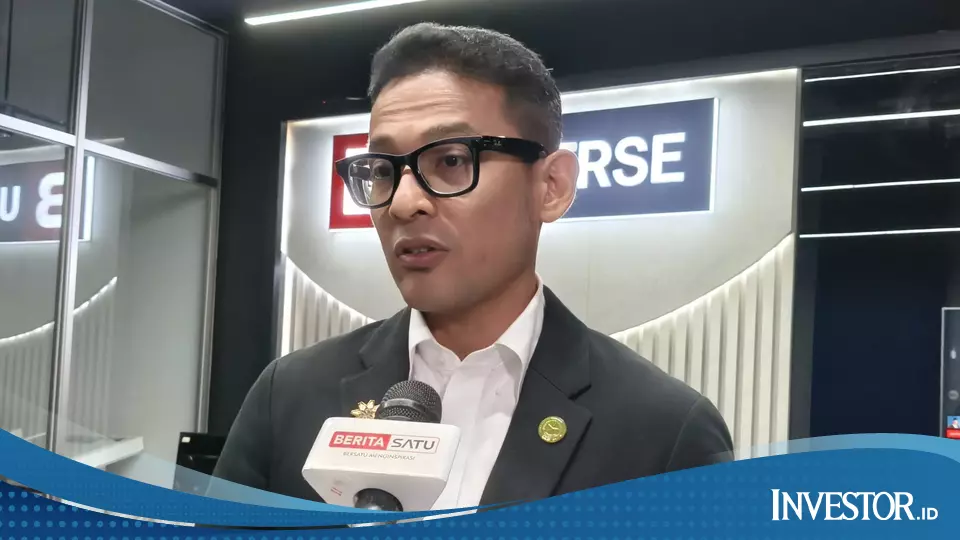
JAKARTA, investor.id – University of Indonesia Faculty of Economics and Business lecturer Fithra Faisal Hastiadi disagrees with the view of Prof. Mohamad Ikhsan, Chair of the Faculty’s Board of Professors, who assessed that Indonesia’s investment climate is in its worst condition in his observation. According to Fithra, the latest indicators do not yet show a systemic loss of investor confidence.
Fithra respects Ikhsan’s criticism, particularly regarding legal certainty, regulatory quality, and policy consistency. However, the label of ‘worst’ and a score of 2 out of 10 is a very strong conclusion that should be supported by commensurate empirical evidence. ‘The stronger a conclusion, the stronger the empirical evidence that should support it,’ Fithra said in his response received by Investor Daily on Saturday (22/8/2026).
He pointed out that investment realisation throughout 2025 reached Rp1,931.2 trillion, growing 12.7% year on year. In the first half of 2026, investment reached Rp1,010.6 trillion, still up 7.2% year on year. Growth has indeed slowed compared with the first half of 2025, which reached 13.6%, but moderation is different from contraction. ‘Our investment base is getting larger, but realisation continues to record positive growth,’ he said.
Foreign direct investment (FDI) is actually strengthening. Fithra particularly highlighted developments in foreign direct investment. In the first quarter of 2026, FDI reached Rp250 trillion, growing around 8.5% year on year. In the second quarter of 2026, FDI rose to Rp257.7 trillion, surging around 27.4% year on year.
Cumulatively, FDI in the first half of 2026 reached Rp507.6 trillion, up 17.3% from Rp432.6 trillion in the same period of 2025. ‘So we are not seeing foreign investment flows drying up. On the contrary, growth is actually experiencing a fairly sharp acceleration,’ Fithra stressed.
According to him, FDI is important because it reflects long-term capital commitment. When investors build factories, smelters, data centres, industrial estates, purchase machinery, or form supply chains, those decisions stake capital on economic prospects for years to come. ‘Investors ultimately vote not with words, but with capital commitment,’ Fithra said.
Gross fixed capital formation (GFCF) data also shows a similar trend. GFCF grew 5.96% year on year in the first quarter of 2026 and accelerated to around 6.87% in the second quarter.
According to Fithra, if the investment climate were truly at its worst point, there should be a consistent pattern of falling foreign direct investment, companies holding back expansion, weakening capital goods purchases, and GFCF slowing sharply or even contracting. ‘But the first half of 2026 data does not yet show that pattern,’ he said.
Nevertheless, Fithra acknowledged that Indonesia’s homework remains substantial. Regulatory certainty, policy consistency, transparency, institutional quality, bureaucracy, a level playing field, and policy predictability must continue to be improved.
He also reminded that investment cannot be assessed solely by the amount of capital entering, but also by whether that investment is productive, technology-intensive, creates quality jobs, generates knowledge transfer, and improves productivity.
‘We must listen to harsh criticism as an alarm so that reform does not stop. But for me, an alarm is different from a diagnosis,’ he said.
Previously, Prof. Mohamad Ikhsan gave a score of 2 out of 10 to Indonesia’s investment climate at the Suar Forum 2026 in BSD City, Tangerang, on Friday (21/8/2026). ‘To be honest with all of you, based on my observation, this is the worst condition in my observation,’ Ikhsan said.
He assessed that Indonesia actually has very large economic potential. However, the gap between potential and realisation is widening. He also highlighted issues of trust and credibility, transparency and credibility of data, and the importance of maintaining competition.
Fithra does not deny the criticism. However, he believes that institutional quality issues need to be distinguished from a diagnosis of the actual condition of investment. ‘Perceptions deserve to be heard. Institutions must continue to be improved. But data must also be given the opportunity to speak,’ he said.
With first-half 2026 investment still growing 7.2%, FDI up 17.3%, second-quarter FDI surging 27.4%, and GFCF growing 6.87%, Fithra believes the data does not yet depict investors leaving Indonesia. ‘Is it true that it is at its worst point? For such a harsh conclusion, I think the latest figures actually tell the opposite story,’ Fithra concluded.
Source: jawawa.id (https://jawawa.id/newsitem/fithra-data-does-not-yet-show-indonesias-investment-climate-is-the-worst-1787417414)
Originally published by investor.id (https://investor.id/macroeconomy/451284/fithra-data-belum-tunjukkan-iklim-investasi-ri-terburuk), translated from Indonesian