
Fishery By-Products Hold Potential as High-Value Biomolecules for Blue Economy
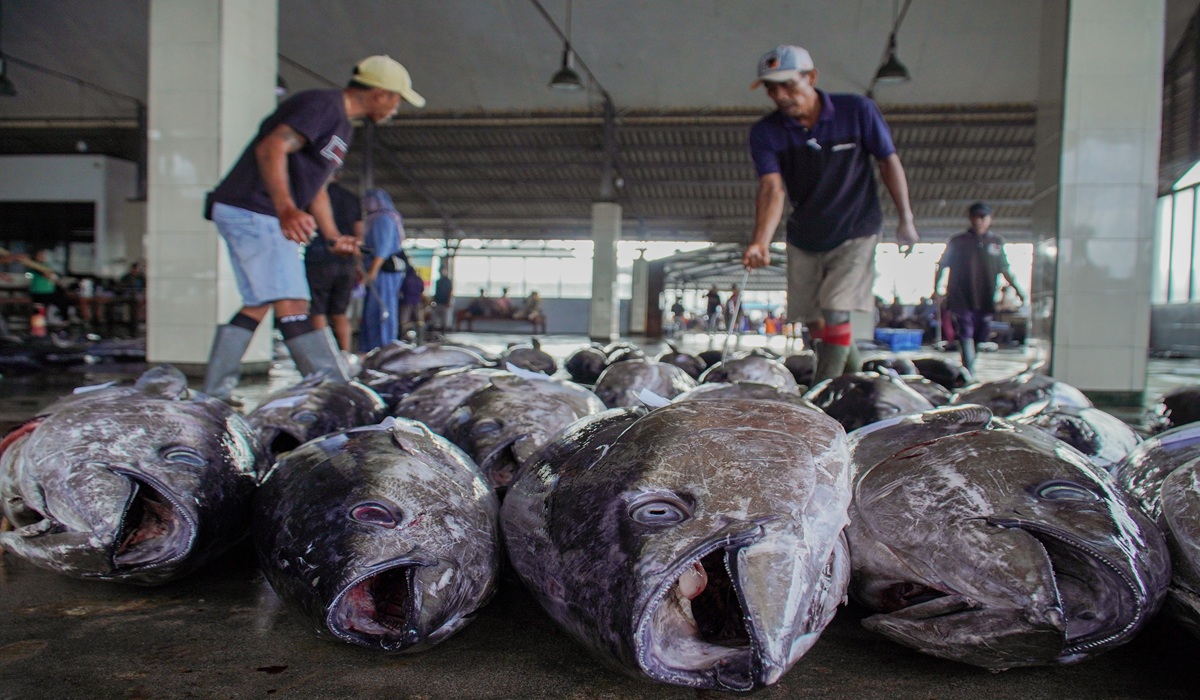
Fishery by-products, long regarded as waste, harbour extraordinary potential. Beyond supporting food security, optimising this marine biomass is projected to strengthen the health industry and accelerate Indonesia’s blue economy.
Professor Wini Trilaksani, a leading academic at the Faculty of Fisheries and Marine Science (FPIK) of IPB University, asserted that transforming blue food by-products into value-added marine biomolecules is a strategic move. This effort is believed to enhance the competitiveness of the national fisheries sector on the global stage.
During her Scientific Oration as an IPB University Professor on Saturday (27/6), Prof Wini presented concerning data on global fisheries efficiency. Currently, around 35% of fish catches are wasted along the supply chain. Furthermore, only about 54% of fishery harvests are directly consumed by humans.
“The remainder is lost due to spoilage, inefficient processing, and low utilisation of by-products. This situation not only causes economic and environmental losses but also has the potential to become a serious nutritional problem,” she explained.
According to Prof Wini, the sea does not only provide fish as a table commodity. Behind the parts often discarded—such as heads, bones, skin, scales, fish eyes, swim bladders, and shells—lies an abundance of nutrients and bioactive compounds. These parts constitute secondary marine biomass containing components that can be processed into high-value-added products, ranging from functional foods, nutraceuticals, cosmetics, marine pharmaceuticals, to biomaterials.
One breakthrough developed by Prof Wini and her team is the utilisation of tuna eyes. This typically discarded part has proven to be a highly potential source of omega-3 to support public health and intelligence. Research from the IPB University team detailed the nutritional content of large tuna eyes.
Prof Wini emphasised that the future of Indonesian fisheries no longer depends solely on fish production volume, but on the industry’s ability to optimise all harvested biomass. The utilisation of these by-products also plays a crucial role in reducing the carbon footprint through resource efficiency.
“The blue economy is not only built from a sea that produces commodities, but from the ability of science to transform every fraction of biomass into value,” she concluded.
Source: jawawa.id (https://jawawa.id/newsitem/fishery-by-products-hold-potential-as-high-value-biomolecules-for-blue-economy-1782705046)
Originally published by Media Indonesia (https://mediaindonesia.com/humaniora/905375/potensi-limbah-perikanan-jadi-biomolekul-bernilai-tinggi-untuk-ekonomi-biru), translated from Indonesian