
Fishermen to Receive Modern Vessels as Indonesia Upgrades Fishing Fleet
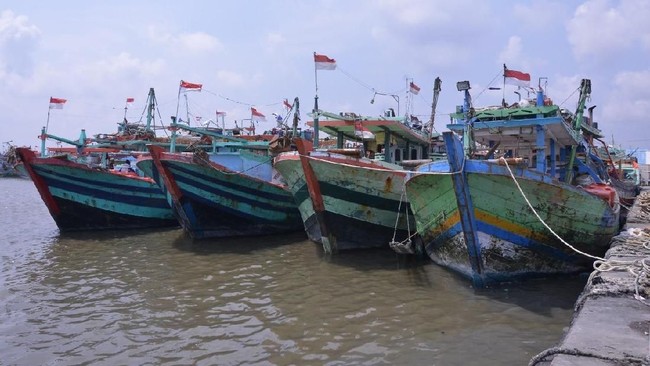
Minister of Maritime Affairs and Fisheries Sakti Wahyu Trenggono has revealed the rationale behind the government’s push to modernise the national fishing fleet. He noted that the majority of Indonesian fishing vessels still use wooden boats, which are considered unable to meet modern fishing standards in terms of hygiene, safety, and sustainability. Consequently, the government is targeting the construction of 1,582 modern fishing vessels by 2028, including 1,000 units of 30 gross tonnage (GT), to replace the traditional fleet currently used by fishermen. This modernisation programme is one of the government’s priorities to increase the productivity and competitiveness of the national fisheries sector.
“Our fishing vessels are almost… if I say 90% that’s too extreme, maybe around 70% are still using wooden boats. With wooden boats, in terms of hygiene, safety, and the fishing methods used, outsiders still consider our fishing methods barbaric. So, it’s not yet modern,” Trenggono said during the CNBC Indonesia Economic Update 2026 on Thursday (25/6/2026). According to Trenggono, modernising the fleet is not just about replacing the boat material, but also about changing the way fishermen catch fish to be more efficient and environmentally friendly. The new vessels will be equipped with various supporting technologies such as fish finders, freezers, and processing facilities.
“With this modernisation, the hope is that with facilities like fish finders, freezers, and processing units, the fishing methods will also be environmentally friendly. So, not everything is taken indiscriminately,” he explained. He assessed that the use of such technology would help fishermen target their catch more precisely without damaging the marine ecosystem. “Foreigners say that Indonesia’s fishing methods are still barbaric, catching everything including coral reefs. Even though we have implemented new rules, practising them in the field is still difficult. This is what we want to avoid,” he said.
Beyond preserving fish resources, modern vessels are expected to improve the quality of the catch because they are equipped with better storage facilities. “With this, the catch is better preserved, the boat is cleaner, more hygienic, and the crew is better educated. That is the hope,” Trenggono stated. The government is also preparing a change in the fishermen’s operational patterns. Currently, most fishermen use vessels under 5 GT, limiting them to one or two days of fishing. The presence of 30 GT vessels is expected to allow fishermen to operate further and in groups.
“The 1,000 units of 30 GT vessels will be placed in 1,000 Red and White Fishermen’s Villages. Previously, they used small boats under 5 GT for one-day or maximum two-day fishing trips. Now, with these vessels, they will shift and work in groups,” he said. One 30 GT vessel can be operated by around 15 people, significantly increasing fishing capacity compared to small boats manned by only two or three fishermen. With the new fleet, the fishing range will also expand to over 12 nautical miles.
To realise this programme, the Ministry of Marine Affairs and Fisheries is collaborating with the Ministry of Defence, specifically its Defence Logistics Agency, in the shipbuilding process. The government is currently finalising the preparatory stage with an initial target of completing 50 modern vessels by the end of this year. “The Ministry of Defence’s Logistics Agency has experience building modern ships like warships. To ensure good coordination, we have provided the specifications,” he explained. “Our hope is that by the end of this year, 50 units can be completed. If that happens, then by 2027-2028, everything will be finished,” he added. Beyond building the ships, the government is also preparing human resources to operate the modern fleet. Fishermen will receive training, and graduates from maritime and fisheries polytechnics will be involved to support operations in the Red and White Fishermen’s Villages. “Because this is modern, the villages will initially be managed by professional managers. Then, there will be education for the fishermen. We will train them to shift from traditional methods to more modern ones. That is what we are preparing,” Trenggono concluded.