
Fish Taboos in Bima: Kuwe Brings Disaster, Belanak Causes Deafness
Residents of Jia Village, Sape District, Bima Regency, and Jatiwangi Subdistrict, Asakota District, Bima City, West Nusa Tenggara (NTB), observe unique traditions passed down through generations. These involve a prohibition on consuming kuwe fish for Jia villagers and a taboo against eating belanak fish for Jatiwangi residents.
“From the beginning, Jia villagers have never consumed kuwe or buta bangkolo (in the Bima language),” said local youth leader Muhammad Rusdin to detikBali on Sunday (9/8/2026).
According to Rusdin, abstaining from kuwe fish has become a tradition that must be upheld across generations. To this day, the prohibition remains firmly in place. He claims that any villager who dares to consume kuwe fish risks bringing disaster upon themselves, their family, and the entire village, ranging from severe skin itching to outright catastrophe.
Rusdin explained that the taboo originated from the story of a Ncuhi (a local elder or ancestor) from Jia who survived a maritime accident. The story goes that the Ncuhi survived thanks to the help of a kuwe fish. “From the stories passed down, the Ncuhi of Jia made a vow or swore that his descendants would never consume kuwe fish. This was a form of gratitude and respect to the kuwe fish that helped save him,” he said.
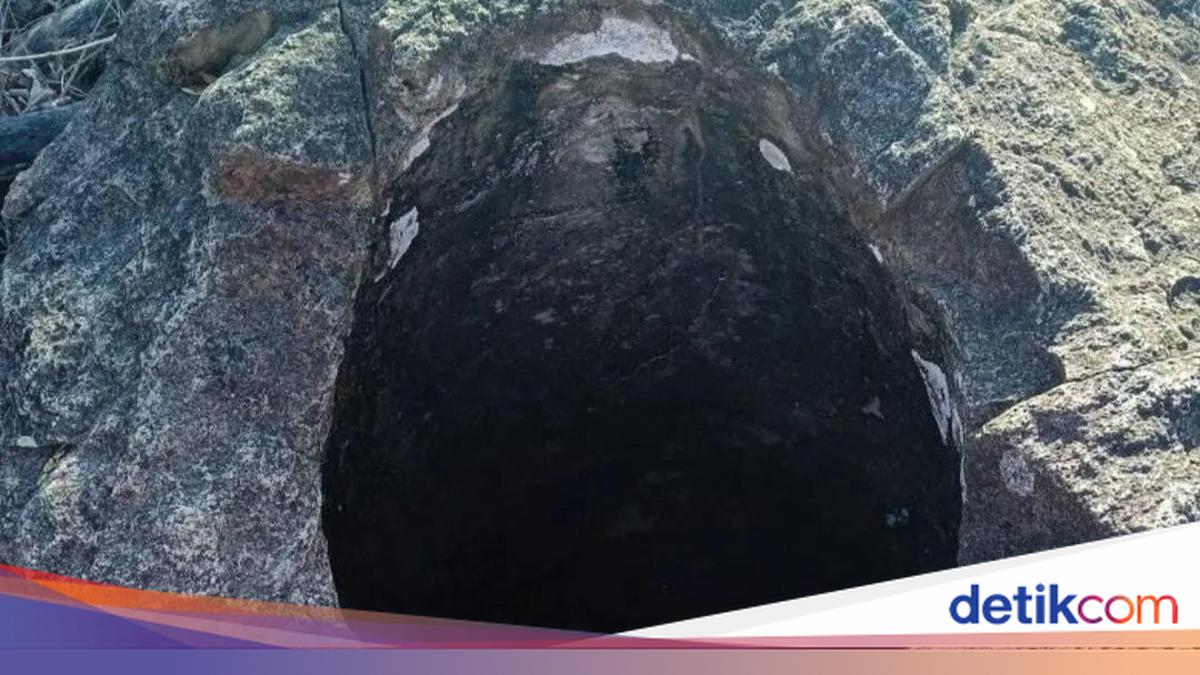
In addition to the oath, the Ncuhi and the villagers built a large cauldron as a tribute to the kuwe fish. To this day, the cauldron is known as the tabe bangkolo inscription, located on a hill of Mount Jia Village, and is frequently visited. “Until now, we still believe and hold firmly that eating kuwe fish will bring misfortune, disaster, and cause family members to fall ill. We continue to uphold this as a form of respect for our ancestors,” Rusdin added.
A similar tradition is found in Jatiwangi Subdistrict, where residents have a taboo against the belanak fish, known locally as uta mpole. Mahdin, the head of RT 05 in Jatiwangi, stated that locals believe the fish must not be eaten. “If any Jatiwangi resident eats uta mpole, they will experience dizziness, senility, and even deafness,” Mahdin said.
Mahdin noted that this practice has been followed for generations. Not only native residents but also newcomers who have settled and lived long-term in the Jatiwangi area are prohibited from eating uta mpole. “It has been passed down. If outsiders come to live here, we inform and explain it to them. After that, they naturally stop consuming it,” he said.
Mahdin revealed that uta mpole is not consumed because it is one of the fish that lives in a parafu site. For the Bima people of old, a Parafu was a sacred or hallowed place, such as a large tree, a spring, or a rock, believed to be inhabited by spirits, ancestral souls, or supernatural forces. “This story continues to be passed down through generations and is still believed from one generation to the next,” he stated.
Mahdin recounted an incident where a newcomer stubbornly ate belanak fish. The following day, the person suddenly fell ill and lost their hearing, becoming deaf. “Believe it or not, the fact is many have complained of sickness and deafness after consuming this uta mpole,” he said. He added that to this day, he has never seen a belanak fish in person, only hearing stories and seeing photos and videos circulating on social media. “People say this fish is delicious and savoury. But unfortunately, I cannot eat it,” he concluded.
Regarding this matter, local Bima history and culture researcher Fahru Rizki confirmed the existence of the folklore concerning the kuwe fish taboo in Jia Village and the belanak fish taboo in Jatiwangi. However, he admitted he has not yet conducted in-depth research on the origins of these two traditions. “This matter is perhaps more of a doctrinal culture,” he remarked briefly.