
Fiscal Reality, Defence Spending Ambitions, and Debt Risks
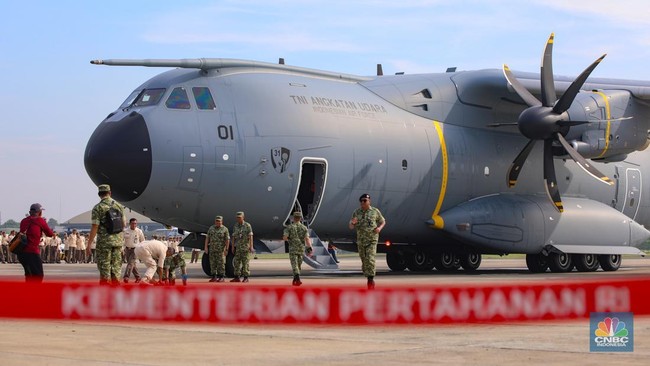
Unlike the Macroeconomic Framework and Fiscal Policy Principles (KEM-PPKF) of previous years, the 2027 KEM-PPKF does not detail the indicative ceiling for each ministry or agency, except for the total indicative ceiling of Rp 1.38 quadrillion. Through a meeting between the government and the House of Representatives (DPR), it was revealed that the Ministry of National Development Planning/Bappenas only provided an indicative ceiling for the Ministry of Defence worth Rp 139 trillion, a decrease compared to the 2026 KEM-PPKF figure of Rp 167.4 trillion from a total indicative ceiling of Rp 1.51 quadrillion.
It is not surprising that Defence Minister Sjafrie Sjamsoeddin requested an additional budget of Rp 195 trillion on top of the indicative ceiling set by the Ministry of National Development Planning/Bappenas. Regarding this request, which would bring the total defence budget for the 2027 fiscal year to Rp 334 trillion, several matters deserve attention.
Firstly, the fiscal condition. The reduction in the indicative ceiling for the Ministry of Defence reflects a government fiscal situation that is far from healthy. Referring to available data, other ministries and agencies also experienced a reduction in their indicative ceilings, meaning the shrinkage is not exclusive to defence spending. Since the beginning of this year, the Indonesian economy has faced turmoil rooted in government fiscal policies that lack market confidence, a situation exacerbated by external factors such as the war in the Middle East and its implications for the national economy. Economic shocks inevitably affect government revenue from taxes and non-tax sources, forcing the government to take on debt, both through Government Securities (SBN) and loans, to finance various priority spending activities. The high interest rate policy of the US Federal Reserve and the strengthening of the US dollar mean the government must offer higher yields to investors if it wants its SBN to sell on the international market.
Several priority government spending programmes that absorb massive budgets further narrow the fiscal space, which has been tight since the previous administration. Faced with these circumstances, it is reasonable for the Ministry of National Development Planning/Bappenas to be conservative and cautious in projecting indicative ceilings for ministries and agencies.
Secondly, government programme priorities. If referring to the 2027 KEM-PPKF, the defence sector’s role is merely as a supporting cluster, with spending priority given to the National Priority Work Programme (PKPN) cluster. This cluster consists of food sovereignty, energy and water independence, education, downstreaming and industrialisation, infrastructure, housing and disaster resilience, and the people’s economy and villages. This differs from the 2026 KEM-PPKF, which made the defence sector one of eight strategies to support the development agenda. It is natural and reasonable if sectors related to the PKPN cluster receive budget priority in the 2027 fiscal year.
If the additional budget request of Rp 195 trillion is approved by the Ministry of Finance and the DPR, the Ministry of Defence will certainly receive the largest budget in the 2027 State Budget (APBN). In fact, this year’s defence budget also reached Rp 337 trillion, but it was disguised in two different budget accounts: the Ministry of Defence budget and the State General Treasurer budget. Of that figure, Rp 187.1 trillion was placed in the Ministry of Defence budget, while the remaining Rp 150.5 trillion was allocated to the State General Treasurer budget. The question is whether this pattern of splitting the allocation will continue next year.
Thirdly, work programme priorities. The request for additional defence funding is part of an effort to implement the Ministry of Defence’s work programme, which translates the defence force development policy. The question is whether the total proposed budget of Rp 334 trillion entirely covers work programmes that must be executed immediately without a priority scale. For instance, is it necessary to continue the formation of new territorial development battalions in the 2027 fiscal year? If the Ministry of Defence intends to support the Indonesian National Armed Forces (TNI) in carrying out military operations other than war that are assistance-based, such as natural disaster management, assisting regional government tasks, and empowering defence areas, why is such a budget not prepared by the ministries or agencies that have primary duties in those fields? Why must the defence budget also cover activities that are not the main tasks of the Ministry of Defence and the TNI?
On the other hand, the Ministry of Defence still requires a large budget to support the execution of the TNI’s primary duties, such as the construction of defence infrastructure. The ministry also still needs Rupiah Murni (RM) funds to support the activation of defence equipment procurement contracts based on Foreign Loans (PLN), which for the 2025-2029 period are projected to be worth US$34.8 billion. As an illustration, of the Financing Source Determination (PSP) of US$33.9 billion approved by the Minister of Finance, US$14 billion comes from Foreign Private Creditors (KSA), which are known to have higher loan interest rates because no country acts as a loan guarantor. The decision to choose KSA in such a large quantity certainly raises long-term risks for Indonesia’s debt management, especially amid market distrust of the government’s fiscal policy. Additionally, there remains a risk of a downgrade to the Indonesian government’s sovereign debt rating by one or several global rating agencies. The risk grows even larger if the PLN adopting the KSA scheme is spent in a country that is currently experiencing a recession.