
First Service Post for NTT Earthquake Established, Indonesia Siaga Programme Serves 3,466 Affected Residents
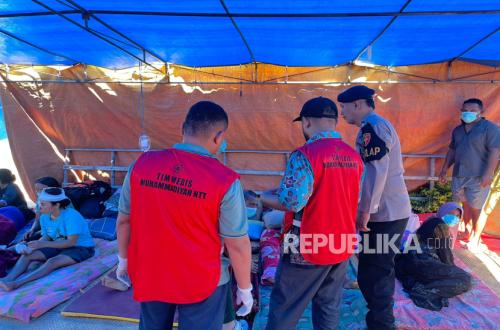
Disaster management in Flores, East Nusa Tenggara, is continuing. The response aims to ensure the basic needs of affected communities are met. The Muhammadiyah Disaster Management Centre (MDMC) together with Lazismu are strengthening humanitarian services for communities affected by the earthquake through the Indonesia Siaga programme.
Ensuring the basic needs of disaster-affected communities continues through health services, food provision, family kits, psychosocial support, emergency education, clean water and sanitation, as well as temporary shelter, according to Aulia Taarufi, Deputy Secretary of MDMC PP Muhammadiyah.
During the emergency response period, this response is managed through the opening of Coordination Posts (Poskor) in six regencies as well as plans to establish service posts at nine Muhammadiyah service points. The emergency response phase is planned to last for 30 days, involving various volunteer elements and Muhammadiyah resources from within and outside the region.
To support health services, MDMC has prepared eight Emergency Medical Team (EMT) teams. Volunteer support from East Java, Kupang, and Bima has also been mobilised to strengthen the response on the ground. Community service programme (KKN) teams from UMY, UAD, and Universitas Muhammadiyah Kupang are also involved in providing services together with the community and local government.
Head of the MDMC Coordination Post, Indrayanto, said that strengthening coordination is an important part of ensuring the response can reach affected communities according to their needs.
“We are carrying out this emergency management by strengthening coordination in affected areas and opening service posts at several Muhammadiyah service points. Volunteers from various regions together with the community and local government are working hand in hand to ensure basic services can be provided to affected residents,” said Indrayanto.
One area currently the focus of services is Sambi Rampas Sub-district, East Manggarai Regency. As of Sunday (16/8/2026) at 15.00 WITA, the joint team continued to collect data and verify the condition of residents in four coastal areas, namely Naga Rama Village, Nanga Baling, Nanga Baur, and Pota Urban Village.
Data collection is focused on these areas because there are many survivors as well as quite severe damage to buildings and infrastructure. The team, consisting of KKN Pena UMY students, KKN Universitas Muhammadiyah Kupang students, together with the community health centre (Puskesmas), military sub-district command (Koramil), police sub-district (Polsek), and the Sambi Rampas sub-district head, is collecting data on the condition of affected residents as a basis for determining service needs.
The data includes the condition of victims, damage to settlements, public facilities, and the needs of communities in affected areas. To support handling on the ground, the main post has been established in the grounds of SMK Muhammadiyah Manggarai Timur. The post serves as a community service centre covering medical treatment, a public kitchen, as well as information services and data collection of affected residents.