
First in Indonesia, School Establishes Waste Education Centre
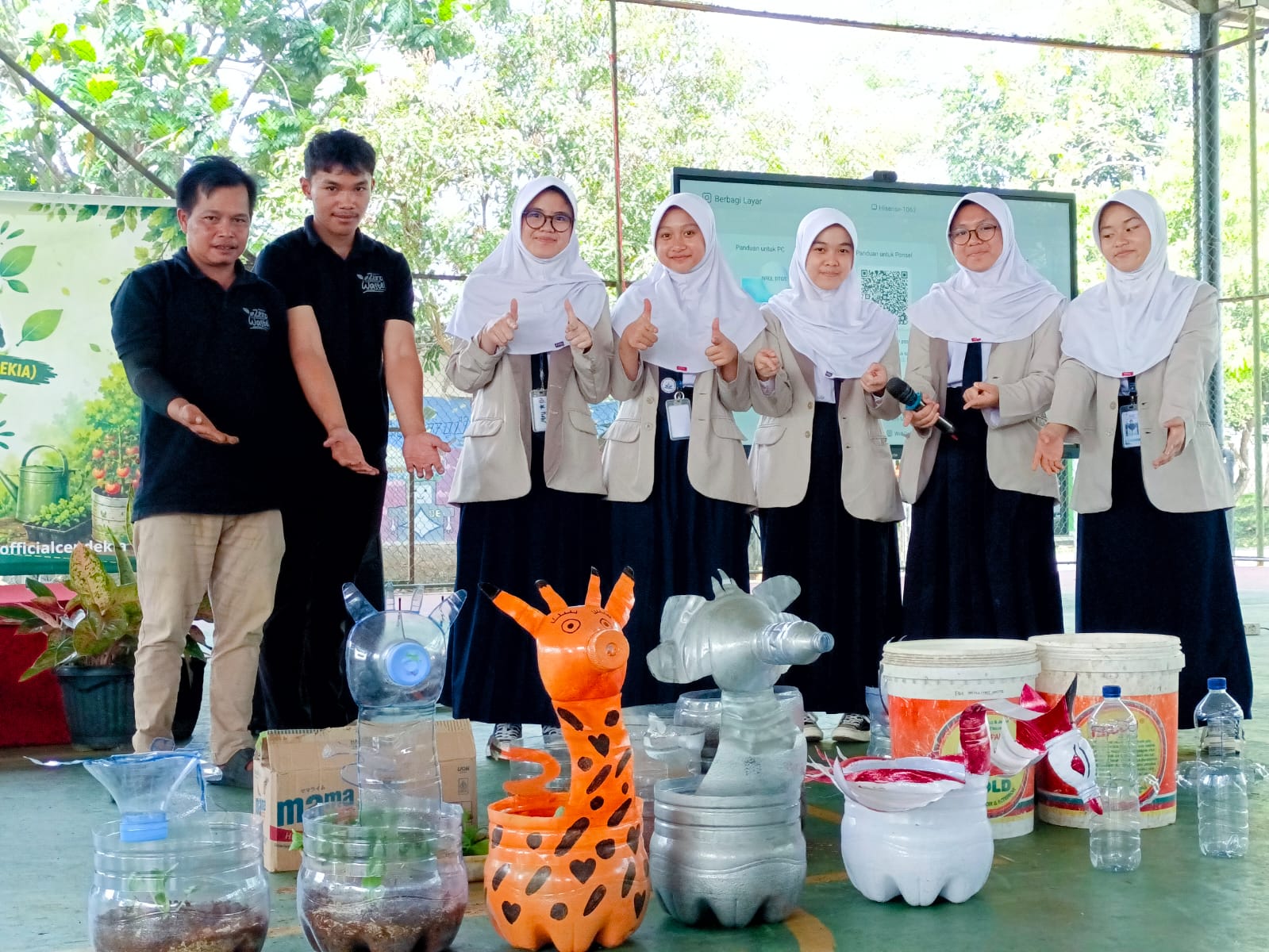
Yayasan Pribadi Kamila is the organiser of TKIT Annisa, SD Islam Cendekia, SMP Islam Cendekia, and SMA PU Al-Bayan Cendekia in Cianjur Regency, West Java. The school has developed a Waste Education Centre (WEC) programme. The programme, which has been running for almost two years, is said to be the first of its kind in a school environment in Indonesia.
WEC is an educational activity centre aimed at raising public awareness of waste management and encouraging concrete action to reduce its environmental impact. Its four activity pillars are reducing waste volume, managing waste, utilising the results of waste management, and environmental outreach. These four pillars are realised through scheduled learning, structured counselling, training, and environmental campaigns.
Head of the Waste Education Centre, Deni Rohimat, said the establishment of WEC at Sekolah Islam Cendekia was based on the environmental crisis caused by waste. At least two main challenges exist in facing this condition: environmental restoration and the formation of a future generation that is more environmentally conscious. “We see the need to be part of the solution by establishing the Sekolah Islam Cendekia Waste Education Centre, which has existed since 5 June 2024,” said Deni on Saturday (29/8).
He said the objectives of establishing WEC include minimising the contribution of waste disposal in Cianjur Regency, while also preparing a generation that cares about the environment from an early age. Building environmental awareness and concern is not easy. It requires the role of all parties, so the foundation involves all employees and students at all levels to achieve the programme’s goals.
This information was reinforced by the foundation’s Operational Director, Rita Yulianti. “We involve all members of the institution and integrate the curriculum at kindergarten, primary, junior high, and senior high levels,” she stressed. Rita believes educational institutions have a strategic role in the waste problem, as it relates to negligent human behaviour.
Based on data compiled from various sources, as of July 2024, 36.7% of waste in Indonesia was not properly managed. This condition is linked to low public awareness of waste management. In West Java, waste production remains high, reaching 13.41 thousand tonnes per day. In Cianjur Regency, residents are still found dumping waste into rivers, prompting the local government to impose social sanctions.
Addressing the waste crisis is a shared responsibility, including educational institutions as entities that also contribute significantly to waste production. At the kindergarten to senior high school level, for example, data from Statistics Indonesia (BPS) in 2025 shows Indonesia has 303,445 educational institutions. This does not include boarding schools and Islamic boarding schools (pesantren), which have higher waste production levels.
There are 42,369 pesantren with 6,274,307 students in Indonesia. Of that number, 13,005 pesantren with 646,143 students are in West Java. If each person living in a pesantren produces 0.68 kg of waste per day with a composition of 60% organic and 40% inorganic, then from students alone in West Java, this could generate around 439.37 tonnes of waste per day, comprising 263.62 tonnes of organic waste and 175.75 tonnes of inorganic waste.
“Environmental education is part of our distinctive curriculum in the form of institutional quality commitment. We are bold about this because environmental issues are a serious shared challenge,” said the Education Director of Yayasan Pribadi Kamila Cianjur, Dr. Dindin Alawi, S.Si., M.Pd. “We are aware that environmental education is very important and needs to be implemented from an early age, comprehensively, and sustainably,” added the Chairman of Yayasan Pribadi Kamila Cianjur, Drs H Lucky Hermawan.
RELIGIOUS MESSAGE
“The Islamic command to protect the environment from damage is clear. That is why the foundation always pays attention to this matter,” said foundation supervisor KH Ghazali Rahman, S.Pd.I. “The Quran and science cannot be separated. The two are very harmonious, including their messages on preserving the environment,” explained foundation patron Ir. Runjai Wangsa Laksana, M.Pd.
IMPLEMENTATION
The implementation of the WEC work programme varies according to the uniqueness of each school level. At the kindergarten unit, the WEC programme is implemented through education on disposing of waste in the correct place according to category, singing and clapping about waste that they developed themselves, and watering plants. “All of this is done repeatedly and involves all school members in order to build meaningful and sustainable habits,” said Head of TKIT Annisa Lia Khumairoh Z., S.Pd.
At the primary school unit, implementation is carried out through socialisation activities during every break time and after Duha prayer. “Including showing videos related to waste management and watering plants,” said Head of SD Islam Cendekia, Ryzki Armansyah, S.Pd.
At the junior high school unit, the WEC programme is implemented through the weekly ‘Pusaka’ (Pot Unggulan Sayur Andalan Karya Anak Cendekia) activity for three months, followed by daily monitoring of waste management as part of the planned impact. “Pusaka is not merely a plant commodity, but an entity of creativity of school members in managing waste in an environmentally friendly and sustainable manner,” said Head of SMP Islam Cendekia, Nisrina Meta Gamanik, S.Pd.
At the senior high school unit, all school members are involved. Implementation is carried out with a sustainable development approach, based on real practice, reflection, collaboration, and integrated with learning and school culture. Routine activities are realised through ‘Selasa Berseka’ and ‘Jumat Bersih’ with the habit of sorting plastic, paper, glass, and organic waste every day in class. Collected waste is weighed and further processed twice a week, accompanied by environmental community service activities involving students.
Organic waste is used as a learning resource through project learning activities (catfish ponds, hydroponics, aquaponics, and leachate). Inorganic waste is managed through the practice of making ecobricks, paving blocks, and insulators while upholding high safety standards in every process.
The senior high school has an Environmental Ambassador group consisting of student representatives from each class, guided by two supervising teachers and the head of WEC. Their role regarding the environment is very significant. Not limited to waste management, the Environmental Ambassadors also have a Botanika programme, introducing the names and interesting facts of each plant to all school members in order to foster care and familiarise harmonious living with the environment.
“I see waste not as a problem, but as a source of innovation for school members,” said Head of SMA PU Al Bayan Cendekia, Ruddy Herdriawan, ST., MM.
IMPACT OF THE WEC PROGRAMME
The gradual implementation of the Waste Education Centre work programme has had a positive impact on the environment and school members under Yayasan Pribadi Kamila Cianjur, especially in reducing waste volume. Almost 100% of organic waste can be recycled and utilised within the school environment. Most plastic waste can be managed, and waste disposal outside the school environment has decreased drastically.
In addition, the environmental awareness of school members has tended to increase. A low-waste lifestyle trend is beginning to form, students’ skills in managing waste have improved, and external parties have been stimulated to take an interest in environmental care movements. The trend of decreasing waste production is directly proportional to waste education through environmental campaigns.
“Reducing waste production is not easy. Everyone needs to be constantly reminded. Even adults, when it comes to waste, are like small children; they need to be constantly reminded,” stressed General Affairs Manager, Asyraf, SH.
Besides bringing positive impacts, the environmental care movement through the Waste Education Centre has also received positive impressions from students and school committees as parent representatives. “It’s fun, because I now know where to throw rubbish. I like watering plants with a sprayer the most because it makes the plants fresh, not wilted,” said Class B1 student Mahesa Fransisca.
Hasby, a grade 5B student at SD Islam Cendekia, said he was happy to learn at WEC. Much knowledge can be gained, including making flower pots from used bottles. “I am very happy to participate in Waste Education Centre activities. I can learn directly how to manage waste and protect the environment. It turns out that protecting nature is fun and there are many things to learn,” added another student, Irdina Putri Afiqah, a grade 8D student at SMP Islam Cendekia.
Meanwhile, Daffa, a grade XI-1 student, said he was happy and proud to be directly involved in the Waste Education Centre programme at SMA PU Al Bayan Cendekia, especially as he was trusted to be part of the Environmental Ambassadors. For him, the WEC programme is more than just learning to keep the environment clean. He gained new experience in sorting, processing, and reusing waste so that it has value.
“My friends and I have become more caring and responsible towards the environment. Being an Environmental Ambassador also makes us feel we have a role in inviting friends to build better habits in managing waste. We are proud to contribute to creating a cleaner, more beautiful, more comfortable school and pesantren environment, and to be part of the change towards a Zero Waste culture,” he stressed.
Parents also appreciate and fully support the implementation of the Waste Education Centre programme, which is scheduled into students’ learning activities and even integrated into the foundation’s curriculum. “I see the students are very enthusiastic about participating in waste sorting, simple recycling, and the habit of disposing of waste in the right place, which is packaged attractively by the teachers,” said Chair of the TKIT Annisa Committee, Intan Herawati, S.Keb., Bdn.
These activities not only shape environmentally caring character from an early age but also teach responsibility, discipline, and cooperation. “We agree that environmental education is an important part of forming a generation that is noble and cares about the sustainability of the earth,” she explained.
Meanwhile, Chair of the SD Islam Cendekia Committee, Wini Noviany, observed changes in children’s behaviour towards waste, including learning not to litter and being more aware of environmental protection. “Alhamdulillah, the children look very enthusiastic about participating in the Waste Education Centre programme. The activities are very positive in building environmental awareness from an early age and training good habits in students,” explained Chair of the SMP Islam Cendekia Committee, Isma Masrofah.
“This is the spirit we see and encourage at SMA PU Al Bayan Cendekia through the Waste Education Centre and the Zero Waste movement. This education not only teaches how to manage waste but also builds awareness that every individual has a responsibility to reduce waste generated from the source. Hopefully, the small steps taken by SMA PU Al Bayan Cendekia can be part of a larger solution for society and the environment. From school we move, from family we habituate, and from today we begin. Zero Waste is not just an ideal, but our shared responsibility,” said Chair of the SMA PU Al Bayan Cendekia Committee, Sulkifly Baro.
Dr. Dera Nugraha, an education activist who also contributed to the establishment of the Sekolah Islam Cendekia Waste Education Centre, is optimistic about this environmental programme. According to him, WEC has not yet been able to overcome the waste crisis in Cianjur Regency, let alone in West Java. However, in terms of contributing to environmental improvement and preparing a future generation that is more environmentally conscious, its motivation, realistic work programme, and real impact can be replicated elsewhere according to context. “Especially for similar educational institutions in Indonesia, for the restoration and a better environmental future,” said Dera.