
First Half of 2026: Passenger Volume on Five Longest Train Services in Sumatra Rises Across the Board
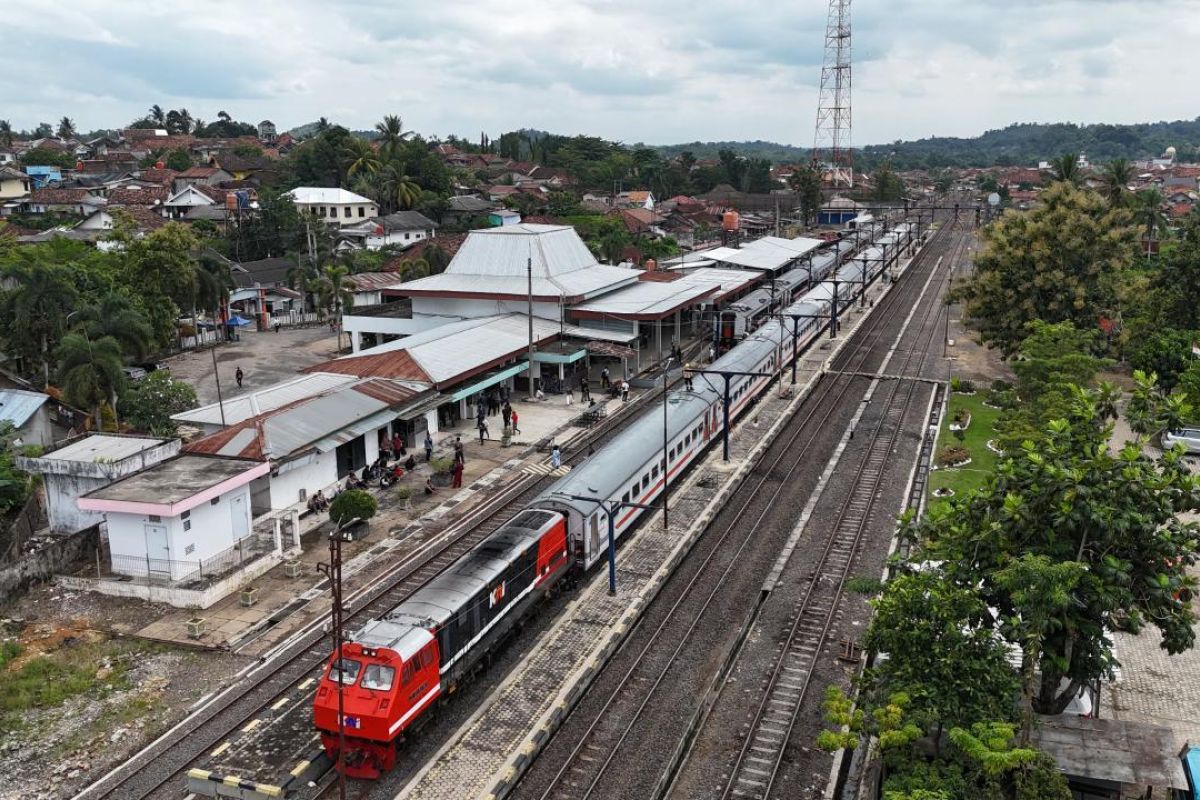
Growth across all services strengthens intercity connectivity and supports regional economies, tourism, education, and community activity across Sumatra.
Jakarta (ANTARA) - PT Kereta Api Indonesia (Persero) recorded passenger volume growth across all five passenger rail services with the longest routes on Sumatra island throughout the first half of 2026 compared with the same period the previous year.
The following are the five longest-route passenger rail services on Sumatra and their passenger volumes:
- Rajabasa rail service, Tanjungkarang–Kertapati return journey (pp)
Distance of approximately 388 kilometres; in the first half of 2026 it served 469,028 passengers, compared with 345,770 in the first half of 2025, an increase of 35.65 per cent.
- Sindang Marga rail service, Kertapati–Lubuklinggau return journey (pp)
Distance of approximately 305 kilometres; in the first half of 2026 it served 159,658 passengers, compared with 147,797 in the first half of 2025, an increase of 8.03 per cent.
- Bukit Serelo rail service, Kertapati–Lubuklinggau return journey (pp)
Distance of approximately 305 kilometres; in the first half of 2026 it served 278,705 passengers, compared with 275,636 in the first half of 2025, an increase of 1.11 per cent.
- Sribilah Utama rail service, Medan–Rantau Prapat return journey (pp)
Distance of approximately 266 kilometres; in the first half of 2026 it served 419,637 passengers, compared with 387,459 in the first half of 2025, an increase of 8.30 per cent.
- Kuala Stabas rail service, Tanjungkarang–Baturaja return journey (pp)
Distance of approximately 215 kilometres; in the first half of 2026 it served 377,928 passengers, compared with 360,185 in the first half of 2025, an increase of 4.93 per cent.
KAI Vice President of Corporate Communication Anne Purba said the growth across all services demonstrates the strong demand among Sumatra’s residents for mass transport connecting cities, regencies, trade centres, education hubs, public services, and tourist destinations.
“Each route has its own distinct travel character. People use trains to commute to work, pursue education, trade goods, seek medical treatment, visit family, and enjoy leisure travel. The rise in passenger volumes shows that rail continues to be an important part of life for the people of Sumatra,” said Anne.
The longest-route service is the Rajabasa, connecting Tanjungkarang and Kertapati over approximately 388 kilometres. In the first half of 2026, the Rajabasa served 469,028 passengers, up 35.65 per cent from 345,770 in the first half of 2025.
The route links Bandar Lampung and Palembang, two provincial capitals with strong government, trade, education, culinary, and tourism activity in the southern part of Sumatra.
From Kertapati Station, passengers can continue their journey towards the Musi River area, the Ampera Bridge, Fort Kuto Besak, culinary centres, and traditional craft hubs typical of South Sumatra. From Tanjungkarang, passengers can reach central Bandar Lampung and travel onwards to various natural and maritime destinations in Lampung Province.
“The growth in Rajabasa passengers shows the high demand for travel between Lampung and South Sumatra. This route widens people’s access to economic centres, education, public services, and tourist destinations in both provinces,” said Anne.
Next are the Sindang Marga and Bukit Serelo services. Both operate the same Kertapati–Lubuklinggau return route of approximately 305 kilometres.
Although they share the same route, the two services cater to different passenger segments. The Sindang Marga offers business and executive classes, while the Bukit Serelo serves as the economy-class option.
In the first half of 2026, the Sindang Marga carried 159,658 passengers, up 8.03 per cent from 147,797 in the first half of 2025.
The route connects Palembang with several areas in the western part of South Sumatra, including Prabumulih, Muara Enim, Lahat, Tebing Tinggi, and Lubuklinggau. These journeys support commuting, business activities, family visits, education, and access to public service centres.
Passengers can also continue to a range of tourist destinations, from the Musi River area in Palembang and the megalithic heritage sites in Lahat Regency, to the Temam Waterfall and Sulap Hill in Lubuklinggau.
On the same route, the Bukit Serelo carried 278,705 passengers in the first half of 2026, an increase of 1.11 per cent from 275,636 passengers in the same period last year.
The name Bukit Serelo is taken from a distinctive landscape in Lahat Regency, also known as ‘Thumb Hill’ (Bukit Jempol) because of its thumb-like shape. The naming showcases the natural riches and local identity of the areas traversed by the train.
The Bukit Serelo is widely used by workers, students, traders, and families travelling to centres of education, healthcare, trade, government, and public services.
“The Sindang Marga and Bukit Serelo show how a single route can serve diverse customer needs. Passengers have a choice of service classes and travel schedules that suit their requirements,” explained Anne.
From North Sumatra, the Sribilah Utama serves the Medan–Rantau Prapat return route of approximately 266 kilometres. In the first half of 2026, the service recorded 419,637 passengers, up 8.30 per cent from 387,459 in the first half of 2025.
The Sribilah Utama connects Medan with several centres of community activity in the eastern part of North Sumatra, including Tebing Tinggi, Kisaran, Membang Muda, and Rantau Prapat.
Medan is a centre of government, education, trade, services, cuisine, and urban tourism, while the areas along the way to Rantau Prapat are anchored by plantation activity, trade, public services, and local enterprises.
Passengers arriving in Medan can continue to the historic Kesawan district, Maimun Palace, culinary centres, and various buildings that tell the story of Medan’s development. Travel to Rantau Prapat also helps residents access economic and service centres in Labuhanbatu and surrounding areas.
The fifth service is the Kuala Stabas, connecting Tanjungkarang and Baturaja over approximately 215 kilometres. In the first half of 2026, the Kuala Stabas served 377,928 passengers, up 4.93 per cent from 360,185 in the first half of 2025.
The Kuala Stabas serves journeys across parts of Lampung and Ogan Komering Ulu Regency. It is used for commuting, education, trading, accessing healthcare, and visiting family.
From Baturaja, passengers can continue to several natural and historical destinations, such as Gua Putri and the Tiger Cave heritage site. Meanwhile, Tanjungkarang serves as one of the gateways to central Bandar Lampung and various tourist destinations across Lampung Province.
Anne explained that passenger rail services in Sumatra are spread across North Sumatra, West Sumatra, South Sumatra, and Lampung. Each region has service characteristics tailored to local needs and railway network conditions.
In West Sumatra, KAI also serves the public through the Pariaman Ekspres, Minangkabau Ekspres, and Lembah Anai services. These support daily travel, access to Minangkabau International Airport, and connectivity to coastal tourist areas.
“Sumatra has a strong railway foundation that has been part of people’s lives for decades. Trains connect cities and regencies, bringing people closer to economic centres, education, public services, and tourist destinations,” said Anne.
The presence of rail services also brings benefits to economic activity around stations and destination cities. Passenger journeys generate demand for onward transport, restaurants, accommodation, souvenir shops, markets, and micro, small, and medium enterprise products.
When passengers arrive in a city, journeys continue through local transport, visits to tourist destinations, food purchases, shopping, and the use of various community services. This chain of activity helps expand the circulation of local economies.
KAI will continue to improve safety, journey reliability, service quality, the cleanliness of trains and stations, and ease of ticket purchase. Evaluations are carried out continuously so that services increasingly match the needs of communities in each region.
“Through rail travel, people can see the breadth of Sumatra, become acquainted with the cities along the way, and discover the economic, cultural, and tourism potential of each area. KAI wants every journey to be safer, more comfortable, more enjoyable, and more beneficial for the community,” Anne concluded.
Source: jawawa.id (https://jawawa.id/newsitem/first-half-of-2026-passenger-volume-on-five-longest-train-services-in-sumatra-rises-across-the-board-1783767200)
Originally published by Antara (Indonesian) (https://www.antaranews.com/berita/5645469/semester-i-2026-volume-pelanggan-lima-layanan-ka-dengan-relasi-terpanjang-di-sumatra-kompak-meningkat), translated from Indonesian