
First Half 2026: TINS Profit Soars to Rp 2.71 Trillion, Here's Why
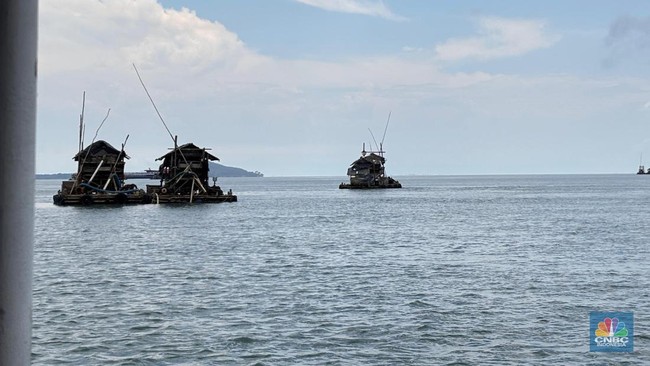
State-owned tin mining company PT Timah (Persero) Tbk. (TINS) recorded a net profit of Rp 2.71 trillion in the first half of 2026. This achievement exceeded the full-year 2026 net profit target of Rp 1.61 trillion, equivalent to 169 per cent of the target.
The profit was driven by TINS’s revenue for the first half of 2026, which reached Rp 10.42 trillion, an increase of 247 per cent compared to the first half of 2025 figure of Rp 4.22 trillion. “The increase was driven by a rise in sales volume and an increase in the average selling price of tin metal amidst conducive market conditions,” management stated in an Indonesia Stock Exchange (IDX) disclosure on Wednesday (29/7/2026).
In line with revenue growth, the company posted an operating profit of Rp 3.48 trillion, a significant increase compared to the first half of 2025 figure of Rp 0.38 trillion. The company also recorded EBITDA of Rp 3.90 trillion, a 363 per cent increase compared to the first half 2025 EBITDA of Rp 0.84 trillion.
From a financial position perspective, the company’s total assets in the first half of 2026 increased by 21 per cent to Rp 16.45 trillion compared to the year-end 2025 position of Rp 13.64 trillion. Liabilities were recorded at Rp 5.90 trillion, up 13 per cent from the year-end 2025 position of Rp 5.23 trillion. Meanwhile, the company’s equity increased by 25 per cent to Rp 10.55 trillion from Rp 8.41 trillion at the end of 2025, supported by the net profit achieved during the first half of 2026.
Management noted that tin prices remained at high levels compared to the same period the previous year, supported by tight global supply conditions due to limited mine production in several major producing countries. The average Cash Settlement Price for tin metal on the London Metal Exchange (LME) during the first half of 2026 was recorded at US$50,319.19 per metric tonne, an increase of 56.68 per cent compared to the same period the previous year of US$32,115.77 per metric tonne. “The price strengthening reflects solid tin market fundamentals, although its movement is still influenced by supply dynamics and global economic developments,” the statement read.
As the first half of 2026 progressed, global tin supply conditions began to show improvement, marked by increased metal inventories in LME warehouses and production recovery in several regions. Tin inventories in LME warehouses at the end of June 2026 were recorded at 8,575 tonnes, an increase of 58.36 per cent compared to the beginning of 2026 position of 5,415 tonnes.
On the demand side, global tin market fundamentals remain intact, with the consumption structure still dominated by the solder segment, which accounts for around 50 per cent of total world consumption, primarily for the semiconductor and electronics industries. “Demand prospects are expected to remain positive in line with the ongoing digital transformation and global energy transition, which are driving increased investment in artificial intelligence (AI), data centres, electric vehicles, energy storage systems, and electrical infrastructure,” management wrote.
Based on the CRU Tin Monitor, global tin metal production in the first half of 2026 was recorded at 173,536 tonnes, while global tin metal consumption reached 179,256 tonnes. “This condition indicates that the global tin market remains in a supply deficit, which is expected to be a supporting factor for the tin industry’s prospects in the second half of 2026,” the company revealed.
President Director of PT Timah (Persero) Tbk., Restu Widiyantoro, stated that tin ore production up to the first half of 2026 reached 12,232 tonnes of Sn, a 75 per cent increase compared to the same period the previous year of 6,997 tonnes of Sn. The production increase was driven by productivity optimisation and the addition of operating units at several production sites, including Bucket Wheel Dredges, Suction Pontoon Dredges, and partnership onshore mining operations.
In line with the increase in tin ore production, the company recorded tin metal production during the first half of 2026 of 10,865 metric tonnes of Sn, a 58 per cent increase compared to the first half of 2025 figure of 6,870 metric tonnes of Sn. Tin metal sales reached 10,984 metric tonnes, an 85 per cent increase compared to the same period the previous year of 5,933 metric tonnes. The increase in sales volume was also supported by the optimisation of tin metal inventory management to meet market demand.
Meanwhile, the average selling price of tin metal throughout the first half of 2026 reached USD 49,794 per metric tonne, a 52 per cent increase compared to the first half of 2025 of USD 32,816 per metric tonne, in line with the continued strength of tin prices in the global market. In the first half of 2026, the company’s tin metal sales were still dominated by the export market, which contributed 97 per cent of total sales, while the domestic market accounted for 3 per cent. The six main export destination countries included China (36 per cent), India (12 per cent), South Korea (11 per cent), Singapore (6 per cent), the Netherlands (5 per cent), and Italy (5 per cent).
The company is optimistic about maintaining its positive performance momentum in the second half of 2026, in line with global tin industry prospects still supported by demand growth from the electronics, semiconductor, electric vehicle, data centre, and AI-based technology sectors. As of the first half of 2026, the company recorded tin resources of 798 thousand tonnes and tin reserves of 312 thousand tonnes, serving as the foundation for the sustainability of the company’s operational activities and business development. Going forward, the company will continue to increase productivity, optimise assets, improve cost effectiveness, strengthen mining governance, and implement good and sustainable mining practices.