
First Edamame Harvest Strengthens Integrated Village Farming Model
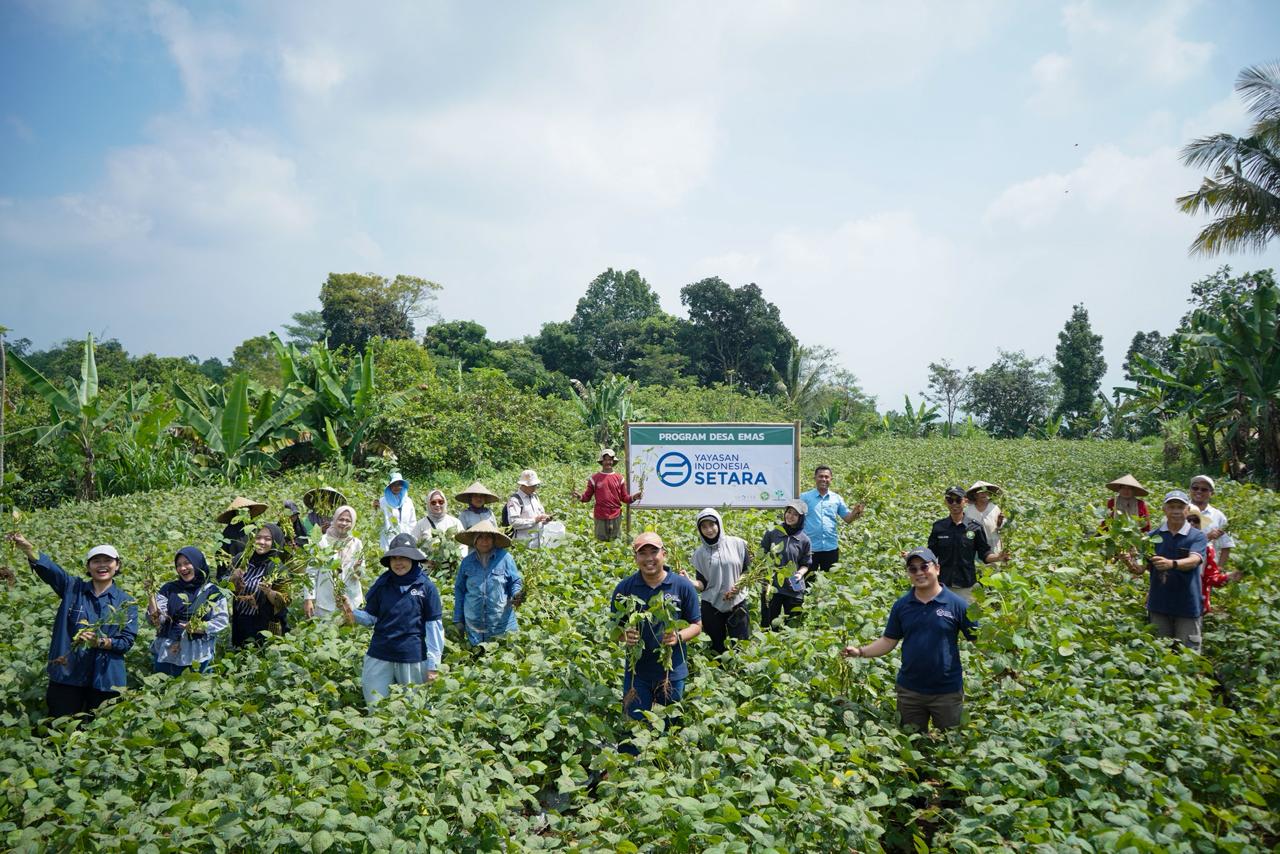
Community-led farming empowerment programme delivers tangible results again. Yayasan Indonesia Setara, together with a number of partners, has carried out the first harvest of edamame as part of developing an integrated farming ecosystem aimed at improving the welfare of village farmers.
The inaugural harvest took place on Tuesday, 19 May 2026, marking the initial milestone of the edamame farming development programme implemented through cross-sector collaboration. The programme involves Yayasan Indonesia Setara, Wiguna Farm, Agribusiness and Technology Park (ATP) IPB as off-taker, Gebrakan Anak Negeri (GAN), and BSI Maslahat.
Founder Yayasan Indonesia Setara Sandiaga Salahudin Uno says, the Desa Emas programme is designed not only to raise agricultural yields but also to build a sustainable village economy.
According to him, the agricultural sector needs to be supported through an ecosystem integrated from upstream to downstream so that the benefits can be felt directly by rural communities.
In its implementation, the programme partners with Wiguna Farm to develop edamame cultivation using wakaf land of one hectare as the initial phase of the programme.
“The support provided includes the supply of seeds, fertilisers, education, training, mentoring of farmers, and access to markets for a share of the harvest,” Sandiaga said in the statement.
Wiguna Farm owner Hasan regards consistent mentoring as a key factor in raising farmers’ productivity. He noted that the success of the inaugural harvest demonstrates that collaboration between social organisations, business players and farmers can create a more directed farming model with economic value.
One of the programme’s main aims, he said, is to ensure market certainty for farmers. For this reason, Agribusiness and Technology Park (ATP) IPB acts as off-taker, purchasing the edamame harvest directly from farmers.
“The scheme is expected to provide market assurances while also increasing the income stability of village farmers,” he said.
ATP IPB representative Sarwono explained that the involvement of the off-taker is an important part of building a healthy agricultural supply chain. With a fixed buyer, farmers are viewed as having greater certainty to run farming ventures and can focus on improving production quality.
“The programme is also designed to continue to grow sustainably. Profits from the harvest will be reinvested to expand farming land, increase production capacity, and extend the programme’s benefits to more farmers in various village areas,” he said.
Going forward, Yayasan Indonesia Setara hopes this edamame-based empowerment model can become an example of autonomous village economic development. Starting from one hectare of land, the programme is targeted to reach more farmers and create villages with economic strength through sustainable agriculture. (E-4)
The SME training pattern is now moving in a more progressive direction. Not only sharpening production skills, but also encouraging business people to adapt quickly to digital technology.
Efforts to empower women’s economy again receive attention, this time through an unconventional approach that combines culinary skills with digital technology.
A total of 100 packages of staple foods were distributed, including 3 kilograms of premium rice, 1 litre of cooking oil, 1 bottle of syrup and 0.5 kilogram of sugar.
Yayasan Indonesia Setara (YIS) together with SKIES Indonesia organised the Viral Takjil Baking Workshop at the Jatisampurna Sub-district Hall, Bekasi on Thursday (12/3) last.
To build independence, Yayasan Indonesia Setara (YIS) in collaboration with Bank Infaq, NRC, and Gentanala conducted a workshop on wood waste processing in Jepara, Central Java on Friday (6/2).