
First ASN WFH Day: Vehicles Significantly Reduced, Jakarta Traffic Smooth
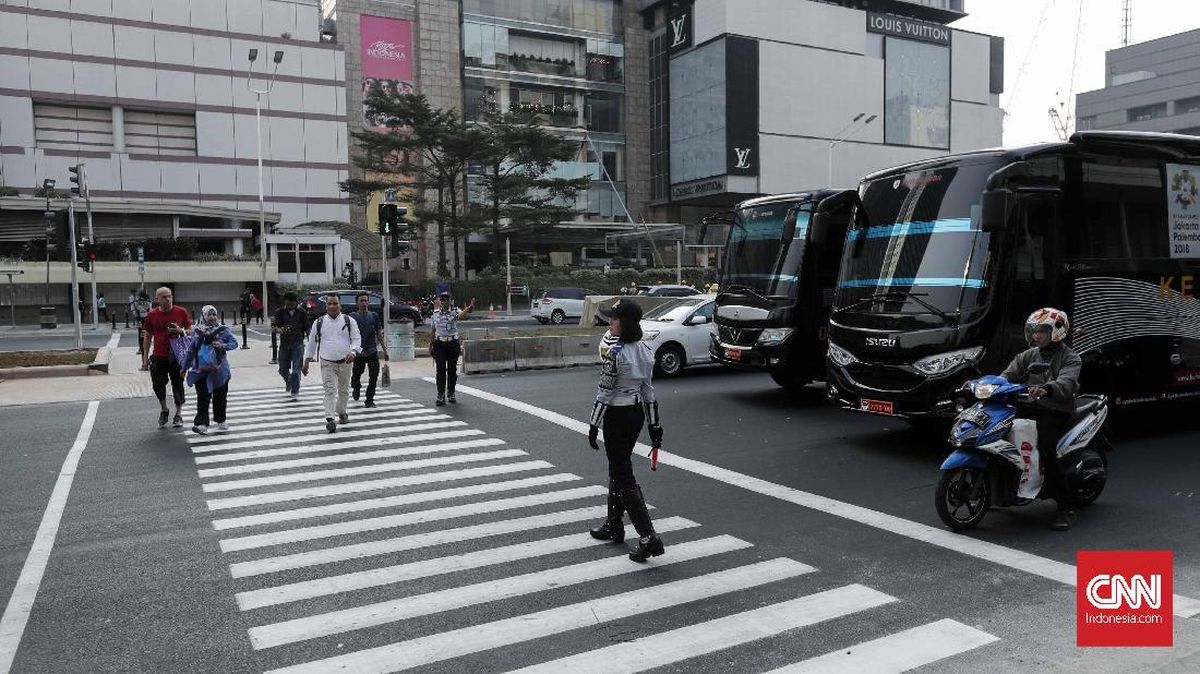
The Traffic Directorate of Metro Jaya Police recorded a decrease in vehicle volume in Jakarta due to the work-from-home (WFH) policy for civil servants (ASN) on Friday (10/4). “Today, there is a quite significant difference in the volume of vehicles used by the public taking advantage of the WFH policy, as seen from traffic flow monitoring. Around 9:20 AM from this morning, we observed a substantial reduction in volume. Jakarta is smoother today,” said the Head of Traffic of Metro Jaya Police, Senior Commissioner Komarudin, when contacted. Komarudin mentioned that several roads such as Jalan Jenderal Sudirman, Jalan Asia Afrika to Jalan Gerbang Pemuda, which are usually congested, were observed to be smooth today. “On several roads like Sudirman from south to north, and north to south similarly. Then meeting other roads like Asia Afrika, Gerbang Pemuda, which usually have long queues on the Ladokgi overpass until this hour,” he said. Nevertheless, Komarudin stated that there are still some congestion points. He said congestion occurs due to vehicle crossings at several points. For example, in the Slipi and Semanggi areas. “We know there is an off-ramp from the toll road going out to Semanggi that crosses with, first, the busway lane, then also crosses with the arterial road from Slipi towards Semanggi. Plus crossings with small roads from Benhil. Also including crossings from Semanggi to Sudirman, from Benhil towards Cawang,” he explained. Previously, the Government officially implemented the WFH system for ASN one day a week every Friday for energy efficiency in facing global conflicts. The Government also limited the use of official vehicles and encouraged the use of public transportation. Coordinating Minister for the Economy Airlangga Hartarto estimated that the WFH policy would save the State Revenue and Expenditure Budget (APBN) up to Rp6.2 trillion. “The potential savings from the Work from Home policy directly to the APBN is Rp6.2 trillion, in the form of fuel compensation savings,” he said during an online press conference on Tuesday (31/3).