
First Aid Readiness Key to Elderly Safety in Emergencies
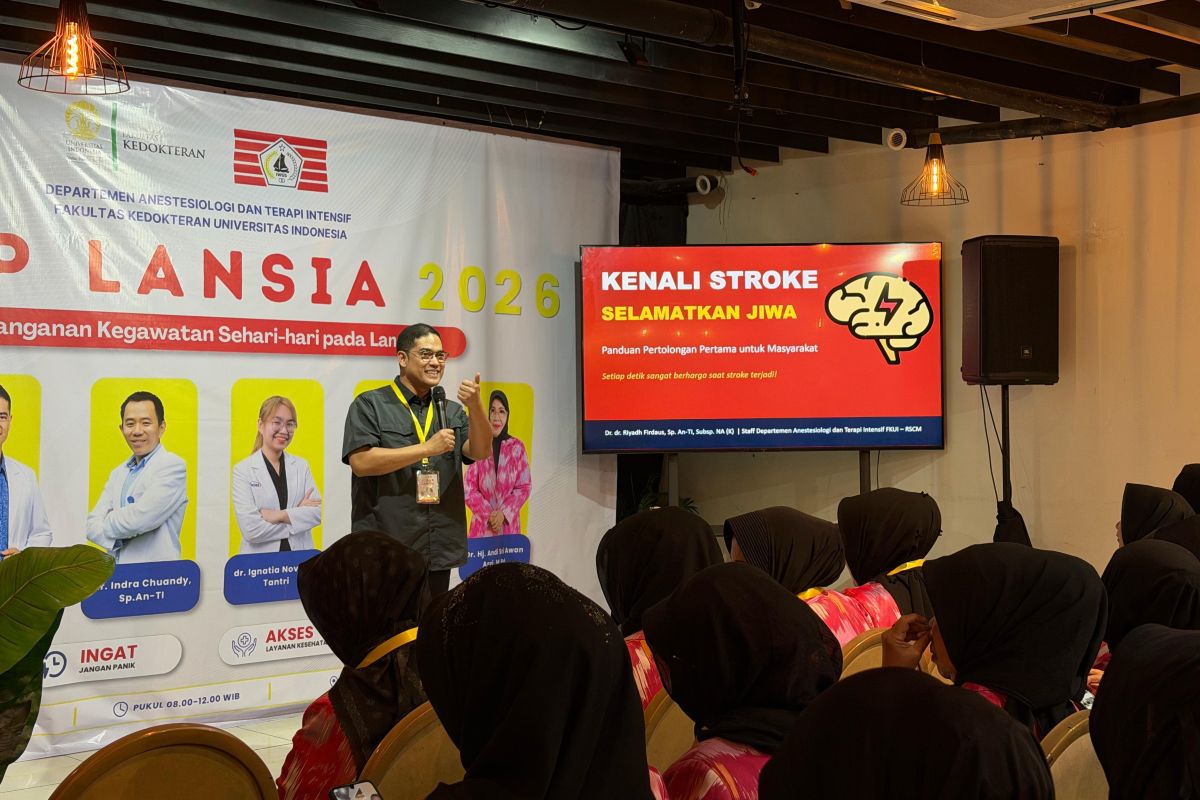
Readiness in providing first aid is a crucial factor in saving elderly individuals experiencing medical emergencies. Conditions such as strokes, shortness of breath, falls, weakness, and cardiac arrest require rapid handling, as the first few minutes before medical assistance arrives are decisive for the patient’s prognosis. However, in reality, families and community members who are closest to the elderly often lack the knowledge of appropriate actions.
Responding to this need, the Department of Anaesthesology and Intensive Care, Faculty of Medicine, Universitas Indonesia - Dr Cipto Mangunkusumo National General Hospital (FKUI-RSCM), in collaboration with the South Sulawesi Women’s Association (IWSS), organised the ‘Sigap Lansia’ programme: National Education on Daily Emergency Management in the Elderly. This activity was conducted both in-person and online, targeting IWSS members as the primary caregivers within the family environment.
The Chairperson of the Sigap Lansia Committee, Dr Aida Rosita Tantri, emphasised that the public must be prepared to provide initial assistance, both at home and in the surrounding environment. “First responders need to know the danger signs and the correct initial actions before medical help arrives,” Aida stated in an official statement.
The urgency of this programme is driven by 2024 data from the Central Bureau of Statistics (BPS), which shows that the number of elderly people in Indonesia has reached approximately 12 per cent of the total population, or nearly 29 million people. This figure is predicted to continue soaring to nearly 20 per cent by 2045.
As age increases, the ageing process leads to a decline in organ function reserves. This, combined with a high prevalence of chronic diseases, makes the elderly far more vulnerable to various emergency risks. Through the Sigap Lansia programme, participants are equipped with the ability to recognise early warning signs. Rapid and correct handling is expected to prevent the worsening of a patient’s condition and reduce the risk of permanent disability or death.
This education is not merely theoretical. Participants engaged in interactive discussions and hands-on skills training. During the in-person sessions, participants were divided into several training stations to simulate the handling of specific cases. Participants were also given the opportunity to practice actions independently under the guidance of expert instructors. Meanwhile, online participants engaged through discussions and visual simulations. To measure the effectiveness of the activity, the committee conducted quizzes before and after the event to monitor changes in knowledge and perceptions regarding basic life support for the elderly.
The collaboration between FKUI-RSCM and IWSS is expected to be a sustainable step in increasing public health literacy, ensuring that every individual is capable of taking appropriate life-saving steps before professional medical personnel arrive at the scene.