
Fire Control Strategy in TNBTS: Early Detection and Geographical Challenges
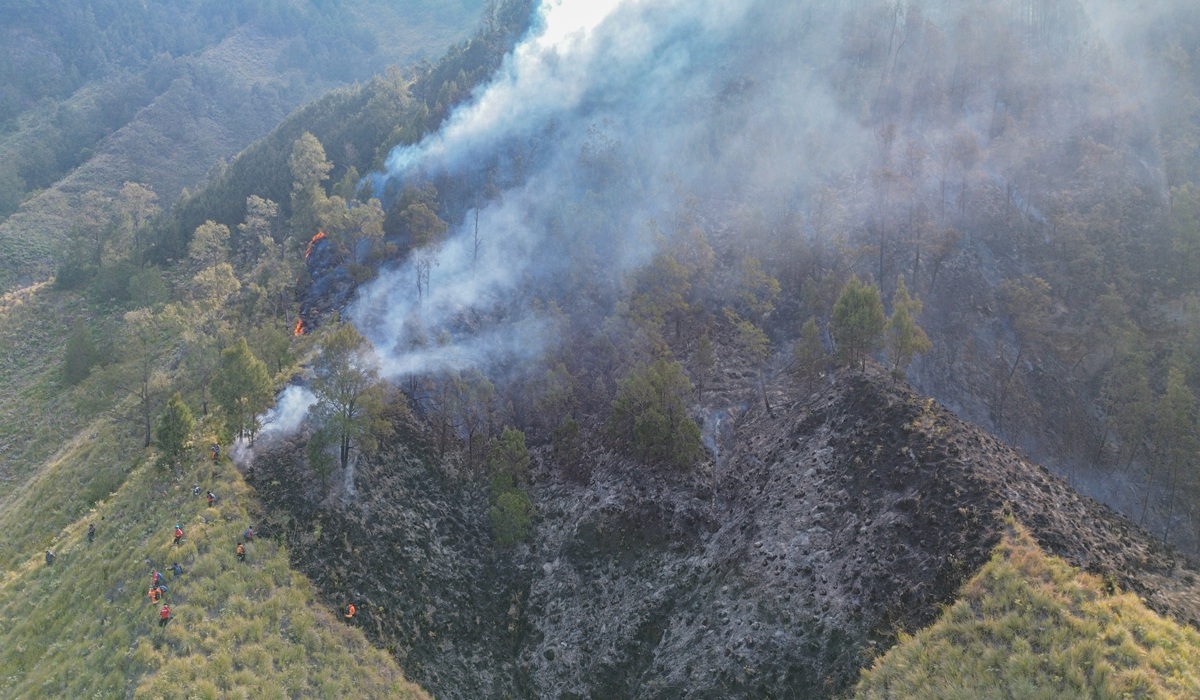
The Bromo Tengger Semeru National Park (TNBTS) area requires a more robust and integrated fire control system. The unique geographical characteristics, the presence of dry vegetation, and extreme weather dynamics are the main factors accelerating the spread of fire in the region.
Professor Bambang Hero Saharjo, a Professor at the Faculty of Forestry and Environment at IPB University, emphasised that the main key to preventing fire escalation is early detection and the readiness of firefighting facilities. According to him, monitoring for fire indications must be carried out as quickly as possible to break the fire’s potential before it develops into a major blaze.
Prof Bambang explained that the terrain in TNBTS has peculiarities that cannot be equated with other areas. Open areas with accumulations of natural fuel (dry vegetation) are highly susceptible to ignition. This condition is exacerbated by the sloping topography of the region.
“The geographical condition of TNBTS, which resembles a cauldron, also influences the pattern of fire spread. Changes in wind direction and speed can make the movement of fire difficult to predict,” said Prof Bambang. When fire moves on sloping terrain with the support of strong winds, manual firefighting with limited equipment becomes very difficult to carry out.
Given the complexity of the terrain, the firefighting strategy must not rely on just one method. Prof Bambang suggests a combination of ground and aerial firefighting (water bombing). However, he provided a special note regarding the use of helicopters, advising that they be operated with precision so that the downdraft from the rotors does not actually trigger new fire spots.
If the fire fails to be controlled, the resulting ecological impact is very serious. Besides the loss of land cover, there is an increase in surface temperature that can disrupt the natural recovery of the ecosystem. This threatens the existence of characteristic vegetation that grows in the various altitude zones of TNBTS.
Furthermore, Prof Bambang reminded that the visual extinguishing of a fire does not mean the area is completely safe. The post-fire monitoring system must remain active to ensure there are no hidden embers that could reignite the fire. He also stressed the importance of education for the communities involved in firefighting so they have adequate basic knowledge.
“Fire control must be carried out seriously, from prevention and suppression to post-fire management. The major fire in 2023 should serve as a lesson for making changes so that similar incidents do not recur,” he concluded.